

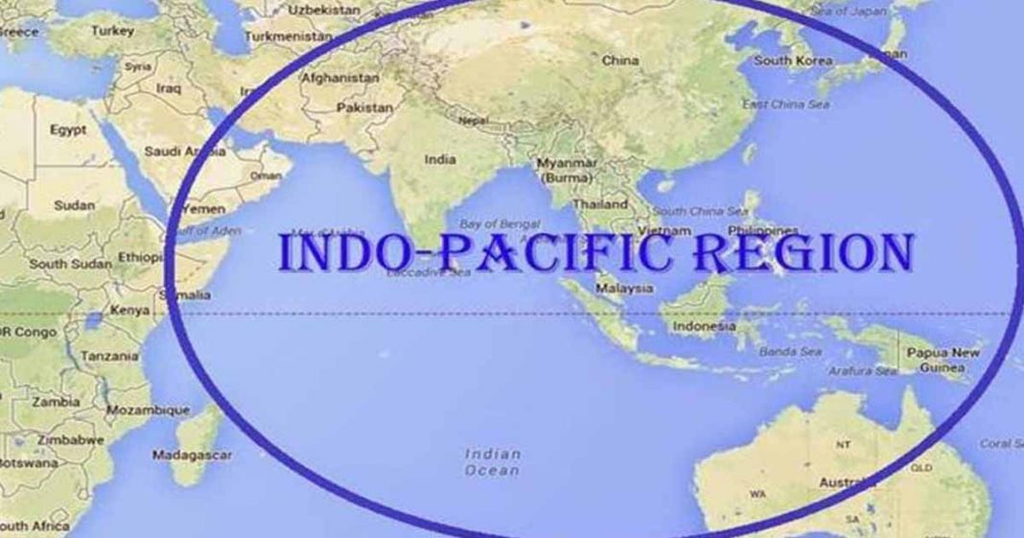

While most predict a retreat in US aggression, given its low military performance in Iran and the prospect of another “eternal war” in West Asia, developments inside Washington do not seem to confirm this. The expectation that the US will maintain “strategic stability” in East Asia while dealing with the consequences of its failed adventure in Iran appears illusory, as the Pentagon announced that it is revising US nuclear doctrine to provide “more options for the President,” apparently as US military policymakers realize that the chance of winning a conventional war is now unrealistic.
We recall that China has had a No First Use nuclear doctrine since it became a nuclear power in 1964. The revision of the US doctrine has only one explanation, namely, a first nuclear strike is being considered as an option, focusing on China, which is considered according to the National Defense Strategy (NDS) the main adversary. It also means that they are lowering their nuclear threshold. Of course, the message has caused serious alarms in Chinese military circles (for more analysis on this issue please read the article titled “What can US “allies” contribute on the ground in a war in the Indo-Pacific region?“).
The situation prevailing in recent days in Washington can only be described in medical terms, with psychiatric syndromes. Usually the “loser effect” makes individuals become more submissive, more conciliatory, after a defeat in order to avoid further harm. However, under desperation or low impulse control, individuals experience a reversal where repeated losses lead to escalation rather than submission. This is called the “reverse loser effect.” There is also the less diplomatic term “crammed rat effect” to describe the shift to “flight into battle,” when repeated losses eliminate all perceived options for retreat.
There is, of course, “narcissistic rage,” with highly narcissistic individuals for whom repeated defeats cause “narcissistic injury,” which is a threat to their inflated self-image. In such “narcissistic rage,” rather than retreat, the patient responds with increasing hostility, intense rage, and endless retaliation to reestablish their perceived dominance. Medical professionals categorize such chronic violent tendencies as Personality Disorders, Intermittent Explosive Disorder, and Oppositional Defiant Disorder.
In political science and international relations, several less sophisticated terms are used to describe a superpower behaving like a madman. They include
- “escalation of commitment,”
- “compensatory aggression,” or
- “the “sunk cost fallacy.”
Whatever the nickname for such psychotic state behavior, we have seen great power responses throughout history that are analogous to the current U.S. behavior. More specifically:
Other great power responses which lost their position in history
1. From 431 to 404 BC, during the Peloponnesian War, Athens was locked in a grueling struggle against Sparta and was losing influence. Instead of seeking peace, Athenian pride and hubris led them to launch attacks on their neighbors. Athens sent a fleet to the small island of Milos, which was a neutral island that simply wanted to remain independent. Athenian envoys told the Melians to surrender and pay tribute or face total annihilation. When the Melians tried to argue by appealing to morality, justice, and the gods, the Athenians cut them off with pure, unadulterated Realpolitik: “The strong do what they can and the weak suffer what they must.” The Melians refused to surrender. The Athenians besieged the island, executed all the adult males, and sold the women and children into slavery.
In 415 BC, Athens reaped what it had sown. Blinded by hubris and the belief that its unbridled power made it invincible, Athens launched a massive, aggressive naval invasion of Sicily to conquer Syracuse, a much larger adversary than Milos. The mission was a disastrous failure. The Athenian fleet was crushed and tens of thousands of soldiers were captured. Athens never regained its naval supremacy and ultimately lost the war outright to Sparta.
Thucydides wrote in his book that empires based on the logic of brute force, hypocrisy, and the “right of the mighty” ultimately self-destruct through their own arrogance.
2. Another empire that fell to the sword of hubris was Napoleon’s French Empire in 1812.
Napoleon’s army had been bogged down in Spain during the “Iberian War”, unable to crush local resistance or force Britain and Portugal to surrender. Driven by the need to impose and demonstrate absolute French dominance, Napoleon escalated the situation by assembling the Grande Armée (over 600,000 men) to invade Russia. Scorched earth tactics and the harsh Russian winter devastated the French army. Fewer than 100,000 men survived, sparking the War of the Sixth Coalition, Napoleon’s abdication, and the end of the French Empire.
3. During World War II, Imperial Japan was mired in a costly, unwinnable land war in China from 1937, which severely depleted its resources and led to crippling trade embargoes.
Rather than negotiate a withdrawal from China, Japan’s military leadership increased its efforts and attacked the United States at Pearl Harbor in 1941 to secure energy resources in Southeast Asia, betting that aggression would intimidate a much larger power into submission.
Its decision mobilized the greatest industrial power of the time against Japan, resulting in the complete destruction of the Japanese navy, air force, major cities, and the dropping of two nuclear bombs on Japan.
4. The parallel with Japan is its World War II ally, Germany. Overestimating its own invincibility on the Western Front, Germany launched a surprise invasion of the Soviet Union in 1941 with Operation Barbarossa.
Hitler went up against a nation with far greater manpower, land area, and war production capabilities. Germany became trapped in a war of attrition on the Eastern Front that devastated the Wehrmacht, ultimately leading to the complete capture of Berlin and the dissolution of the 1,000-year-old Third Reich.
It seems like there are a lot of “Sputnik moments” that the US has been experiencing in recent years.
So good luck with the “more presidential choices.”

