


The expectation that the US will maintain “strategic stability” in East Asia while dealing with the fallout from its failed adventure in Iran appears illusory, as the Pentagon announced it was revising US nuclear doctrine to provide “more options for the President,” apparently as US military policymakers realize that the chance of winning a conventional war is now unrealistic.
Let’s compare China to Iran, which is currently beating the US.
- China is 6 times larger than Iran and its population is over 14 times larger
- China’s economy is 40 times larger than Iran
- China has an army of 2 million, the largest in the world
- China has a larger warship than the US, a larger air defense and an air force with comparable capabilities to the USAF
- China has space and cyberspace capabilities on par with the US
- China has a nuclear triad and enough nuclear weapons to destroy the US in a second strike
- China has an arsenal of missiles and drones that are qualitatively and quantitatively superior to Iran or the US
- China’s unmanned systems (land, air, sea and submarine) and military artificial intelligence are world-class
In other words, a war near China’s coast (not to mention the mainland) would be so one-sided that the Pentagon itself admits that the US military cannot withstand more than a few weeks. You can read the relevant confidential Pentagon study entitled “Overmatch Brief”.
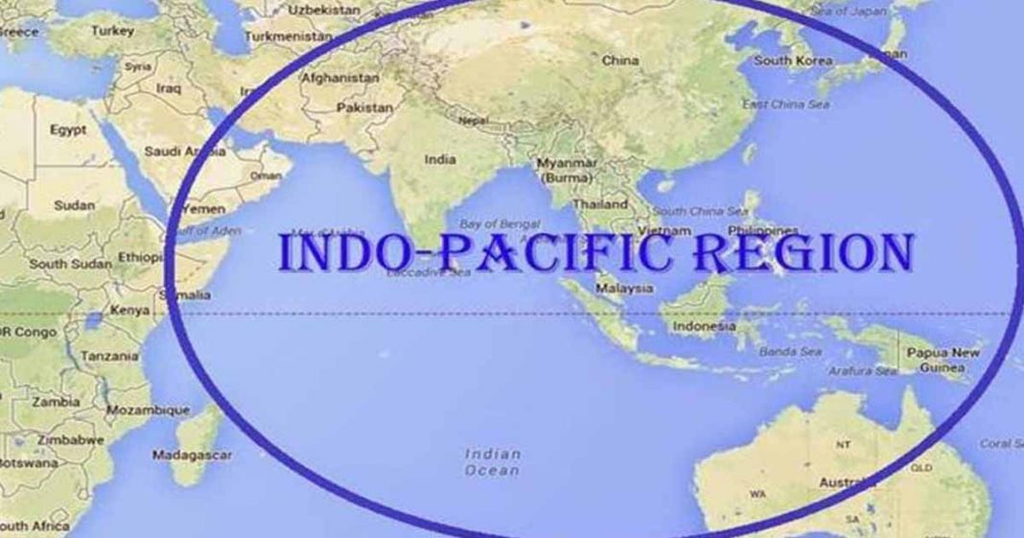
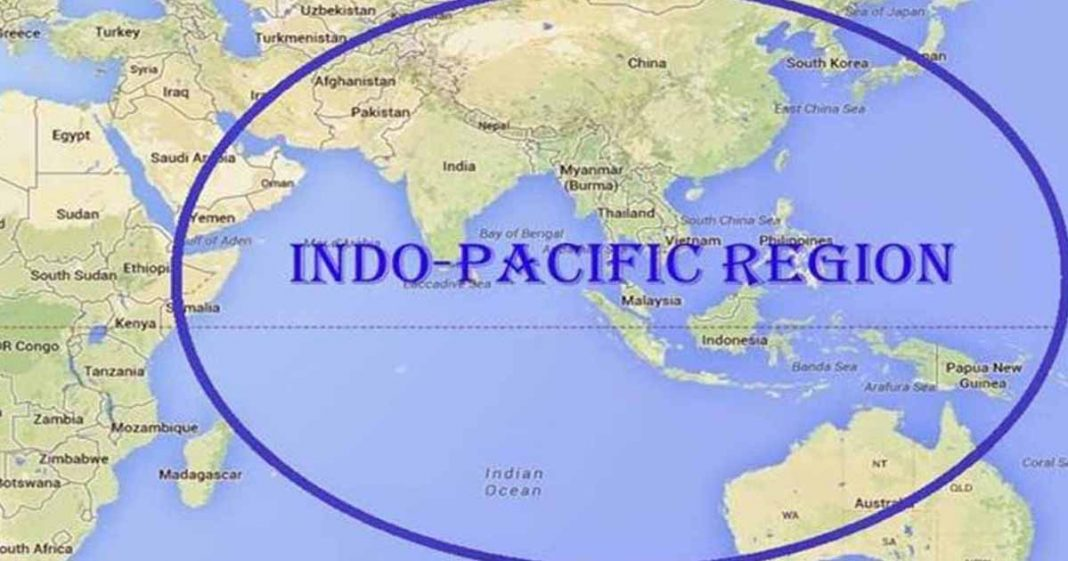
The US “allies” in a war in the Indo-Pacific region?
1. South Korea is unlikely to get involved. Seoul’s economy depends on trade with China and it has a neighbor to the north it cannot afford.
That leaves Japan, Australia, the Philippines, and Taiwan as potential participants in any military action. Let’s assume they all join forces against China.
China would be happy to even the score with the Japanese for their barbaric atrocities in the Sino-Japanese wars of the 20th century. All of Japan is within China’s conventional strike range with missiles and drones.
2. Japan hosts 130 U.S. military bases, the most in the world, and China is perfectly justified in destroying any Japanese infrastructure if it is used to support the war. Thus, Tokyo can expect missile barrages and drone strikes against Japanese islands.
Beijing can also cut off Japan’s access to energy and food, as the country imports 90% of its energy and 60% of its food. If Japan were to enter the war, its economy and physical infrastructure would be completely destroyed.
3. Australia’s tiny population, its remoteness from the Western Pacific, and its tiny military make it more of a nuisance than a threat. Australia is heavily dependent on trade with China, which mainly includes minerals (iron ore, coal). Canberra’s economic survival is at stake if it were to engage in a war against China.
4. The Philippines is a joke as a military power. It has the most corrupt government and the weakest military in Southeast Asia, with an air force and navy armed with American weapons from the 1950s and 60s. In addition to its lack of military hardware, the Philippines lacks a strong national identity, as the archipelago was never a nation-state until 1946.
It has been ruled by a series of colonial conquerors and, after “independence,” by some of the world’s most corrupt dictators and oligarchs. Manila is not even qualified to be cannon fodder. It will serve primarily as a target for absorbing Chinese missiles aimed at American bases.
5. Taiwan’s armed forces are strictly defensive in nature. Its military has no plans or capabilities to attack mainland China, nor to engage in a war in the Indo-Pacific, the goal is to protect the island with the so-called “Porcupine Strategy”.
To this end, it has invested in surface-to-sea missiles and anti-aircraft systems that could cause casualties to Chinese landing forces, with the aim of making such a landing impossible.
Recently, based on the lessons learned from the war in Ukraine, it aims to acquire thousands of kamikaze drones and autonomous surface vessels to prevent Chinese landing ships from a possible conflict. In a US-China war, Taiwan’s main concern would be the defense of the island and not aggressive actions in the Indo-Pacific or mainland China.
The American Pentagon is aware of the reality that we briefly described above
He is fully aware that the US has no chance of winning a conventional war with China. This led to the shocking public announcement that the Pentagon is revising its nuclear doctrine to lower the threshold for the use of nuclear weapons. And it is this dying empire logic that is fully on display, which is not just crazy, it is suicidal.
The US would be completely “disappeared,” to use Trump’s language, if it dared to launch a nuclear first strike. Because China possesses an absolute “second strike” capability that the US cannot defend against. In China’s arsenal, there is the standard nuclear triad for second strike, intercontinental ballistic missiles launched from land, air and submarines.
In addition, there is a unique nuclear strike platform that only China is developing for which there is no defense. This is the Fractional Orbital Bombardment System (FOBS).
Unlike traditional ICBMs (Intercontinental Ballistic Missiles) that follow a fixed, high-arc parabolic path, the FOBS platform launches a missile with a nuclear warhead into low Earth orbit, just like a satellite.
The FOBS is placed in a temporary orbit (hence the fractional orbit), with the goal of remaining unknown to adversaries. The missile enters orbit around the Earth, just before reaching its target, its warhead, which is usually a nuclear-powered glide vehicle, is detached to head towards the ground. The Hypersonic Glide Vehicle (HGV) travels at Mach 20 to 25 (approximately 25,000 to 31,000 km/h) and is extremely maneuverable before impact.
FOBS can hit any point on Earth, unlike conventional ICBMs that follow a predictable arc. FOBS can approach the target from unexpected directions (e.g. from the South Pole, while the target is in the Northern Hemisphere), thus bypassing early warning systems and missile defense radars.
There is no defense against a nuclear strike by FOBS. The strike capability of this system guarantees that even if only a small fraction of China’s nuclear forces survive a first strike, those remaining warheads will bypass US defenses and destroy their targets.
China tested the FOBS system as early as the summer of 2021. When the Financial Times reported on the launch in October 2021, the Pentagon likened the event to a modern “Sputnik moment” (recalling the surprise and uproar caused in the US by the launch of the first Soviet satellite).
It seems that there have been many “Sputnik moments” that the US has been experiencing in recent years.


