The recognition of Brazilian gangs as terrorist organizations paves the way for an escalation of US-Brazilian relations. Recalling the tragedy of humiliated Venezuela and trying to assess who will be next in line, everyone for some reason focused on Cuba. After all, the US government was also constantly fueling anti-Cuban hysteria.
And amidst this informational “noise of the wild”, the news that a decision was made in Washington to designate the Brazilian drug gangs Comando Vermelho (CV) and Primeiro Comando da Capital (PCC) as terrorist organizations went almost unnoticed.
We have heard something similar before: the pressure on Venezuela began exclusively with the “drug issue”, and then the appetite expanded to everything else.
The measure adopted by US Secretary of State Marco Rubio places Brazilian criminal organizations in the same legal framework that the Trump administration is increasingly applying to criminal organizations in Latin America. Officially, this step is presented as part of the fight against transnational organized crime. However, the broader context indicates a more extensive geopolitical agenda.
The designation as “terrorist” is anything but symbolic. It significantly expands Washington’s capabilities to
- impose sanctions,
- freeze assets,
- prosecute alleged supporters, and
- put pressure on financial institutions abroad.
That is precisely why Brazilian authorities are resisting such classifications. It is worth recalling that Brazil had rejected a similar US request in 2025, arguing that the PCC and CV are profit-motivated criminal organizations and not ideologically driven terrorist groups.
This issue cannot be separated from broader geopolitical developments — last year also saw pressure from Washington on Brazil, sanctions against Supreme Court Justice Alexandre de Moraes, and discussions about access to strategic military facilities, as part of a new version of the Monroe Doctrine by the Trump administration.
The goal… is to break up the BRICS
The goal was not so much a direct military intervention as the creation of leverage. Brazil’s growing role in the BRICS, its strategic partnership with China, and its increasingly independent foreign policy have made it an object of pressure.
Its current “classification” as a crime zone seems to fit perfectly into this strategy. The imposition of sanctions could increase the cost of compliance with regulatory requirements for Brazilian companies and financial institutions. Undoubtedly, the big banks currently see limited short-term impact — at least for now.
The broader concern here relates to the expansion of the United States’ extraterritorial financial influence. Perhaps the least publicized aspect of this debate concerns Brazil’s financial sovereignty.
Washington has effectively acquired a new, powerful tool to pressure Brazilian companies, banks, and possibly even the national payment system Pix. To begin with, Pix is much more than just a payments platform. It is a successful example of Brazilian financial sovereignty, which has reduced dependence on externally controlled payment networks.
Visa, Mastercard and WhatsApp Pay have all struggled to compete with Brazil’s state-owned infrastructure. So, if counter-terrorism measures become a tool to increase pressure on Brazilian financial institutions, Pix could indirectly find itself in Washington’s crosshairs.
This should also be seen in the broader context of the BRICS countries’ efforts to reduce dependence on dollar-centric financial systems (de-dollarization).
Institutions such as the BRICS New Development Bank are another small but real challenge to US financial sovereignty. From this perspective, a blow to Brazil’s financial infrastructure would amount to economic warfare rather than simply a crime-fighting initiative.
And what about military operations?
This question has been heightened by speculation surrounding Washington’s operation in Venezuela earlier this year. In January 2026, US forces arrested President Nicolás Maduro and transferred him to the United States to face old “narco-terrorism” charges.
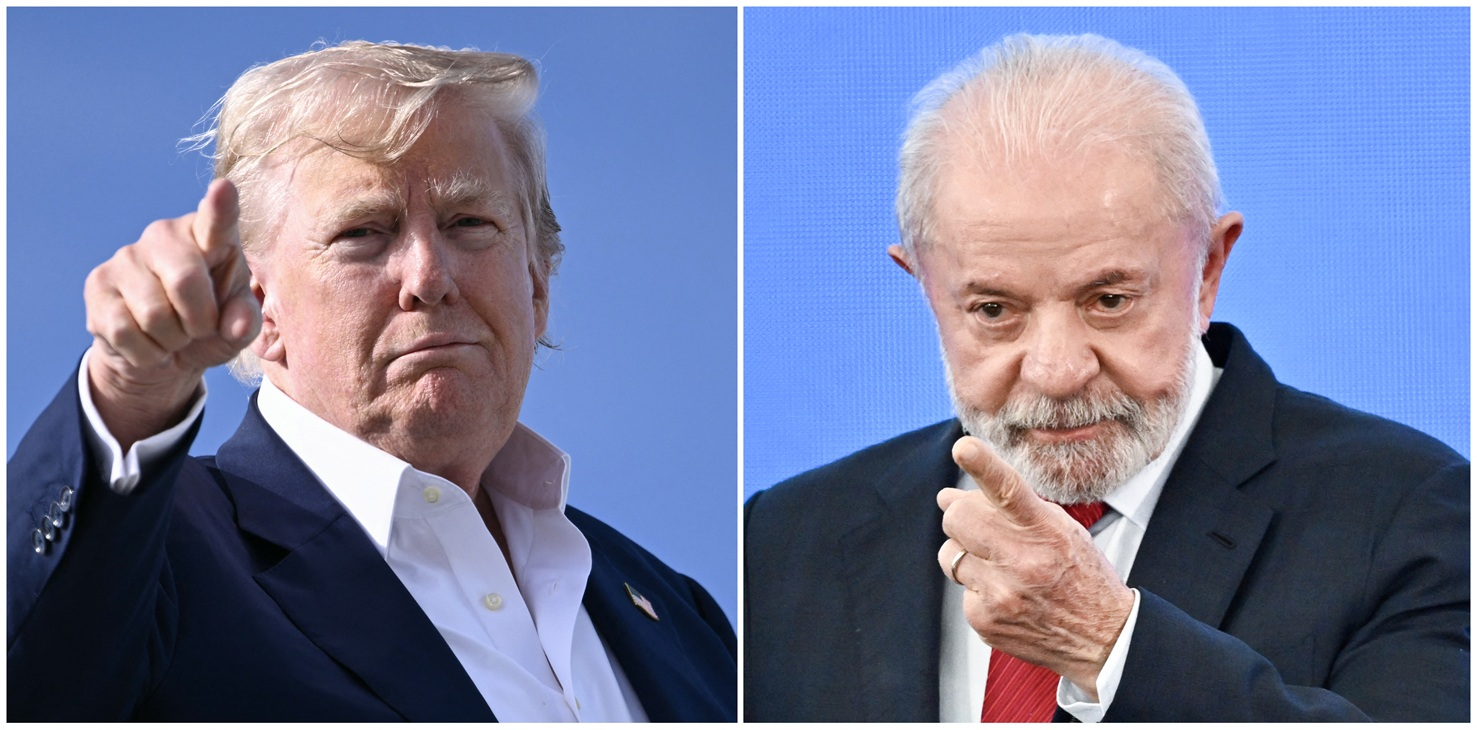
Unlike Maduro, President Lula da Silva is not facing criminal charges in the United States. Moreover, Brazil is not an isolated state under sanctions, but the largest economy in Latin America, a founding member of the BRICS, and a major power in the Global South.
An operation against Brazil, similar to that in Venezuela, would therefore be an act of aggression with enormous diplomatic, economic, and military consequences. A much more realistic scenario might involve intelligence cooperation, sanctions, and economic pressure.
Mexico offers a fairly instructive precedent for what can be done. Recent U.S.-backed anti-cartel operations have relied heavily on intelligence sharing and operational support. Yet even there, unilateral U.S. military operations remain politically unacceptable.
And we must not forget that strategies to dismantle drug cartels often lead to unintended consequences. In Mexico, the elimination of major cartel leaders has triggered waves of retaliatory violence, blockades, and instability, rather than long-term improvements in security.
Complex situation
In Brazil, the situation is even more complex. The PCC and CV organizations are deeply entrenched in prison systems, the local economy, and regional criminal networks. Abrupt external intervention could easily worsen the situation.
Moreover, Washington already faces significant difficulties on multiple fronts, from tensions over Iran to growing legal and political campaigns against Cuba.
Therefore, direct military action against Brazil in the near future is considered unlikely, although Washington has recently shown a readiness to proceed with all kinds of destructive measures.
The main problem here is leverage. In short, Brazil is highly unlikely, but not impossible, to become another Venezuela.
Nevertheless, this development is significant, as it offers Washington new mechanisms to pressure a country that is gaining an increasingly important position within the BRICS and the Global South.
Military action remains unlikely. However, economic coercion is already underway.