The situation in Mali is rapidly evolving into one of the most dangerous crises of our time. The recent large-scale attack by Islamist rebels on the country’s military junta is not just another episode of violence, but a turning point that exposes deeper geopolitical failures—particularly on the part of the West.
Contrary to the dominant narrative that attributes instability solely to local actors or extremist organizations, a closer analysis shows that the roots of the crisis lie in Western interventions over the past decades.
From the dissolution of states to the imposition of failed models of governance, the West bears a significant share of the responsibility for today’s chaos.
The attack that revealed the truth
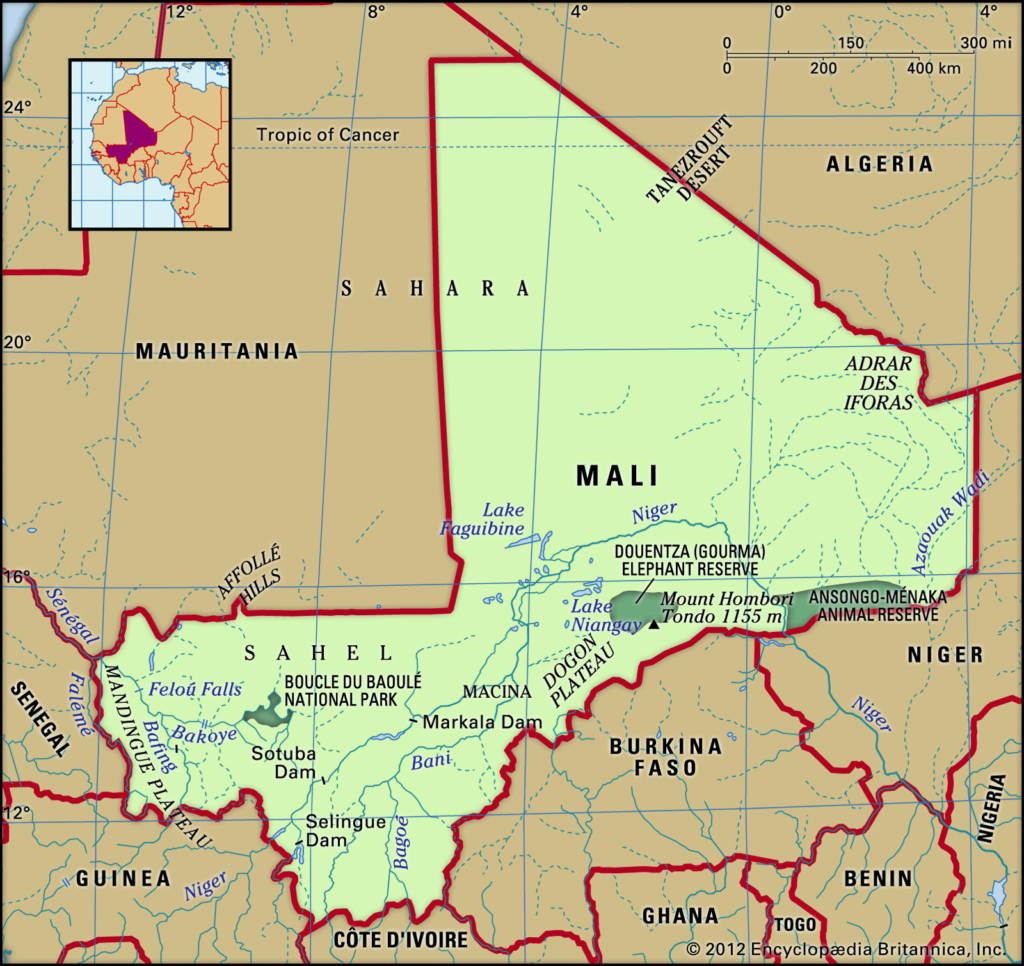
The surprise attack by the rebels in Mali was impressive in both its scope and audacity. It targeted dozens of towns and villages, captured strategic points such as Kidal and reached as far as Kati, near the capital Bamako, where even the country’s defense minister was killed.
The attack shattered the junta’s narrative that the security situation had stabilized. At the same time, it highlighted the growing power of the Jama’at Nusrat al-Islam wal-Muslimin (JNIM), an al-Qaeda-linked group that has become a dominant force in the Sahel region.
The most worrying element, however, is that the attack was not unexpected. It was the inevitable result of a long process of destabilization.
The Origins of the Crisis – Libya and Western Intervention
To understand the current situation, we must go back to 2011 and the Western intervention in Libya, which led to the overthrow of Muammar Gaddafi. This intervention was presented as humanitarian, but in practice it dissolved the Libyan state and left a power vacuum.
Thousands of fighters, including Tuareg mercenaries, returned to the Sahel, carrying with them huge quantities of weapons. This triggered the uprising in Mali in 2012 and paved the way for the rise of Islamist organizations. In other words, the crisis in Mali is a direct consequence of the Western military intervention in Libya.
The French Presence: Stability or Temporary Illusion?
France intervened in 2013 with Operation Serval and then with Barkhane, managing to halt the rebel advance. However, this “success” proved superficial. French forces maintained control of the cities, but failed to address the root causes of the insurgency.
The countryside remained out of control, while local populations often viewed foreign forces with suspicion. Western strategy relied more on military force than on a political solution—a pattern that has been repeated in many regions of the world with disastrous results (an example of the same strategic mistake for the Americans was Vietnam).
Coups and the West’s Withdrawal
In the early 2020s, a series of coups toppled governments in Mali, Niger, and Burkina Faso. New military leaderships expelled French forces and severed ties with the West. This development was no accident.
It reflected deep dissatisfaction with the Western presence, which was seen as a failure and, in some cases, neocolonial.
The rise of Islamists and the failure of foreign strategies
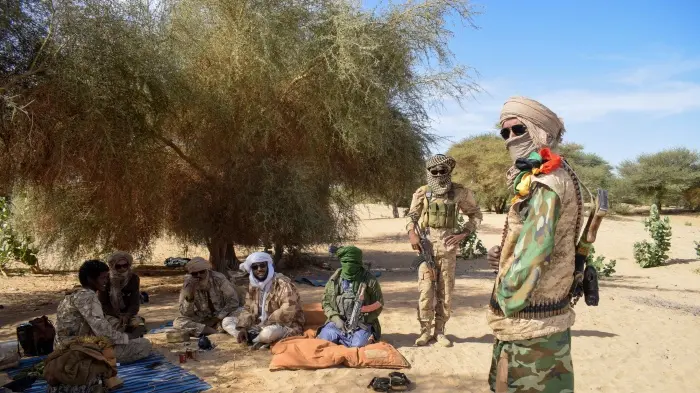
JNIM exploited the power vacuum and grew significantly stronger. In many areas it already functions as a de facto government, collecting taxes, providing services, and imposing its own justice system.
This does not mean that it enjoys widespread popular support. On the contrary, its imposition of strict rules and violent practices creates tension and resentment. However, compared to the weakness of the state, many residents see it as the only form of order available.
The new geopolitical reality and the limits of the West
The West’s withdrawal from the Sahel did not mark the end of the crisis, but rather the revelation of deeper problems. The replacement of Western powers by other external actors has not led to stability.
The reality is that the problem is not just who intervenes, but the model of intervention itself. Imposing external solutions on complex societies has repeatedly failed.
The risk of regional collapse
The collapse of Mali will have wider consequences. Neighboring West African countries risk facing waves of refugees and increased instability. History shows that such crises spread.
Just as coups have spread from country to country, the collapse of a state can trigger chain reactions.
The consequences for Europe will be sweeping
The crisis will not be limited to Africa. Europe will be called upon to deal with new migratory flows, larger than those caused by the crisis in Libya.
Geography may act as a temporary barrier, but the pressure will increase. And once again, Europe will be called upon to manage the consequences of policies in which it has played an active role.
Another failed chapter of Western politics
The crisis in Mali is yet another example of the limits and failures of Western foreign policy. From Libya to the Sahel, interventions aimed at stability have ended up producing chaos.
The rise of JNIM, the weakening of states, and the possibility of regional collapse are not random phenomena. They are the result of political choices that have ignored local realities.
In a changing world, the imposition of force without understanding the consequences does not lead to stability—but to crises that spiral out of control.