




Pyongyang’s latest ballistic missile launches have alarmed South Korea and the United States. Washington and Seoul’s advanced warplanes began on Monday five days of round-the-clock military exercises. Pyongyang criticized the war “games” and suggested it would give a “strong” response.
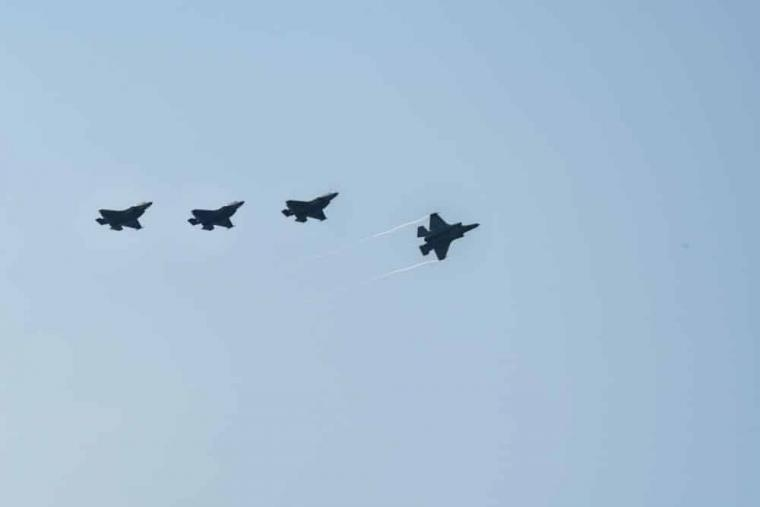
140 fighter jets, including Korean F-35s, F-15Ks and KF-16s, will defend the skies over the “southern” peninsula. Along with its Korean partners, the US is fielding 100 fighter jets, including F-35Bs, EA-18 electronic warfare aircraft, KC-135 tankers and U-2 high-altitude reconnaissance aircraft. American fighter jets take off from the air base in Okinawa, Japan.
The 24-hour operation will continue continuously until November 4. The reason: North Korea’s nuclear missile launch is only a matter of time. Pyongyang’s latest ballistic missile launches have been of short range, causing concern in South Korea and the United States.
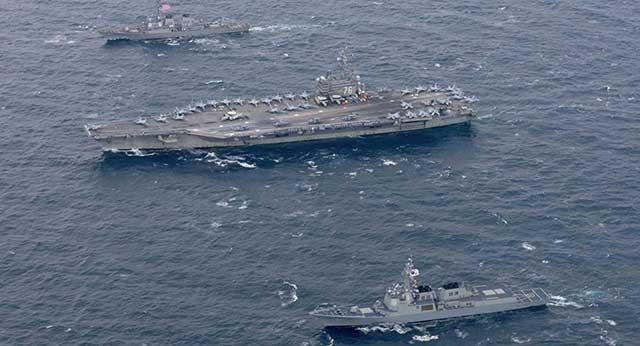
This year’s edition of the annual Vigilant Storm exercise is the largest ever, which the Pentagon says is “designed to exercise wartime missions, roles and tasks in an effort to enhance the combat readiness and survivability of U.S. forces and (South Korea)”.
Just a month ago, antiquated Russian fighter jets, totaling 150 in number, conducted exercises. Pyongyang took to the air vintage Su-25, MiG-29, MiG-23, MiG-21 and MiG-19 aircraft.
What is happening right now on the Korean peninsula is being framed as an exercise between South Korea and the United States. The exercise is codenamed “Vigilant Storm”. The US and South Korea have described Vigilant Storm as a deterrence exercise, while Pyongyang has emphasized that it is an invasion exercise.
It is not the first such exercise between the two partner countries. The last such exercise was held in 2015, but then in 2018 the US and South Korea called it off in an effort to promote inter-Korean harmony.
Military activity on the Korean Peninsula has slowly increased since former President Donald Trump called on North Korea to give up its nuclear weapons during a summit in Hanoi in 2019. The pace has picked up quickly since Joe Biden took over the White House and hardened Washington’s stance towards Pyongyang.
2022 was the busiest year in North Korea’s history for ballistic missile tests. Pyongyang has conducted a total of 28 launches this year. One of the missiles of the North Korean regime even flew over the whole of Japan and headed for the rocky Senkaku Islands. The Senkaku are under Japanese occupation, but are disputed by China and Taiwan, while North Korea apparently has no qualms about “parking” its missiles near them.

