




The Russian invasion of Ukraine began four years ago, on February 24, 2022. Russia attempted a war of rapid collapse: Advance towards Kiev, capture of airports and cutting off the government from the state. The Russian plan included the classic Soviet “decapitation strategy”: Destruction of air defense, landing of paratroopers and the fall of the government in a few days (case of Czechoslovakia). In Ukraine, the doctrine of Georgii Isserson/Trandafillov (Greek expatriate in the Soviet Union), “Deep Operation” was essentially applied in a modern form. To the strategic question of how to break up a front that has defense in depth and reserves, Trandafillov (1920-1930) answered: “You do not win by breaking the front line, you win by destroying the entire combat system at once.” Thus was born the theory of “Deep Operation”.
In contrast to the war of attrition of World War I, Trandafillov proposed a strategy that aimed at the total collapse of the enemy, through simultaneous strikes throughout the depth of his formation.
How his doctrine is implemented in practice:
- Phase 1 – Breakthrough-Exploitation – breaking the tactical defense (tactical depth) and deep penetration (operational depth).
- Phase 2 – Use of Armored/Mechanized Vehicles (due to the speed and agility of armored vehicles to achieve this deep penetration).
- Phase 3 – Successive Operations – Collapse.
The Deep Operation Doctrine is similar to the German Blietzkrieg (lightning war) doctrine, which essentially imitates the then-existing Trandafillov doctrine, with some differences. Many analysts believe that Trandafillov’s ideas influenced the German “lightning war” tactics. The doctrine was successfully implemented by Zhukov in operations such as Operation Uranus (Stalingrad) and Operation Bagration.
However, Ukraine did not collapse:
- The leadership was rescued (Zelensky was transferred to Poland by the British MI6).
- It maintained communications.
- It mobilized the population.
- It used modern Western anti-tank and anti-aircraft Manpand and other weapons systems.
The Russian operation failed mainly due to: Incorrect information, insufficient number of troops (small) and supply problems.
In April 2022, Russia withdrew from Kiev. According to the Russians, the Constantinople Agreement (April 2022) had preceded it, which had been signed by Russians and Ukrainians and was a gesture of goodwill by the Russians. This Agreement was canceled under the responsibility of the British, when then Prime Minister Boris Johnson ran to Kiev and pressured Zelensky not to accept the agreement and that the West would support him until final victory. The Agreement was rejected and the West (Europe, USA, NATO) declared its support for Ukraine, with the horrible slogan “We will fight to the last Ukrainian”.
War of Attrition (Summer 2022 – Winter 2022)
The main Russian target in the war is Donbass. Characteristics of Russian operations: Massive use of artillery, advancing a few hundred meters at a time, and very heavy casualties. Ukraine responded with Western precision missile systems and strikes on warehouses.
The main cities that came under Russian control in 2022 are:
- Kherson: The only regional capital to be captured (March 2022), although it was liberated by Ukrainian forces in November of the same year.
- Mariupol: After a months-long and devastating siege, the city fell completely in May 2022, with the surrender of the last defenders in the Azovstal factory-fortress.
- Melitopol: Captured early in the invasion (February 2022) and has since become an important administrative center for Russian forces in Zaporizhia.
- Sievierodonetsk & Lysychansk: These two cities in Luhansk were captured through “leveling” in the summer of 2022 (June and July respectively) after heavy fighting in Donbas.
- Berdiansk: An important port on the Sea of Azov that came under Russian control in the early days of the war.
- Energodar: The city that hosts the Zaporizhia nuclear power plant, the largest in Europe.
- Izyum & Kupyansk: Strategic hubs in the Kharkiv region that were captured in the spring, but were recaptured by Ukraine during the September 2022 counteroffensive.
Other smaller but strategic cities that were captured include Volnovakha, Popashna, Svitoldarsk, and Liman (which was also recaptured by Ukraine in October 2022).
Ukraine launched two successful counteroffensives in the Fall of 2022:
At Kharkiv, where Ukraine achieved the collapse of the Russian front and the rapid retreat of Russian forces.
At Kherson, the Russians preemptively withdrew west of the Dnieper, crossing the only bridge, without Ukrainian fire, estimating that the Russian force of about 40,000 could be blocked on the western side if the Ukrainians destroyed the Kherson bridge. It was the only period of mobile warfare after the invasion. Russia responded with partial mobilization and a transition to a protracted war.
Ukraine: The War of Fortifications (2023)
2023 was marked by huge defensive lines on both sides. The famous Russian “Surovikin Line”, designed and conceived by the “Armageddon General”, is the most typical example.
It initially consists of Defense in Depth. It is not a single line, but a multi-layered system (usually 3 lines) extending for hundreds of kilometers, with a depth of several kilometers. It also consists of the Combination of Obstacles. This doctrine is based on an “architectural” system that includes:
- Notorious Minefields: Dense minefields that make it difficult for armored vehicles to move.
- Dragon’s Teeth: Rows of conical concrete blocks to trap tanks.
- Anti-tank Trenches: Deep trenches to stop armored vehicles.
- Extended Ditches & Bunkers: Reinforced infantry fighting positions, connected by tunnels.
- Kill Zones: The obstacles are designed to funnel enemy forces to specific points (“kill zones”), where Russian artillery is targeted.
- Drone Cooperation: Russian forces use drones for continuous surveillance and fire direction.
The main areas captured by Russia in 2023 are:
- Bakhmut: The most significant capture of the year. After one of the deadliest and longest battles of the war, Russia announced full control of the city in May 2023.
- Soledar: A small town near Bakhmut, known for its salt mines, which was captured in January 2023.
- Marinka: Although fighting had been ongoing since the beginning of the invasion, Russia achieved full control of the city’s ruins by the end of December 2023.
- Khromove: A settlement on the western outskirts of Bakhmut that was captured in November 2023, after the completion of the Ukrainian counteroffensive in the area.
The major Ukrainian counteroffensive in the summer of 2023 failed to break through the Russians’ triple defensive line. From now on, war looks like World War I – but with drones.
The Russian Adaptation (2024)
Russia changed its war tactics as follows:
Small attack groups, continuous attrition attacks, massive use of FPV drones, and industrial production of ammunition. The goal: Not a quick victory, but the exhaustion of Ukraine, which began to face a shortage of personnel. Ukraine continues to be supplied with Western equipment and uses Western doctrines and tactics, although the tactical situation does not change. The surprise invasion of a Ukrainian force in the Kursk region, inside Russian territory, which was constantly being reinforced. The aim was to seize a nuclear plant, demonstrate a major success, and have Russian territory to exchange in peace processes. Russia gradually retook it, until the spring of 2025.
Ultimately it was a suicidal operation, depriving the rest of the front of critical reserves. During 2024, Russian forces made significant territorial advances, mainly in the Donbas region (eastern Ukraine), occupying over 4,000 square kilometers of land.
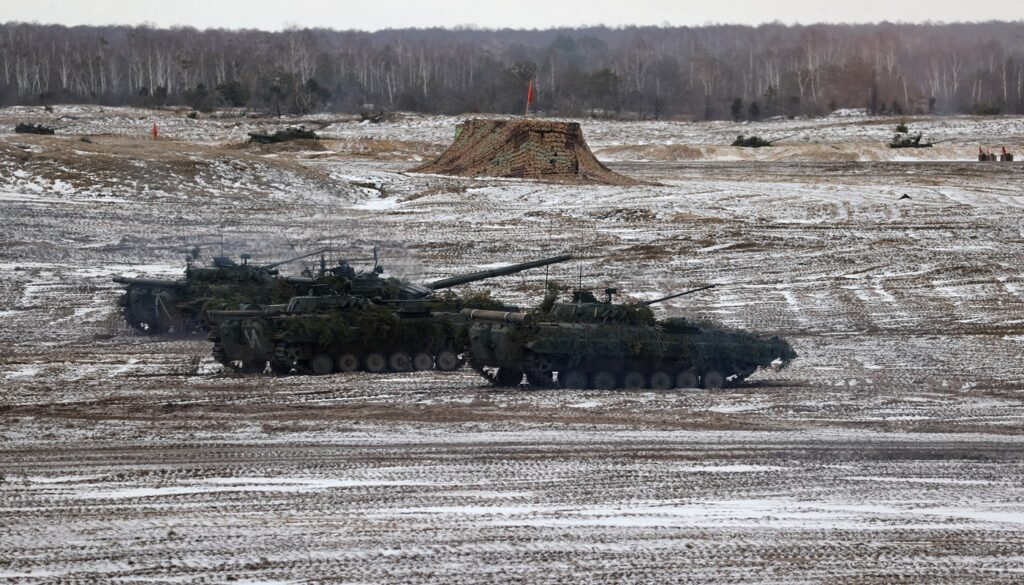
The main cities and settlements that Russia captured or brought under its control in 2024 are:
- Avdiivka: Captured in February 2024 after months of fierce fighting, one of the most important Russian successes of the year.
- Vuhledar: Captured in October 2024, a fortified point in southern Donetsk.
- Selydove: Captured towards the end of 2024.
- Kurakhove: Important city that came under Russian control, also in Donetsk.
- Krasnohorivka: Captured in September 2024.
Ukraine: Highlights from 2024
The majority of the gains were made in the second half of 2024. The Russian advances were aimed at further capturing the Donetsk region. Russia gained about seven times more territory in 2024 than in 2023. At the same time, Ukraine launched its own (suicidal) invasion of Russia’s Kursk region in August 2024, which Russian forces gradually retook.
The Ukrainian invasion of Russia (Kursk) was a secondary issue aimed at boosting Ukrainian morale: Ukraine would show the West that it could eventually defeat Russia and boost the West’s confidence in continuing to support Kiev.
However, it would not ultimately affect the outcome of the war, as Yale University professors Stephen Walt, Robert, and Renee Belfer had estimated at the time, which has been confirmed.
The total land mass of Russia is over 17 million square kilometers, which means that Ukraine had occupied, in 2024, 0.00588% of Russia, for the Yale professors.
However, the complete liberation of Kursk took place after many months in 2025, with the help of even North Korean soldiers (about 10,000) for the first time, who arrived in Russia after the strategic alliance between Moscow and Pyongyang…


