The recent strategic and not just tactical victory of the Ukrainians in Kharkiv has brought to the fore new analyzes of the Russian strategy in Ukraine. A Russian official exclaimed in the aftermath of the defeat that the Ukrainians outnumbered the Russians eight times in the Kharkov area. Chechen warlord Ramzan Kadyrov criticized the way the operations were conducted, while even the Russian Communist Party called for mobilization and a declaration of war.
Vladimir Putin, however, does not seem to be changing his strategy or tactics. But the main problem is the “Perennial Weaknesses of the Russian Army”. The Russian Army has always been large, bulky and of low quality.
And this is not because of its soldiers who are brave to the point of death sometimes but because of the weaknesses that characterize the Russian Army such as the lack of speed in its movements, the responsibility-phobia of its commanders and the lack of initiative at the lower levels.
The Russian Army has always functioned as a hammer meant to melt the enemy and not as a flexible, highly maneuverable force capable of crushing the enemy easily, quickly and economically in friendly blood. He never counted the blood of his men. In World War II it suffered overwhelming losses both in defeats and in victories! His doctrine was always based on quantity, on the ability to have plenty of “cannon fodder”.

The Russian Army has always functioned as a hammer meant to melt the enemy and not as a flexible, highly maneuverable force capable of crushing the enemy easily, quickly and economically in friendly blood. He never counted the blood of his men. In World War II it suffered overwhelming losses both in defeats and in victories! His doctrine was always based on quantity, on the ability to have plenty of “cannon fodder”.
Entire armies of tens of thousands of men were thrown “like small pieces on green felt”, as a leading historian of World War II says. At the Battle of Berlin, Zhukov, the admittedly top Soviet commander of the Second World War, slaughtered literally thousands of his men in the attack on Zeelov Heights. Stalin ordered formation attacks with men carrying only five rounds each… in waves, against the German machine guns. Result; Harvest.
The result of all this was the loss of millions of men. Earlier, in WW1, things were the same and worse. The Russian armies were sent to fight with 100 shells per gun. Against the methodical Germans they did not win a single victory despite their numerical superiority. On the contrary, the German maneuverers – and without Panzers – at that time, marching on foot, like the Russians, managed to crush Russian armies, which… were fighting without ammunition, without logistics, without serious command.
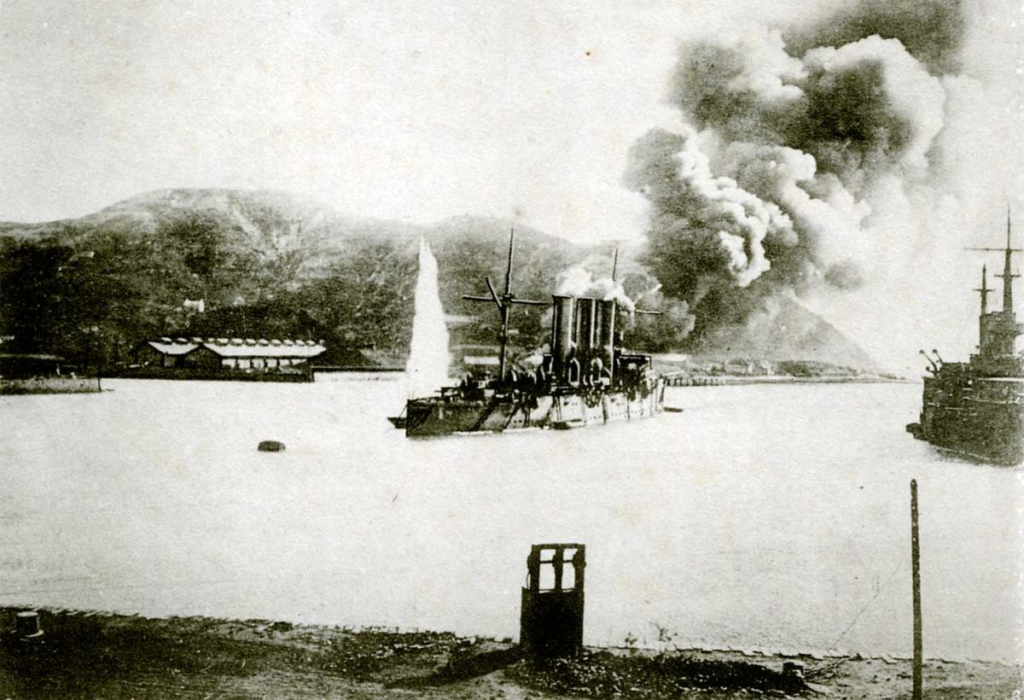
Even earlier, the Japanese, outnumbered, completely defeated and humiliated the Russians in Manchuria. Russia could theoretically mobilize millions of troops. He did not but allowed himself to be defeated because he could not for a number of reasons – transport, logistics, morale of the army and the people.

Isn’t he doing the same now in Ukraine? Why; Is this some wise Putin policy? Based on History at least, no. It is apparently about understanding weaknesses. The Russian Army of the Putin era appeared on paper, once again in Russian history powerful, convincing its own leadership that operations in Ukraine would be a healthy military walk.
But it wasn’t. If morale, in the first place, has collapsed, who can assure the Russian president that the extra men he sends to Ukraine will not be infected with the same virus? Moreover, an army of hundreds of thousands, even millions of men is no simple matter to mobilize, supply, equip, feed and move. Huge financial resources and capacity are required – operational system to bring effect.
And since the Russian Logistics Services failed to serve a force of no more than 200,000 men invading Ukraine with food and ammunition, the medical service unable to treat the wounded, which was equipped with T-62 tanks and 1898 Mosin Nagant rifles (given to pro-Russian separatist units), could he throw and sustain hundreds of thousands of men in battle?
What would he gain? Hundreds of thousands of extra targets for the Ukrainians? And the level of training that the additional forces will have since the invasion involved “elite” who failed miserably will not logically be lower?

Volume alone does not win battles, and therefore neither does it win wars. Anyone who doubts should ask the ghost of Xerxes. Volume has conditional value, and the Russians have – over time – proven incapable of using it against a spirited enemy under “normal war conditions”.
After all, for a regime like today’s Russian one, how easy a decision would it be to arm hundreds of thousands of male potential adversaries of tomorrow in some coup attempt? Do we know exactly what the real political situation and balances are inside Russia?
The state of the Russian military was recently shown when Moscow formed a new army corps tasked with breaking up Ukrainian positions. In theory it would have 60,000 men. In practice, he had about 15,000 volunteers, with a salary three times the normal. Nevertheless, it was disbanded in the first battles. Today it was even announced that Russia is recruiting volunteers for Ukraine with a monthly salary of 3,000 euros. Since Russia has so many soldiers why doesn’t it send them to fight and resort to mercenaries?
There is also the inherent – systemically cultivated responsibility phobia. Russian generals are not initiative commanders. They fear the Kremlin more than the Ukrainians. This is a Soviet legacy – a pathogen that has not been combated. By contrast, in the highly centralized Russian political system, it has been maintained, if not worsened. The “enlightened” leader and his entourage control everything, just like under Stalin. The “bear” isn’t that strong after all, and its leader is starting to see it. But it is not easy to escape now.