


Even before their talks begin, Vladimir Putin’s meeting with Donald Trump at a U.S. military base in Alaska on Friday advances Russia’s goal of reshaping the global security order as the two men revive the “great power” system in which only a few major countries have the final say.
Putin set the stage last week, after meeting with Trump’s envoy, Steve Witkoff, when he ruled out meeting Ukrainian President Volodymyr Zelensky until certain conditions were met that he said remained “far off.”
Trump agreed and rejected Zelensky’s participation, even as the future of his country – and its 40 million citizens – hangs in the balance.
Zelensky had participated in numerous meetings over the past three and a half years since the Russian invasion began, Trump said on Monday, and “nothing happened. I mean, do you want someone who’s been doing this for three and a half years?”
Alaska summit a ‘golden opportunity’ for Putin
A one-on-one summit on American soil was not Putin’s only major victory. It also averted, for now, Trump’s threat of tough economic sanctions on Russian oil and rebuffed the US president’s calls for a ceasefire. On Monday, Trump returned to blaming Zelensky for the war, echoing Putin’s words, although the Republican appeared more conciliatory in a conference call with Zelensky and European leaders on Wednesday.
The prospect of the Alaskan meeting reinforces Putin’s long-term goal of reshaping Russia as one of the few major global powers with legitimate spheres of influence, and fulfills his short-term tactical goal of a one-on-one meeting to win over and manipulate Trump.
A former senior Kremlin official, speaking to the US newspaper on condition of anonymity to discuss sensitive diplomatic matters, described the Alaskan summit as a “golden opportunity” for Putin, adding: “And of course, a visit to the US is a huge victory.”
Another person with close ties to the Kremlin said the summit, which will begin at 11:30 a.m. (10:30 p.m. ET) on Friday in Anchorage, was “a real opportunity to end this” and that the meeting was designed to “calm down the Russian elites, for whom this war is a shame, and they want everything to go back to normal.”
How did Putin get Trump where he wanted?
Former senior Russian diplomat Boris Bondarev, who resigned over the 2022 invasion of Ukraine, said Putin had offered so little that it was hard to understand why Trump agreed to meet. He added that it appeared to be a Kremlin ploy to distract Trump from sanctions, just as Putin distracted Trump from his call for a ceasefire in May by proposing peace talks in Istanbul.
Although Trump has recently criticized Putin’s attacks on Ukrainian cities, he has not imposed sanctions or put any other pressure on Russia beyond rhetoric. The US president told reporters on Wednesday that there would be “very serious” consequences if Putin continued the war after the Alaska meeting, although he has made similar threats in the past without carrying them out.
“It’s a bad idea for Trump to host this meeting,” Bondarev said, questioning its purpose and benefit. “Initially he said, ‘I want to meet with Vladimir and we’ll come to some kind of agreement.’” But then, he added, Trump and Secretary of State Marco Rubio said the purpose of the meeting was to find out what Putin wants, while “it’s absolutely obvious what the other side wants.”
Is the outcome of the summit pre-ordained?
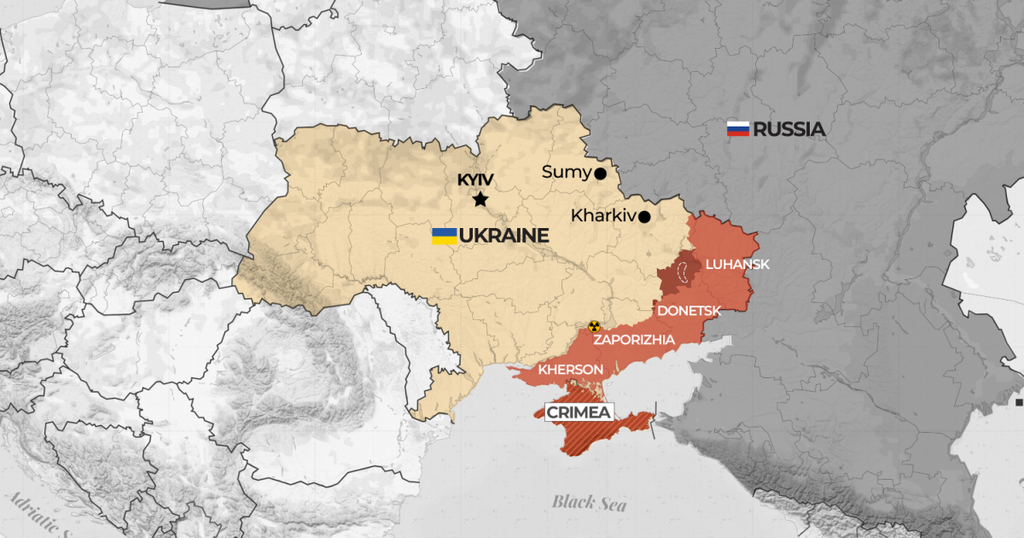
Putin has long made it clear that he demands that Ukraine hand over four resource-rich regions and recognize Russia’s 2014 annexation of Crimea. He also wants Ukraine barred from NATO membership and its military reduced to the point where it is virtually useless.
Rubio said Tuesday that the meeting with Putin “wasn’t a concession” but “a meeting to explore the terrain. A meeting is what you do to understand and make your decision,” he argued, echoing Trump’s view that the chances of success will be clear early on.
It should be noted, moreover, that meetings between the presidents of the United States and Russia – leaders of the countries with the largest nuclear arsenals in the world – are usually highly organized, the result of intensive negotiations, in which specific “outcomes” are agreed upon in advance and nothing is left to chance.
How is Trump reinforcing Putin’s narrative?
Putin’s attacks on Zelensky’s legitimacy as recently as August 1 and his descriptions of Ukraine as a corrupt and artificial state place the Ukrainian at a lower level, worthy of meeting only when he accepts Russia’s terms.
“Putin would like to present it to Trump as follows: that with you, Donald, we know how things are done, and all these people from Europe and this Zelensky, this ugly young man, should not get involved,” Bondarev said, adding that “they don’t know what to do. They don’t know what they want. We know what we want, so let’s agree. Maybe Trump will be flattered by that.”
Trump, perhaps unwittingly, is reinforcing this narrative. At a press conference on Monday, he appeared to portray two tough men negotiating a deal, dismissing Zelensky’s views and claiming that European leaders “rely too much on me. If it weren’t for me, this issue would never be resolved, until the last man dies.”
Trump’s Displeasure with Zelensky
At the same time, he expressed strong displeasure with Zelensky, whom he seemed to blame for the fighting: “I get along well with Zelensky, but I disagree with what he’s done — I disagree very, very strongly. This is a war that should never have happened.”
He also complained about the Ukrainian president, citing the obstacles that Ukraine’s constitution places on changing borders. “He has the authorization to go to war, to kill everybody, but he needs authorization to do land swaps,” Trump pointed out bitterly. However, he failed to mention that Russia quickly incorporated the regions of Ukraine it invaded and annexed them to its constitution through questionable referendums, in an effort to prevent their return.
On the other hand, he boasts that Putin told him how “tough” he is, with him himself describing Russia as “tough,” and he described Putin’s invasion of Ukraine as a reflection of Russian character. “They’re a warring country,” Trump said. “That’s what they do. They fight a lot.”
Zelensky, he warned, had to accept “some land swap” that would be “good for Ukraine,” but also “bad for both sides.”
Moscow’s Real Goals
Putin has other opportunities in Alaska, with Russian Deputy Foreign Minister Sergei Ryabkov saying Tuesday that a key goal for Moscow is to “normalize” relations with the United States, referring to the Kremlin’s desire to end sanctions, restore direct flights and facilitate business deals between the United States and Russia.
Russia also wants to shift blame to Ukraine for Trump’s failure so far to end the war, analysts say, in the hope that the Trump administration will end intelligence support for Ukraine, just as it has slowed down arms deliveries.
With Russia’s recent advances on the battlefield, Putin is confident that victory is near, according to Russian analysts, and he is unwilling to compromise, despite Moscow’s huge losses. The Center for Strategic and International Studies estimates that the number of Russians killed or wounded will reach 1 million by the summer.
But the former senior Kremlin official said Putin no longer cares about the human cost of the war, calling it “thick-skinned.” “He’s like a turtle,” the former official said, “it doesn’t touch him anymore.”
“They’ll either give Ukraine an ultimatum or leave empty-handed.”
At the same time, war fatigue seems to have taken hold on all sides. The official said most people in the Kremlin oppose the war but are afraid to tell the Russian president.
“Everyone is afraid of Putin. People don’t want to talk about compromises because everyone has to show they are patriots,” he explained.
As for the Alaska summit, the former official said he has low expectations: “They will either have to give Ukraine an ultimatum or they will leave with almost nothing accomplished.”