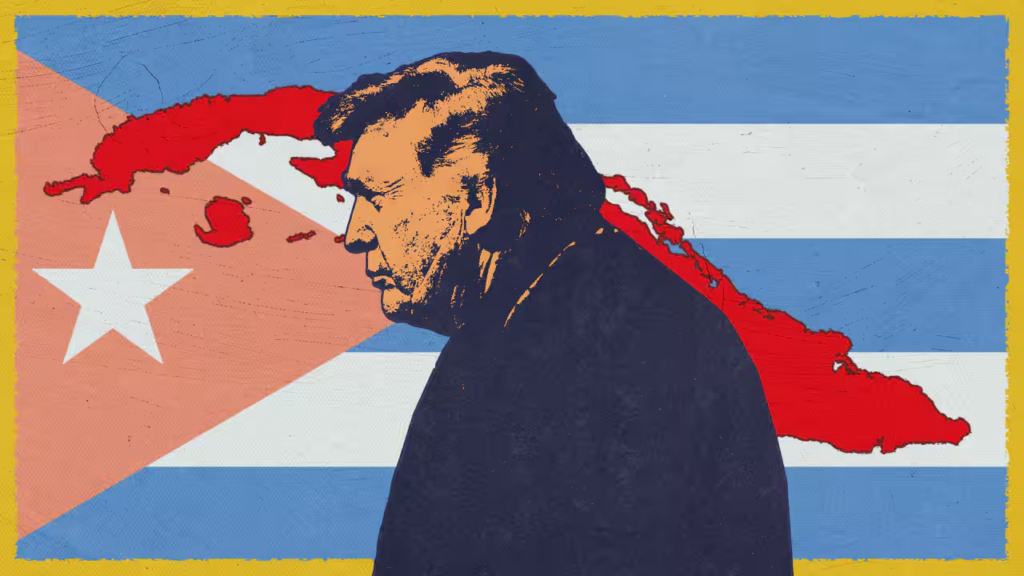
The second communication between President Putin of Russia and President Trump of the United States, which lasted 2.5 hours, showed that the winner, that is, Russia, determines the terms of the surrender of Ukraine, which was on the main menu of the negotiations… we still do not have a ceasefire on the ground, but a first step has been taken… attacks on energy infrastructure are freezing
When you do not participate in the dialogue, you are the main issue on the menu, and this is literally what happened with Ukraine.
What was agreed upon: attacks on energy are frozen… later a ceasefire on the ground…
The presidents of the United States and Russia had their second telephone conversation. They spoke for two and a half hours and issued official statements as a result.
What Russia said after the conversation:
1) Russia agrees to a 30-day ceasefire only in case of “cessation of forced mobilization in Ukraine and rearmament of the Ukrainian Armed Forces” (i.e. arms supplies)
“Serious risks associated with the inability to negotiate of the Kiev regime, which has repeatedly sabotaged and violated the agreements reached, have also been highlighted,” the Kremlin added.
2) A key condition for the Russian Federation to move on the path of a diplomatic settlement “must be the complete cessation of foreign military assistance and the provision of intelligence to Kiev by all Western states.”
3) Trump has put forward a proposal for a 30-day mutual waiver of attacks on energy infrastructure facilities.
Putin “reacted positively to this initiative and immediately gave the Russian military the corresponding order.”
4) Putin responded “constructively” to Trump’s idea of maritime security in the Black Sea.
“It was agreed to start negotiations to further work out specific details.”
5) On March 19, Ukraine and Russia will exchange 175 prisoners for 175 soldiers.
“In addition, as a gesture of goodwill, 23 seriously injured Ukrainian servicemen will be transferred,” the Russian side said.
6) Trump and Putin agreed to “continue efforts to achieve a bilateral settlement in Ukraine.”
For this purpose, groups of Russian and American experts are being created.
7) The United States and Russia discussed the situation in the Middle East and bilateral relations.
“Mutual interest was expressed in the normalization of bilateral relations in light of the special responsibility of Russia and the United States for ensuring security and stability in the world. In this context, a wide range of areas in which our countries could develop cooperation were considered.”
What the US side announced
A) The move towards peace will begin with a ceasefire agreement in the energy and infrastructure sectors, as well as negotiations for a ceasefire in the Black Sea.
B) Negotiations will also be held for a full ceasefire and the establishment of a permanent peace.
“These negotiations will begin immediately in the Middle East.”
C) Trump confirmed the discussion of the Middle East “as an area of potential cooperation to prevent future conflicts.”
“Both leaders expressed a common view that Iran must never be given the opportunity to destroy Israel.”
D) The issue of strategic non-proliferation was raised.
“A future with improved bilateral relations between the United States and Russia has enormous potential. “This includes significant economic agreements and geopolitical stability after peace is achieved,” Trump stressed.
General conclusions from the Putin-Trump conversation
- On the main issue – a 30-day ceasefire on the ground – there is no news yet.
- The Kremlin reiterated Putin’s previous conditions (termination of mobilization and foreign military assistance).
- The White House said that ceasefire talks would “start immediately” in a Middle Eastern country.
- Either they have not yet reached an agreement on a ceasefire, or they have already reached an agreement, but it was decided not to announce it yet.
- The most important (and, in fact, the only public) practical result of the conversation was Putin’s readiness to agree to a mutual cessation of bombing of energy infrastructure.
- Russia stated that the Russian president supported Trump’s idea.
- At the same time, let us recall that this is what Ukraine initially wanted to offer the Americans at the meeting in Riyadh, but, as a result, after negotiations with Trump’s representatives, it agreed to more – a complete ceasefire for 30 days.
Why did Putin and Trump decide to return to the idea of a moratorium on attacks on infrastructure?
- Probably to show that there is no deadlock in the negotiations and there is some kind of result.
- Perhaps Putin will get something big from Trump in return (but this is not yet clear).
- A 30-day break in strikes on Ukrainian energy infrastructure is not critical for the Russian Federation – massive Russian missile attacks on Ukrainian energy infrastructure occur about once a month…
- But Ukraine also regularly attacks oil refineries and other facilities, that is, Russia does not lose much in terms of balance here.
- It is true that the idea of a moratorium, in order to work in practice, still needs to be supported by Ukraine.
- As noted, Zelensky had previously put forward exactly this idea.
- Therefore, it is unlikely that he will reject it now, although this option cannot be completely ruled out.
To summarize – judging by the published texts, there is still no progress in the peace negotiations (or there is, but it is not announced), but there is no clear deadlock either.
- In general, the texts published by both the Kremlin and the White House are written in a very benevolent tone towards each other, showing readiness for the restoration of relations and even for a hockey match between Americans and Russians (which, by the way, will be a de facto significant development in the sports blockade of the Russian Federation, established after 2022).
- Whether this stance will lead to an acceleration of peace talks in Ukraine remains to be seen in the coming weeks.
- There was probably a lot of information from the conversation that was left out of the official reports.
- It is unlikely that Putin and Trump spent 2.5 hours talking only about hockey, attacks on infrastructure, and Iran and Israel.