


This analysis examines Russia’s strategic position under President Vladimir Putin through the lens of aggressive realism, focusing on the paradox where peaceful intentions lead to diminished national security. Despite Russia’s efforts to strengthen trade relations with Europe, notably through energy exports, the actions of the Biden administration and European elites have heightened tensions by supporting Ukraine as a proxy enemy, bringing the conflict to Russia’s borders. The analysis examines the implications of these developments and asks whether peace is strategically advantageous or whether a more aggressive approach by any state contributes to its national security.
Introduction
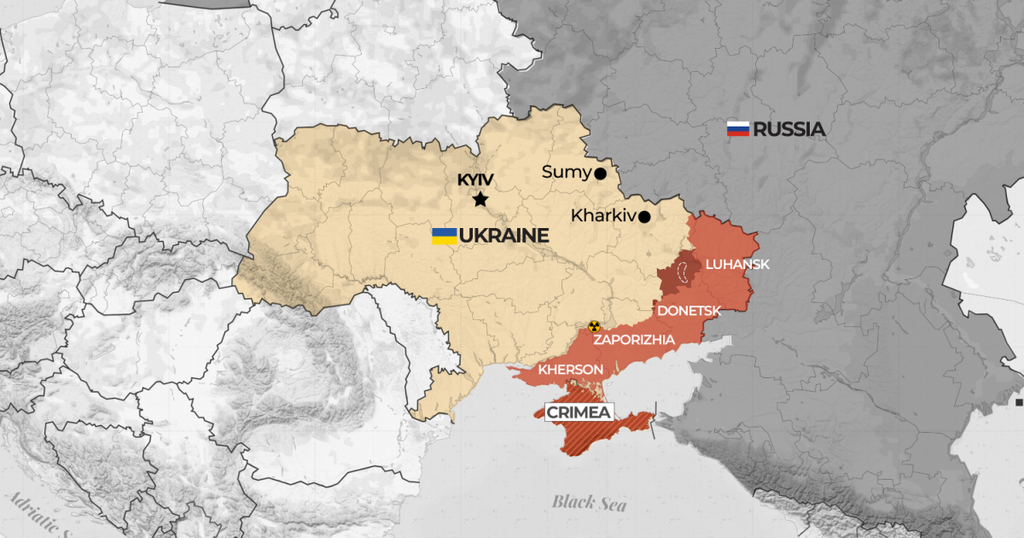
In the anarchic international system, as described by aggressive realism, great powers seek maximum relative power to ensure their survival (Mearsheimer, 2001). Russia’s post-Cold War strategy seemed to focus on economic integration with Europe, aiming for stability through the supply of cheap energy. However, since 2004, with a milestone in 2014 and a turning point in 2022, the strengthening of hostile influence by some Western strategists in Ukraine and the military support of Kiev have reversed this logic, creating an environment of strategic threat for Russia.
Russia as a Provider of Stability through Energy
Russia has shown an intention to act as a reliable trading partner, focusing on the supply of natural gas to Europe. Putin has repeatedly emphasized Russia’s commitment to a continuous energy flow, hoping that this dependence would act as a deterrent to conflict (Politico, 2022).
The Western Manipulation of Ukraine as a Proxy
The West, especially under the Biden administration, has used Ukraine as a lever to pressure Russia. The provision of weapons, training, and intelligence has reinforced the perception that Ukraine is acting as a proxy for the US and NATO, but under the guise of “sovereign decision” or “sovereign state.” This strategy provides Western powers with plausible deniability, while allowing Russian interests to be undermined without direct involvement by Western states, but by mercenaries and special agents.
Reasonable Denial and Strategic Exploitation
The use of “reasonable denial” allows the West to attack strategically through Ukraine while maintaining the appearance of non-direct involvement. This limits Russia’s options and locks it into a conflict with limited scope for escalation or retaliation against the real instigators.
The Paradox of Peaceful Behavior
Russia’s experience confirms a harsh truth: in the world of great powers, peaceful behavior does not necessarily ensure national security. Aggressive realism argues that the accumulation of power and strategic alertness are more reliable means of ensuring state survival (Mearsheimer, 2001).
Conclusions and Strategic Advice
Great power leaderships cannot be complacent with promises of cooperation or commercial interdependence. Russia tried to secure peace with Europe through energy cooperation, but instead of stability, it received war on its borders. The “peace” strategy did not prevent geopolitical competition. Therefore, states like Russia must balance peace with strategic preparation and deterrence.
Sources
- Carment, D., & Belo, D. (2025). U.S.-Russia Proxy War in Ukraine: A Case of Deterrence Failure. New Continent. https://newkontinent.org/u-s-russia-proxy-war-in-ukraine-a-case-of-deterrence-failure/
- Mearsheimer, J. J. (2001). The Tragedy of Great Power Politics. W.W. Norton & Company.
- Politico. (2022). Putin: Russia ‘intends to continue’ supplying gas. https://www.politico.eu/article/putin-russia-intends-to-continue-supplying-gas/
- https://jamestown.org/program/energy-and-the-russian-national-security-strategy/