The German Navy has published its planning, entitled “Der Kurs Marine 2025”, regarding the future of the Fleet and the new shipbuilding projects it plans until 2035. Initially, the document states that the German Navy needs more ships (manned and unmanned), the ability to attack targets at long distances, more personnel and more actions (training and operational). The “Kurs Marine 2025” program foresees the construction of six F-127 frigates and three large-displacement, unmanned ships (LRMV: Large Remote Missile Vessels) by 2035. The F-127 frigates will replace the “Sachsen”-class F-124 frigates and will likely integrate the AEGIS battle management system and Mk.41 VLS vertical launchers. The LRMVs will provide operational assistance to the F-127s in air/missile defense and long-range attack missions (sea and land).
Before the F-127 frigates, the German Navy will acquire six F-126 “Niedersachsen” class frigates, which will replace the four F-123 “Brandenburg” class frigates, while the four F-125 “Baden-Württemberg” class frigates will remain in service. The F-126s will have surface warfare as their primary mission, while the F-125s will have anti-submarine warfare as their primary mission. Thus, in 2035, the German Navy’s frigate fleet will increase from 11 to 16 ships: Six F-127s, six F-126s and four F-125s instead of the four F-123s, three F-124s and four F-125s it has today. Similarly, the submarine fleet will increase to 9-12 T-212CDs from the current six U-212As, while it will also be supplemented by the construction of 12 large-displacement unmanned underwater vehicles (LUUVs).
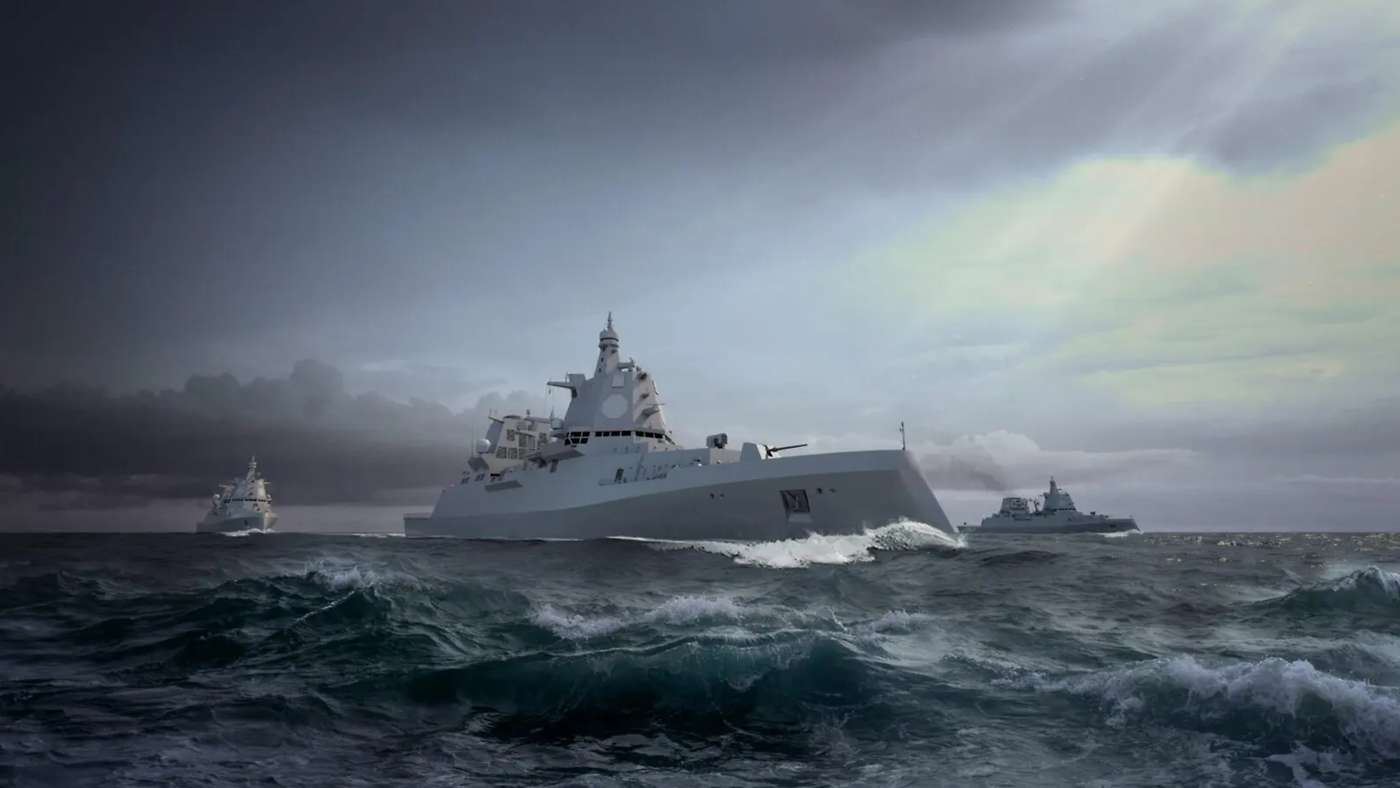
The F-127 frigate (TKMS MEKO A-400 AMD) has a displacement of 10,000 tons, a length of about 160 meters, a width of about 21 meters and a draft of about 5.5 meters. The ship will incorporate two turbines and two diesel engines and will achieve a maximum speed of 32 knots (59 kilometers per hour). Its typical range will be 4,000 nautical miles (7,408 kilometers) or 30 days of continuous presence at sea. The battle management system will be AEGIS with the primary radar AN/SPY-6. The ship will also have a secondary frequency band radar “X”. In terms of armament, the MEKO A-400 AMD will integrate 64 vertical cells Mk.41 VLS, of which 32 in the bow and 32 behind the bridge. It will also integrate NSM anti-ship missiles, two RAM anti-missile systems, a 127 mm main gun, remote-controlled weapon stations, two laser weapons. TKMS clarifies that this specific configuration is not the final one and that the German Navy will decide on the final configuration.
The F-126 frigates are 166 meters long and have a displacement of 10,000 tons. The cruising speed, in sea state 4, is of the order of 26 knots (48 kilometers per hour), while at a cruising speed of 18 knots (33 kilometers) the ship’s range is approximately 4,000 nautical miles (7,400 kilometers). Their electronic equipment includes APAR Block.2 multi-role AESA radar, TRS-4D air and sea search radar, fixed day camera system and infrared vision, with 360º arc coverage, Thales Gatekeeper, integrated communications system, Mirador Mk.2 electro-optical observation and detection system, towed sonar (with the right to choose keel sonar) and integrated Kora-40 electronic warfare system.
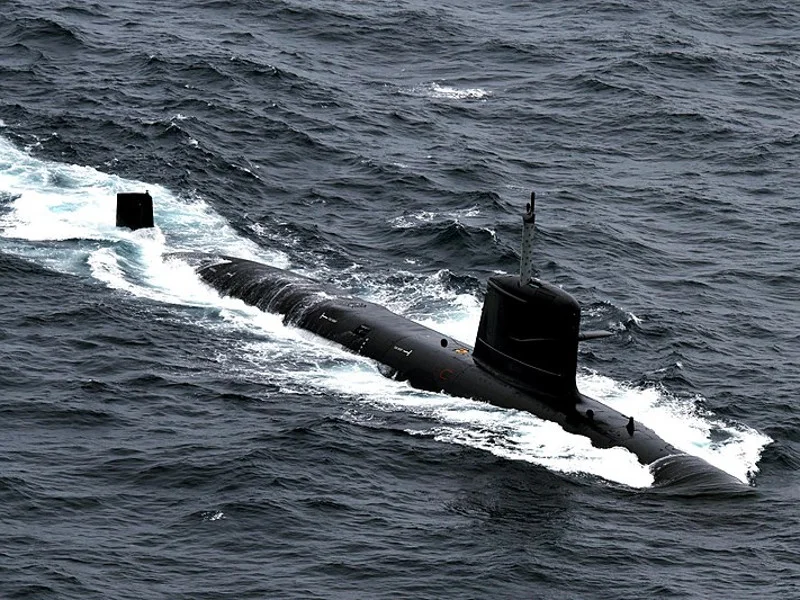
The crew requirements are 114 people, while it can support up to 198 people. It can also receive and support an NH-90 helicopter plus two vertical take-off and landing UAVs. The ships’ armament consists of a 127/64 LW Vulcano 127 mm main gun, eight NSM anti-ship missiles, 16 Mk.41 VLS vertical launchers for 64 ESSM Block.2 air defense missiles, two RAM Block.2 CIWS missile systems with 21 missiles each, two MLG-27 27 mm guns, two MASS self-protection systems, multiple positions for 12.7 mm machine guns or 40 mm automatic grenade launchers, water cannons and a long-range acoustic system. The U-212CD submarines are larger submarines than the U-212A, with a larger outer hull to reduce sonar signature. They also have an increased weapons carrying capacity. The design features straight surfaces to reduce sonar signature, a principle also used in the design of stealth aircraft.