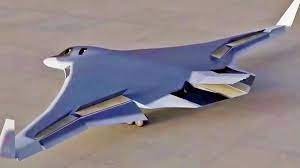
According to the information of The Liberal Globe, the tests will include an ejection seat, for the promising PAK-DA long-range airframe, climatic and resource tests and will examine “mechanical effects”. This involves checking whether structural integrity is maintained and whether the system can withstand the extreme pressures on the seat while being ejected from rocket boosters during flight.
Deliveries of the seats to Tupolev Public Joint Stock Company (PJSC) should begin by 2023. The PAK-DA is Russia’s first “long-range strategic bomber”, in development for decades, to replace the Tupolev Design Bureau’s three RuAF mainstays, the Tu-160 “Blackjack”, the Tu-22M and the 1950s-era Tu-95. It is unclear if this means the Tu-160 will serve alongside the PAK-DA for a while before it is phased out.
However, the Russian Air Force does not usually retire entire fleets of aircraft, and some numbers are retained and upgraded until their replacements complete serial production.
After at least two years of rigorous flight testing, the final production model is frozen to reveal the necessary modifications and fixes. Both flight and ground crews also need time to become fully familiar with the aircraft.
Russian Industry and Trade Minister Denis Manturov said in February this year that the upgraded Tu-160M will also be built with the PAK-DA during his visit to the Tu-160 factory in Kazan. The heavily upgraded ‘M’ variant of the Tu-160 first flew in 2021, six years after its modernization program began in 2015.
Russia will take delivery of the first newly built Tu-160M strategic missile bomber by the second quarter of 2022, for subsequent state tests and operational service. The PAK-DA and the Tu-160 would operate together for a significant period of time before the latter was decommissioned.
With a crew of four on the Tu-160, Russian state manufacturers will build twelve ejection seats for the first PAK-DA, whose development and mass production will cost 500 million rubles, according to a report in Izvestia. These four will be for the three prototype models that will be produced initially.
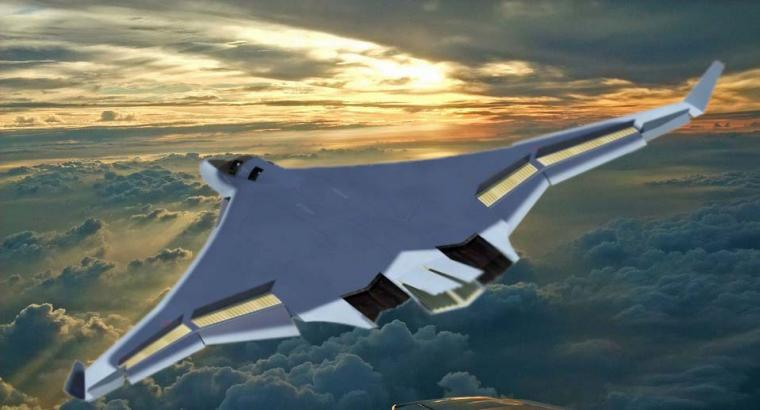
The Prospective Aviation Complex for Long Range Aviation (PAK-DA), began construction in May 2020 and is expected to begin flight testing by March 2025 and serial production by 2028-2029.
A new larger parachute for pilots is also being developed. This happens “because when pilot parachutes of large mass, landing not at ocean level or ground zero, but at 1000-1500 meters, the fall speed is greater and the canopy area takes more time.” The seats will also have a new ejection control unit since the cabin will have to eject not two but four pilots and their seats in sequence. This requires finer timing.
The PAK-DA will be able to stay in the air for 30 hours, fly at subsonic speeds and have an engine with a thrust of about 23 tons. In August, a Popular Mechanics publication suggested that the Russian PAK-DA would have a longer range than the US B-2 Spirit, as Russia has fewer aerial refueling aircraft.
Based on statements by Russian defense industry and ministry officials that the next-generation plane will feature new technologies and “materials” to “reduce radar signature,” it appears that the PAK-DA will be a full-face stealth bomber, Russia’s first. The PAK-DA’s direct competitors will be the US B-21 ‘Raider’ and the Chinese H-20, both aircraft of which early models are also being built. However, the designation PAK-DA will likely change after the final design for serial production.
The aircraft’s defining feature is likely to be a sixth-generation combined cycle engine, research and development (R&D) of which began in July 2021. A “combined power generation system” and a “more electric engine” are intended for the future fighter jets. Until then, the PAK-DA and Su-57 will fly with fifth-generation engines.