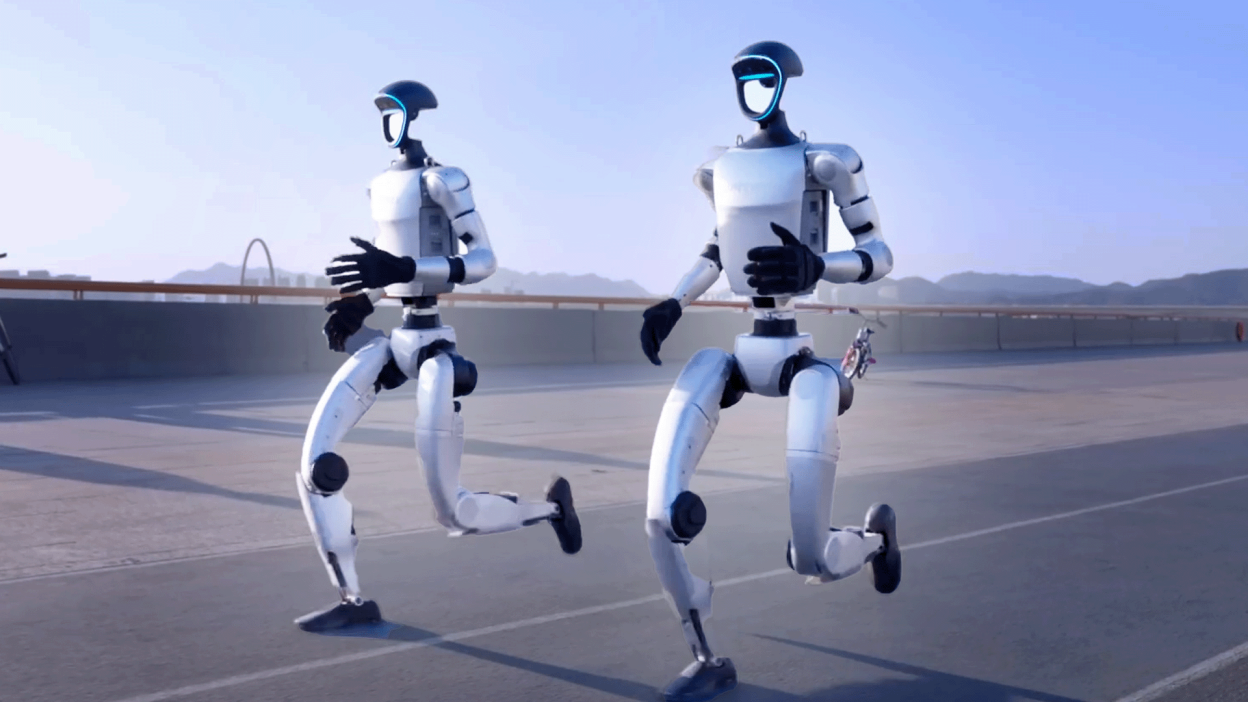
The race between the United States and China to produce humanoid robots is intensifying, as Beijing’s efforts to gain an edge in this emerging arena, critical to the digital transformation of manufacturing, will dominate the world’s second-largest economy’s technology strategy by 2025.
At the Consumer Electronics Show (CES) in Las Vegas on January 7 — the technology industry’s premier trade show — Nvidia CEO Jensen Huang took the stage for his keynote address. During a speech in which he declared that the robotics sector is approaching a watershed moment, he was flanked by 14 gleaming humanoid models from industry heavyweights.
Weeks later, at the Spring Festival Gala—China’s annual televised Lunar New Year celebration watched by more than a billion people—robotics company Unitree gave a different kind of public demo.
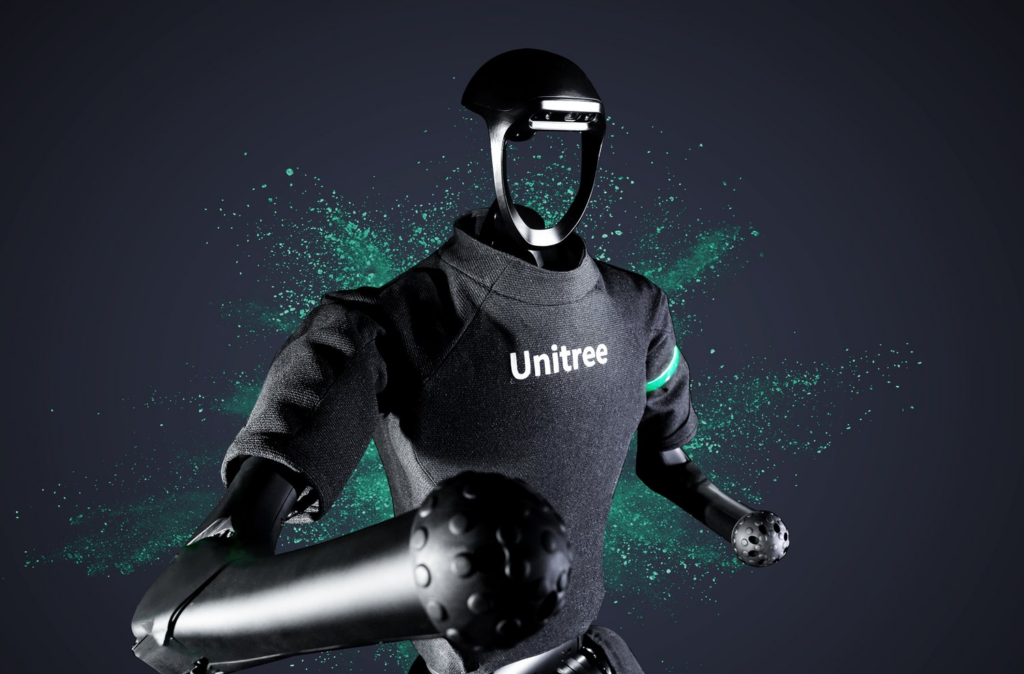
A group of H1 units, which the company bills as the “first universal humanoid robot,” performed a synchronized folk dance with the help of advanced cloud computing and motion control systems powered by artificial intelligence (AI) software.
High-profile events have set the tone for intense competition in 2025, as many robot manufacturers pool their resources with the goal of mass production and global commercial exploitation.
Players from around the world are eager for their share of the spoils. While no country seems to be completely dominant in this new 21st century “space race,” China and the United States are undoubtedly in the forefront.
Among the 14 robots on stage at CES – which included a Unitree H1 – six of their companies were based in China and four were from the United States. While the two countries are in a race for robotics supremacy, each is playing to its own strengths.
China is known for its ability to scale production and speed, with an advantage in supply chain maturity, but analysts have noted that the US is well on its way to producing the next Tesla or OpenAI robot – game-changing giants that will redefine the industry.
The Differences
In the US, the focus is on staying at the forefront of technology, exploring unknown technical challenges. In China, the focus is more on how to integrate existing technologies for practical application.
Chinese companies are investing more broadly in building fully integrated humanoid robots for real-world use, while US companies are focusing on a more generalized ability to perform cognitive functions that could include functions that factories once considered redundant. That calculation may have changed after recent events.
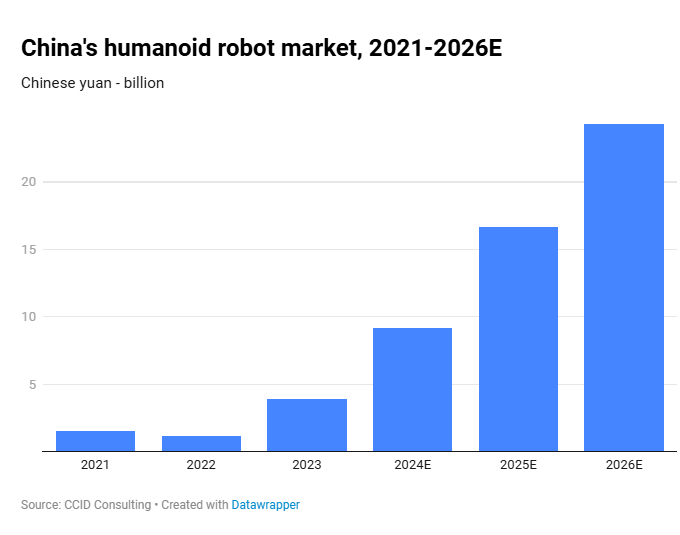
DeepSeek Surprise
Just ahead of Unitree’s New Year’s Eve event, Chinese AI startup DeepSeek stunned the tech world after debuting its large language model R1, which matches OpenAI’s products for performance at a fraction of the cost of use and development.
The company’s open-source product challenged the prevailing assumption that it takes significant capital to train cutting-edge AI systems, leading to a massive sell-off by DeepSeek’s competitors and a reassessment of previous investment strategies.
Each humanoid unit combines a highly advanced “brain” – powered by a suite of AI, machine learning and digital sensor applications – to perceive its environment and take action, with a sophisticated “body” made of lightweight materials that use flexible joints for realistic movement.
A seamless coordination system ensures that the brain and body work in harmony, allowing robots to mimic human behavior such as speech, gestures, and adaptive movements in complex environments.
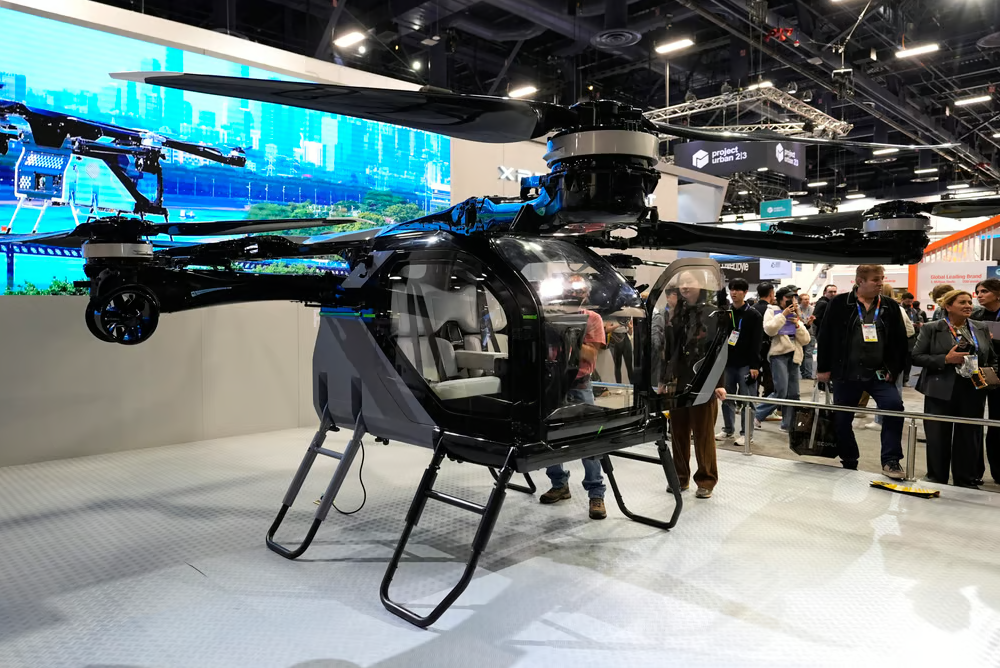
During his CES keynote, Huang unveiled Cosmos – the prototype production models that the Nvidia executive said will be the blueprint for humanoid robots of the future.
The hardware for humanoid robots is mostly mature – or close to it, with components like cameras, motors, force sensors, transmission gears and batteries all commercially available.
Several companies have said they will begin mass production of their models in 2025, which is widely seen as a critical milestone for operational stability and a means to reduce costs by creating economies of scale.
China – long known as the world’s factory – has expanded its dominance in robotics manufacturing.
Tens of thousands of companies play a role in the supply chain, whether they are producing components, assembling units or designing prototypes.
According to the International Federation of Robotics, more than half of the world’s robot installations took place in China in 2023, giving its companies an advantage in controlling costs as they move to enter the domestic market with humanoid models.
Companies operate on thin margins and the main strategy is to quickly capture market share. To some extent, we are already seeing a price war in China.
In December, Shanghai-based startup Agibot announced that it would soon begin mass production of general-purpose robots. The company said it had produced a total of 962 bipedal and wheeled units, with more than 200 kept for internal use and nearly 700 units shipped. The robots are mainly intended for interactive services and manufacturing.
Unitree, based in the eastern city of Hangzhou, also revealed its plans for scale production, with its entry-level G1 model priced at a whopping 99,000 yuan — a fraction of the typical 500,000 yuan charged by its competitors.
Company founder Wang Xingxing said costs would come down even further as production scaled up, with annual orders expected to reach hundreds of thousands of units.
Given the current state of industry development, Unitree said, clearer commercial uses for humanoid robots should become apparent within three to five years.
Tesla’s plans
Tesla CEO Elon Musk, meanwhile, said his goal for the company’s general-purpose Optimus robot by 2025 is to build thousands of units before ramping up production next year.
In the company’s most recent earnings call, Musk predicted that Optimus production would eventually exceed 1 million units annually.
He expressed confidence that the robot’s production cost would fall below $20,000, but added that its final price would depend on market demand. He had previously predicted the price would fall somewhere between $20,000 and $30,000.
Agility Robotics, another U.S. industry leader, has received $150 million in investment from Amazon and has already built a factory for its Digit robot. Its facility, RoboFab, has an order from the state of Oregon to produce tens of thousands of units each year.
The focus is no longer on overcoming individual technical challenges, said He Liang of Northwestern Polytechnical, but on systems engineering and building an optimal system.
Being ahead on some important metrics—not necessarily all—can provide a competitive advantage.
The pace of growth also matters, however, and differences are evident between American and Chinese companies in production scale, funding reserves, and talent.
Tesla, for example, can move quickly through the research and development stage and quickly penetrate the market, thanks to a powerful computing platform and significant financial resources.
While Tesla could end up selling millions of units annually, individual Chinese companies are likely to produce at much lower rates.
But the sheer volume of companies in China creates a cumulative output that could rival or even exceed the potential output of the American company.

The more units you sell, the more data you collect, especially in real-world customer scenarios. With a powerful computing platform, that data helps make robots smarter.
Over time, this feedback loop of capabilities could widen the gap between fast-moving companies and laggards, especially as the industry matures.
Unlike Musk’s company, which is already fully established in the electric vehicle sector, Chinese companies are turning their attention to untapped markets.
The geopolitical game
At the same time, pressure is mounting on Beijing’s high-tech ambitions, raising questions about how this competition will shape the future of humanoid robotics.
Former US President Joe Biden announced new regulations last month aimed at further restricting exports of artificial intelligence processors, primarily to China, Russia, Iran and North Korea.
These restrictions, a week before Biden steps down on January 20, will limit exports of AI-related technology to most countries, completely block such exports to four geopolitical rivals and allow almost unlimited access to data for Washington’s closest allies.
When the industry’s focus shifts from data to computing power, that’s when the growing pains will really begin.
The limitations on powerful processors have not caused much pain to Chinese humanoid robot companies – not yet, at least, as mainstream processors are still sufficient for basic training tasks – and the demand for computing power has not reached its peak.
However, when data volumes grow exponentially, the demand for computing power increases significantly, and then high-end chips will be needed to meet these demands.
When the industry’s focus shifts from data to computing power, then the growing pains will really begin.
The race is expected to be fierce, and the winner will take all…