

It is clear that the world after the war in Ukraine is not the same. This is validated in various ways. The most recent example is the publication (and ratification) of the new official doctrine of Russia’s foreign policy that replaces the precedent established in 2016.
Russia’s new foreign policy doctrine combines two features: insistence on a new multipolar world (and thus opposition to the “Western” conception of the world), and the way Putin-era Russia projects Russian identity as an ideology.
The transition to a multipolar world
A basic position of the new doctrine is that “revolutionary changes” have taken place in the world leading to a more egalitarian and multipolar world. In other words, they consider that the previous model, which was largely based on the economic development of the colonial countries at the expense of the peripheral countries, has declined. On the contrary, both the sovereignty and the economic and political power of non-Western countries and powers are now being strengthened. This is reflected in their economic development but also in the development of various forms of national consciousness and cultural diversity. According to Russia, the problem is that countries accustomed to the “logic of global domination and neo-colonialism” cannot accept these changes in the world.
According to the Russian position, the Western powers are trying to undermine these historical dynamics with a number of illegal actions, against the background of a deepening crisis of economic globalization, with the result that, among other things, too much pressure is being exerted on the UN and other multilateral organizations.
The Russian side essentially accuses the “collective West” of currently using illegal methods and tools that include imposing sanctions, bypassing the Security Council, provoking coups and military conflicts, threats, blackmail, “manipulating the consciousness of certain social groups ” and “offensive and subversive actions” in cyberspace.
Moscow argues that Russia’s strengthening as “one of the leading centers of development in the modern world” and its “independent foreign policy” are viewed by “the US and its satellites as a threat to Western hegemony and therefore seize every opportunity , with the war in Ukraine as a prime example to weaken Russia. Against this, the Russian side opposes the defense of its “right to existence and freedom of development”. Particular emphasis is placed “on the imposition of destructive neoliberal ideological positions that oppose traditional spiritual and moral values.”
At the same time, they accuse the West of wanting to implement a new framework in international law whose main aspect is the enforcement of rules and the formation of opinions that have not been formed with the equal participation of all parties (please also read the analysis titled “China and Russia insist on co-operation ignoring the West“).

The fight against “Russophobia”
An interesting aspect of the new doctrine is the way it attributes a special spiritual dimension to Russian identity. As has been seen from several public statements by Putin and other representatives of the Russian government, the perception has been formed that Western aggression towards Russia is not only about geopolitical interests, but also an aggression towards what the Russian identity represents in an ideological, cultural and spiritual level.
Hence the reference to “Russophobia”, a concept worded analogously to “Islamophobia” that refers to a structural hostility of the West towards Russia.
The axes of Russian politics
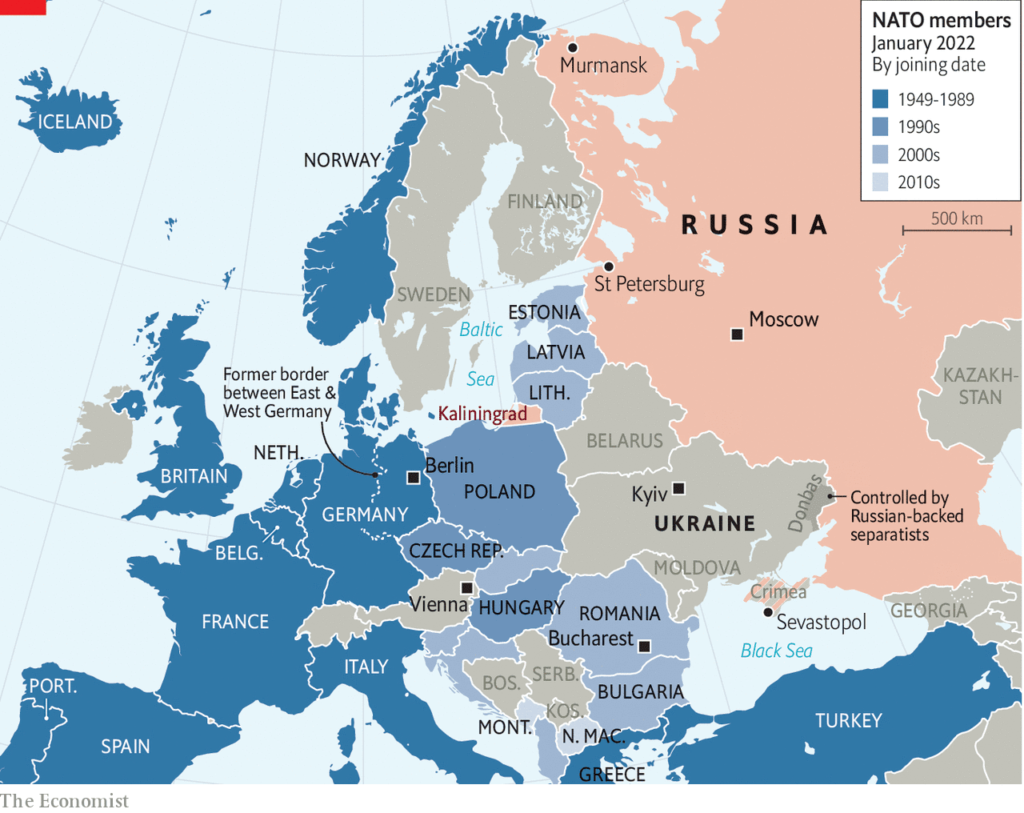
The new doctrine also refers to specific axes of Russian politics. First, it makes clear that Russia will continue to treat the countries of the “Commonwealth of Independent States” as countries for which it has a special responsibility for settling disputes, preventing confrontations and resolving conflicts, while also making it clear that it will prevent the entrenchment of positions “unfriendly” states in this wider region. It is clear that this particularly concerns regions such as the Caucasus, but also Central Asia. Accordingly, it underlines that it will oppose efforts by “unfriendly states” to gain a greater military presence in the Arctic, as well as questioning the existing status of the Russian Federation’s territorial waters.
Then the goal of strategic cooperation with China and a privileged relationship with India is clearly formulated, in the context of a more comprehensive Eurasian strategy, which concerns connectivity on the major axes as well as upgraded economic relations. A strategy they want to extend to East Asia and the Pacific region.
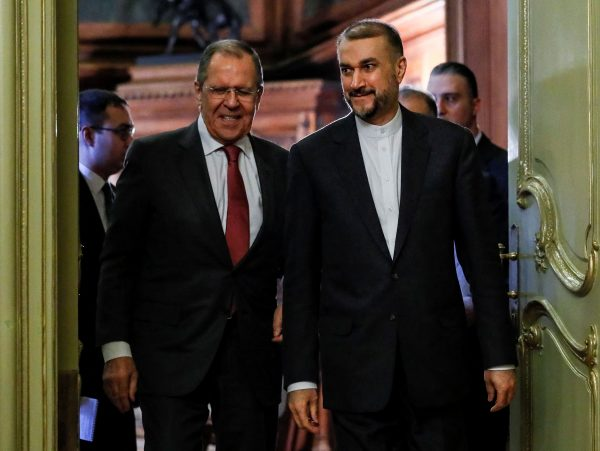
References to the Islamic world are also of interest. Full and trust-based cooperation with Iran, comprehensive cooperation with Syria, but also cooperation with Turkey, Saudi Arabia, Egypt and other countries of the Organization of Islamic Cooperation are proposed, while the need to implement the Russian interpretation is emphasized of collective security and in the wider Persian region.
Regarding Africa, the need to support the independence and sovereignty of African states, their energy and food security is underlined.
In Latin America, the need to support the states that are currently under pressure from the United States and its allies is highlighted, as well as cooperation with Brazil, Cuba, Nicaragua, and Venezuela.
For Europe, there is the finding that most European states are pursuing an aggressive policy against Russia that includes “threats to the security and sovereignty of the Russian Federation, the acquisition of unilateral economic advantages, the undermining of political stability, and the erosion of traditional Russian moral and spiritual principles.” ». Opposing this is the need for a new model of coexistence with the European states.
Finally, vis-à-vis the USA, which is presented as “the main initiator, organizer and executor of the aggressive anti-Russian policy of the collective West”, the demand for strategic parity and peaceful cooperation is raised on the condition that the USA “abandon the policy of sovereignty and revise the their anti-Russian course”.
Russia claims to be the reference point of the multipolar world
This document comes to confirm what has become apparent in various ways in the past, namely the attempt of the Russian leadership to become the point of reference for all countries that today do not accept the “divisive” strategy of Western countries and do not accept as self-evident the leadership role of the US.
He knows that the positions he articulates, i.e. the emphasis on the priority of national sovereignty, the avoidance of interventions in the internal states based on their internal politics, the opposition to the violent export of “democratic principles” and “liberal values”, the denial of a violent and exogenous “modernization of morals” and above all the refusal to take for granted the primacy of the West and the hegemonic position of the USA, find many receptive ears in a large part of the planet.
At the same time, it knows that together with China it also forms a potential alternative pole, especially in the coordination with the “Eurasian integration” processes, the Brics-type processes, the defense of OPEC+ policies, the search for “de-dollarization” practices of international transactions, elements that various countries are seeing with increasing interest, even if at the same time they maintain particularly high trade with Western economies.
After all, Moscow has very carefully weighed the number of countries that have chosen not to impose sanctions against Russia and the fact that they represent the majority of the world’s population.
And of course he realizes that in reality we are living today the completion of decolonization, with the dynamism demonstrated by emerging markets and developing economies. Nor is it a coincidence that on these issues the rhetoric of the Russian leadership derives more from Soviet ideology and strategy (and its anti-imperialism) than from the otherwise invoked Russian imperial tradition, which was certainly equally colonial.
It is finally shown that in partnership – and by no means identification or “axis” – with China, Russia may not have the economic power of China, but it still has the accumulated knowledge and experience of the “great power” it can suggest. a design of international architecture.