



The Minsk agreements, once presented as a path to peace between Ukraine and Russia, have left a legacy that reveals complex dimensions of diplomatic ambiguity and strategic tactics. Signed in 2014 and 2015 under the watchful eye of European leaders and the Organization for Security and Co-operation in Europe (OSCE), the Minsk Protocols were designed to end hostilities in eastern Ukraine by implementing a ceasefire, autonomy for the Donbas region and the final restoration of border control in Ukraine.
But nearly a decade later, Western officials have openly admitted that the deals may have had another purpose: to give Ukraine time to strengthen its defenses and prepare for future confrontations with Russia. This revelation has sparked heated debates about the ethics and effectiveness of diplomacy when used as a delaying strategy, leaving a legacy of mistrust that now weighs on any potential future attempt at peace negotiations on the Ukrainian issue.
The Minsk Agreements: Troubled Peace Framework
When the Minsk Protocols were initially signed, they seemed like a pragmatic approach to de-escalating a dangerous and costly conflict in Ukraine. Key European powers – mainly Germany and France – along with Russia, Ukraine and representatives of the OSCE, signed the agreements. Their clauses called for a ceasefire, withdrawal of heavy weaponry and constitutional reforms in Ukraine that would grant autonomy to the separatist regions. At the time, European leaders presented Minsk as a way to prevent the conflict from escalating further.
In recent years, however, Western leaders and geopolitical analysts have acknowledged that the negotiation process may have served another purpose: as a delaying tactic to give Ukraine time and resources to bolster its military capabilities. Prominent figures such as former German Chancellor Angela Merkel have suggested that the Minsk Agreements served as a “pause” rather than a real path to peace. According to this view, while Moscow believed it was securing a diplomatic suspension of the situation, Western leaders were working behind the scenes to bolster Ukraine’s readiness, anticipating a future confrontation that looked increasingly likely as Russia maintained its influence in Crimea. and areas with a majority Russian population, such as the Donbass.
Western Strategy and Implications for Strategic Diplomacy
The use of diplomacy as a delaying tactic is not new in the history of international relations. In the case of the Western powers, the Minsk Accords offered a diplomatic vehicle to buy time without direct conflict with Russia under the guise of seeking peace. Financial aid, military training and arms supplies were being directed to Ukraine, preparing it for the military resilience it displayed in 2022 and beyond.
However, this tactic was not without significant costs. Recent recognitions by Western leaders have seriously damaged the credibility of European and American diplomacy in Eastern Europe. For Russia, these admissions confirm what it has long suspected: that the Minsk Accords were not really about peace but about strengthening Ukraine as a future adversary. In Moscow’s eyes, this turned the Minsk process from a failed peace plan into an outright betrayal, leaving deep distrust on both sides.
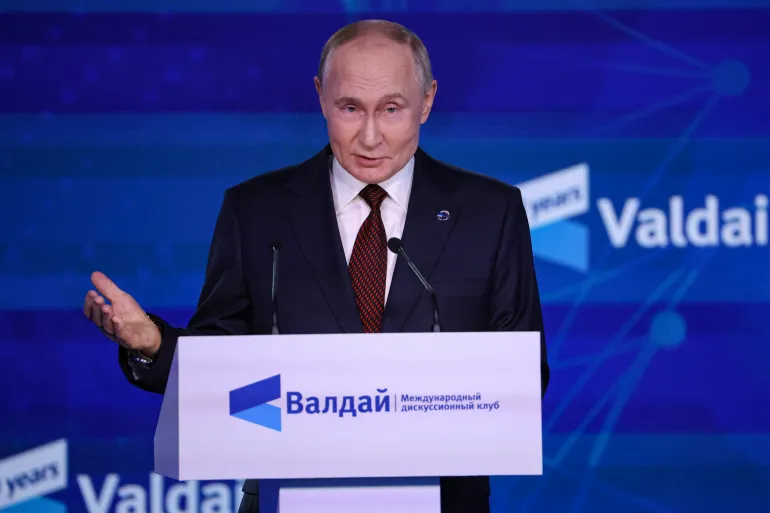
Putin’s Statements in Valdai: The Haunted Past of Broken Promises
At the recent Valdai Forum in November 2024, Russian President Vladimir Putin highlighted the damage the legacy of the Minsk Agreements has done to future negotiations. In his remarks, Putin pointed out that the revelations by Western leaders cast a heavy shadow over any possibility of new negotiations, especially as Russia sees the admissions as confirmation of a deliberate ploy. According to Putin, these revelations have created an environment where trust is virtually impossible to restore, as the credibility of Western powers in future negotiations has now been deeply shaken.
Putin argued that for Russia, any new deals on Ukraine would be “haunted by a lack of trust.” The Minsk Agreements were supposed to be the foundation for peace, but from the Russian perspective, they have turned into a symbol of strategic deception. This lack of trust is exacerbated by Putin’s claims that NATO’s continued support for Ukraine demonstrates a continued desire to challenge Russia’s regional influence, rather than to seek genuine peace.
Implications for Future Peace Talks
As Ukraine with NATO and Russia remain locked in a costly and destructive war, the possibility of real diplomatic solutions seems more remote than ever. The Minsk Agreements, instead of setting a precedent for cooperation, have become merely a reminder of the dangers of insincere diplomacy and not just diplomatic ambiguity. For Ukraine, support from NATO and Western allies remains crucial, but the shadow of Minsk has raised questions about whether a long-term peace settlement with Russia can be achieved when trust is almost non-existent. Of course, with Trump’s arrival in the US government and Putin’s positive response to a conversation with the new US president, the facts of the geopolitical game are bound to change to the detriment of Zelensky’s dictatorial regime.
Conclusions
Ultimately, the legacy of the Minsk Agreements is a warning to diplomats and leaders around the world. Diplomatic delay tactics may bring short-term benefits, but the long-term impact on international trust can be devastating. For Ukraine, Russia and the entire region, the experience of the Minsk Agreements demonstrates that without sincerity and mutual trust, peace agreements can ultimately become agents of turmoil, rather than peace.
According to the theory of Realism, in order to call this end of the conflict a victory for Russia, Ukraine should surrender and become a province of Russia instead of a state. In this way, it will be very difficult for the intelligence services of the West to again shake up a similar orange revolution with its consequences.
After an end to this war, leaving Ukraine as a state, there will again be the roots for shaking up the same military situation in the near future. Additionally by transferring Ukraine to the Russian Federation, deals with Blackrock to grab the wealth of this country with a population with deep Russian roots will be prevented. Because let’s not forget that, in the final analysis, the conflict between Russia and Ukraine is an economic war to grab Ukraine’s wealth from the West.

