



The Chabad-Lubavitch Movement is an international movement, within the wider mainstream of Orthodox Judaism and in particular Hasidism.
Hasidism was born in the Age of Enlightenment, a time that simultaneously gave birth to strong trends of secularization but also strong currents of religious “fundamentalism” in Judaism and Christianity.
It originally developed on the borders of the Polish-Lithuanian Commonwealth in the 18th century. Anyway, precisely this large area of Central Europe, was the pre-eminent area with a large concentration of Jewish communities in Europe
There began to appear the phenomenon of forming circles of pious Jews around charismatic Rabbis. The Hasidim movement is essentially a movement of the pious. The characteristic was that they combined traditional piety with the ecstatic joy of faith. In this direction they drew both from earlier Kabbalah texts and traditions of Jewish mysticism, as well as from more popular magical traditions. The emphasis was more on prayer than study, and they always emphasized the joy that authentic spirituality brings.
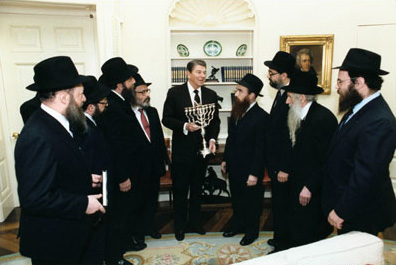
Hasidism has a strongly physical dimension, since prayer, storytelling, song, dance, communal meals and all the rituals associated with them were a constituent element of the creation of the community of believers. Combining a strongly communal element, with an emphasis on the Messianic dimension and mysticism, Hasidism will come into conflict with other variants of Judaism.
In fact, this strongly messianic dimension was also a response to the “messianic crisis” caused in the Jewish communities of the 17th century by the fact that Rabbi Shabbetai Sevi, who had acquired the reputation of the Messiah, decided to embrace Islam and his converted Jewish followers , the Donmeds, will be a distinct stream within Islam.
Chabad was thus formed in the 18th century as one of the currents of Hasidism. Its first Rebbe, i.e. its spiritual leader, was Rabbi Snior Zalman of Liadi, a small town in the then Grand Duchy of Lithuania, who founded the movement around 1775. The name Chabad itself is an acronym for three Sephiroth from the Kabbalistic Tree of Life: Hokma, Binah, Daat (Wisdom, Understanding, Knowledge). From 1813 to 1915 the center of the movement was Lubavitch in the Smolensk region of Russia. The leadership of the movement rested, like other Hasids, on a rabbinical dynasty. The sixth Rebbe, Yosef Yitzchak Schnierson moved the headquarters of the movement to Poland and then, with the outbreak of World War II, to the USA.
It was there that everything changed and Chabad ceased to be a small stream of orthodox Judaism. And here the crucial fact was that Menachem Mendel Schnierson, who had married the daughter of the previous Rebbe, took over the leadership of Chabad as the seventh Rebbe.

Menachem Mendel Schnierson and the grand opening of Chabad
Menachem Mendel Schnierson made a great opening, having the understanding that Chabad should have not only religious but also cultural and humanitarian action. He still had the notion that he should be open to Jews who did not identify with a particular theological current. At the same time, he made some critical shifts in the political stance of the movement, mainly by supporting the policy of the State of Israel and essentially accepting the Zionist plan and project, in a differentiation from the stance of other Orthodox currents that maintained a much more cautious stance against Zionism.
Although the base of the movement still remains in Crown Heights, Brooklyn, New York, where the headquarters of the movement is located at 770 Eastern Parkway, the movement gradually gained a presence in Israel and in many countries.
Menachem Mendel Schnierson was also particularly adept at perceiving the importance of forms of address, believing that the members of the movement should have a “missionary” character, in an effort to find Jews around the world and make them more pious. In fact, at some point special vehicles appeared, described as mini-synagogues that facilitate this address, under the name “tanks of the commandment” (mitzvah tanks).
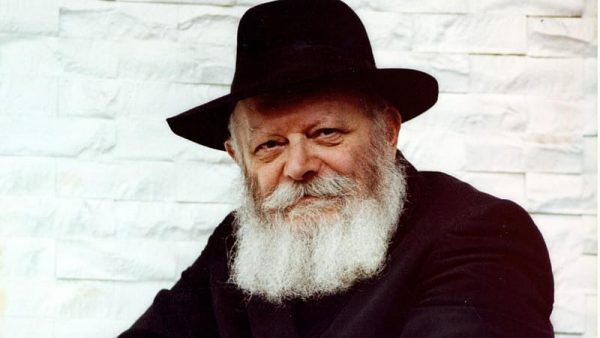
Menachem Mendel Schnierson, precisely because he played such an important role in the expansion and massification of Chabad, was treated by a part of the movement’s faithful as the Messiah. In any case, there is a Messianic dimension in Hasidism, but here we were also dealing with the phenomenon of the followers treating him as the Messiah, even though he himself did not declare such a thing. In fact, the fact that the Chabad was largely developed thanks to his charismatic personality increased this sense that he is the Messiah. After all, he himself towards the end of his life had begun to talk about the fact that we had entered an era that prepares the coming of the Messiah. This further heightened the impression of several followers that he is the Messiah or even a Messiah on trial or in waiting. Contributing to this was the fact that he was childless and that towards the end of his life no one had appeared to succeed him as the eighth Rebbe.
The fact of death was seen in part as a refutation of this messianic expectation, yet the movement continued to grow. However, it is no coincidence that after the death of Menachem Mendel Schnierson, an internal division developed within Haban, with one section, the “messianicists” insisting on treating him as the Messiah.
The Chabad Houses
The Chabad Houses around the world are exactly the main reference point of the Chabad movement, since they combine the religious as well as the cultural address, with the main characteristic that although they represent a version of Hasidism, they nevertheless try to show that not necessarily orthodox or even particularly devout Jews they are welcome. It is interesting that one can find Chabad Houses in so many places, all over the world. Combining places of prayer with places where e.g. one can have a traditional Shabbat meal at a kosher restaurant. In this way, they try to convince Jews who are not particularly religious to return to Orthodox Judaism.
The spread of Chabad Houses is impressive, as they simultaneously seek to appeal to local Jewish communities and Israeli tourists abroad, even to non-Jews. The movement’s appeal is because it combines Orthodox Judaism, which is highly conservative, with this “openness” to non-Jews, but also because any political position it took was compatible with defending the State of Israe


