The case with Qatar brings to the fore the dominance of lobbies in Brussels. The E.U. it applies a variant of the American system, where large financial and business interests are very close to decision-making centers and exert pressure to advance their interests. The American system, however, has more elements of transparency than the European one, since financial support to politicians is recorded and controlled in a fairly strict manner.
Especially with regard to Qatar there is a past of interventions and impressive give-and-take. We mention as an example that the president of France Sarkozy had supported Qatar’s bid to host the soccer World Cup and was promoting the well-known former soccer player and soccer agent Michel Platini for the leadership of FIFA. The ferment within FIFA to award back-to-back soccer World Cups to Russia and Qatar has led to an internal crisis, resignations at FIFA, and even an FBI intervention against corrupt soccer federation officials.
Qatar’s method is to promote its interests against impressive contracts that it awards to the countries and actors that support it.
Therefore, the story of the Qatari lobby has a past, a present, and probably a future as it bids to host the 2036 Olympics, among other things.
The Europeans sometimes denounce Qatar’s policy, but at the same time they rush to develop their cooperation with it. It is typical that during the football World Cup representatives of Germany’s coalition government negotiated a major gas supply agreement to meet the needs of the German economy.
Qatar is a world champion in natural gas exports, the international price of which has multiplied following Russia’s invasion of Ukraine and the drastic curtailment of Russia’s energy cooperation with the EU. and especially Germany.
With just 300,000 citizens, 2.7 million foreign workers and an annual trade surplus of $60-70 billion, Qatar can sign any check it sees fit.
During the World Cup, Qatar signed a large-scale long-term gas supply agreement with China, sending a message of globalizing its strategy and reducing any dependence on Western interests. Qatar is also the strongest financier of the Erdogan regime in Turkey. It provides him with credit facilities of billions of dollars thus supporting the national currency of Turkey.
The E.U. it appears to be lagging behind in managing its well-intentioned interests in relation to Qatar and vulnerable, through corruption, to a large game unfolding globally. This image of weakness and erosion undermines its international standing vis-à-vis the US, China and even other less powerful countries.
The All-Powerful lobbies are in Brussels
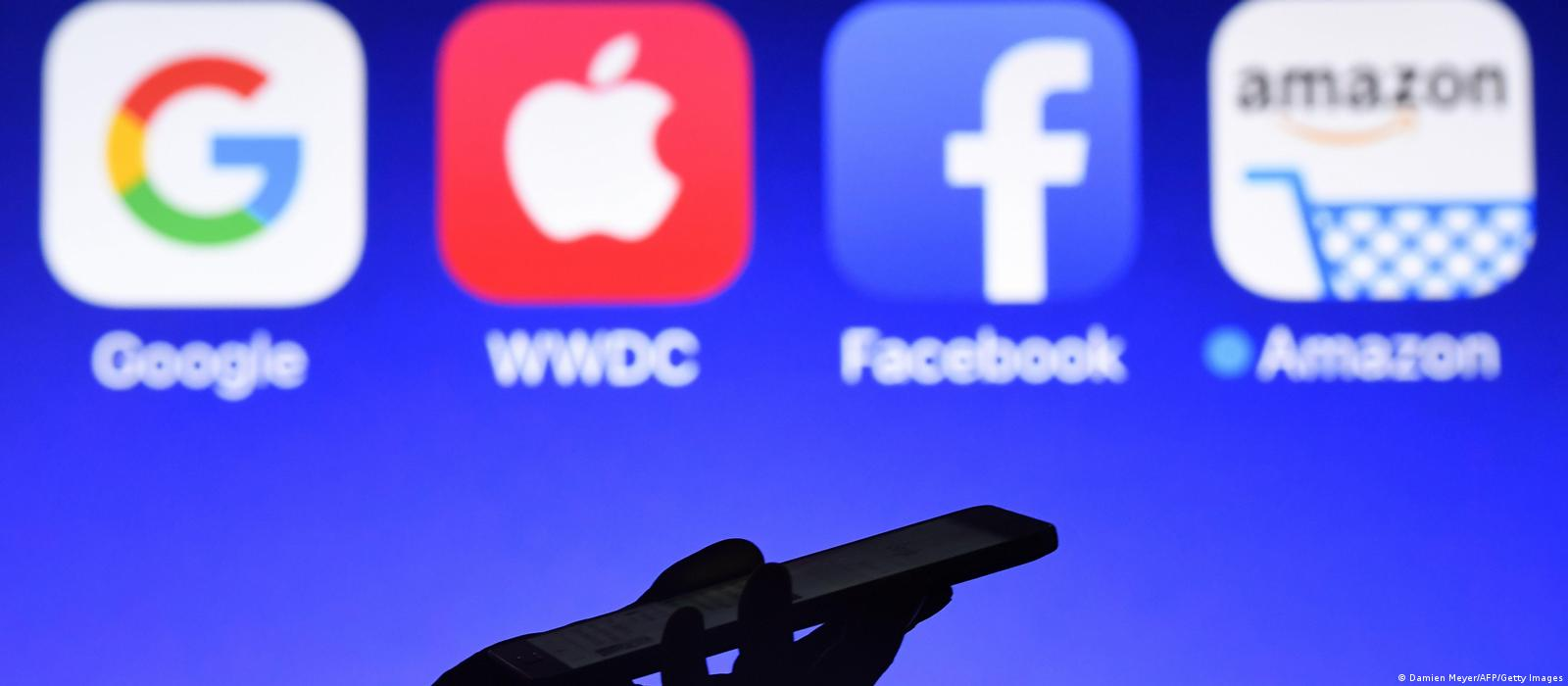
Observing Kaili’s movements in the European Parliament, we come to the conclusion that she had developed relations with the powerful lobby of GAFA (Google, Apple, Facebook, Amazon). He had created a special committee – outside the official organizational chart of the European Parliament – the STOA, which organized the European future especially in the digital sector, digital currencies and even cryptocurrencies.
Kaili had developed her contacts with the leaders of the digital giants, had taken part in the Davos conference on these very issues, and had emerged as a symbol of the OECD.
He recently played a leading role in organizing a two-day impressive presentation at the European Parliament of AI business plans, achievements and products.
A serious investigation by the European Parliament into the role of lobbies in Brussels should also include Kaili’s relations with the giants of the digital economy. The European Parliament is in the process of drafting the operating framework of GAFA in the EU, which highlights the role of Kaili.
It is not only the baggage from Qatar, which is a vulgar and of course illegal version of collusion and lobbying, but also the serving of big interests at the expense of the public interest, that should concern the European Parliament. Even if we assume that this service is done in a legal way, it is politically unacceptable and may create additional problems for the European economy.
The question is whether the European Parliament has the political will and stamina to put the powerful lobbies in their place.
However, in the corridors of Brussels and Strasbourg, everyone is preparing for new revelations about the role of lobbies and the reduced resistance of specific MEPs. It sounds like, for example, that the next scandal to break will have to do with the lobbying of another Gulf country and a center-right MEP.