




As the situation in Kazakhstan unfolded last week, it shows that Russia has managed to “read” the moves of the US and China in Kazakhstan, securing a privileged position in the midst of geopolitical rivalries.
Russia, having known and studied the methodologies of the West in the past in the other countries of the former Eastern Bloc in Europe and in the Arab world, that is, that foreign secret services work inside a country creating pockets of supporters with the help of non-governmental organizations for the subsequent events-revolutions, managed in time to use the power of the adversary (West-China) against them.
The Russian minority (25% of the population of Kazakhstan) and the fact that it belonged to the USSR in the past, always secured privileges in Russia, which continued the methodology and military philosophy of the USSR.
The cores cultivated by Western services inside Kazakhstan have found suitable ground to be triggered by the energy crisis. Russia took full advantage of the opportunity-social uprising. The sequel is known. The regime in Kazakhstan turned its back on the wall and was forced to seek help from Russia.
Russia set its own terms to help, and always through the CSTO, occupied immediately, with Russian troops, key positions for full control of Kazakhstan and mainly areas with hydrocarbon deposits where American and other Western energy companies are or want to be active.
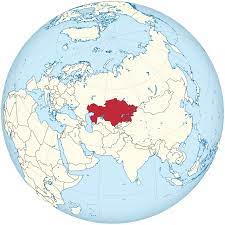
At the same time, Turkey, through the situation in Kazakhstan, may seem to be losing its dominant policy of uniting the Turkic-speaking Muslim populations of Central Asia, by integrating Kazakhstan into them with the aim of creating a Turkish-Muslim Confederation in Central Asia. , but is presented with a strong bargaining chip against NATO and the West. That is, “if you want to return to the Central Asian region, you have to rely on Turkey.”
That’s why the United States is abandoning the construction of the East Med pipeline to transport gas from Israel-Cyprus to the EU. , then the geostrategic interests of Russia’s competitors, namely the US and China in Central Asia, are directly affected.
The expulsion of the United States from Eurasia and its control is synonymous with the control of the onshore trade corridor (One Belt-One Road Initiative). Its implementation will now depend on the consent and control of Russia, which has currently gained a strong negotiating position in controlling China’s expansionist policy in the Central Asian region of interest to both China-Russia. With Russia’s position in Kazakhstan, Russia can negotiate from a position of power a geostrategic modus vivendi with the United States, as part of a cooperative type of “co-management” of international affairs.
At the same time, the United States does not want to recognize the status of a superpower in Russia. Russia is doing the same by using Ukraine, threatening to implement a military solution if the US does not agree to an informal recognition of Russia as a superpower that controls Eurasia.
Russia’s energy control of the world economy
Occupying key positions in the Russian military, in Kazakhstan, among others, in the vast Tengiz field, which is led by the American Chevron and Exxon Mobil, it could be seen that these companies now operate in Kazakhstan under “Russian tutelage”.
If these two companies leave and are replaced by Russian companies, then the problems in world production will negatively affect the global supply of hydrocarbons and the energy crisis will peak as well as the “semi-control” of the world economy.
Given that Russia does not have oil-producing countries such as Venezuela, Algeria, Libya and that after the US withdrawal from the Middle East, the Arab countries (UAE, Saudi Arabia) now tend to maintain a more balanced attitude towards the US and Russia, because they see the Russian presence in their region strengthening, the world economy and its energy supply will eventually be held hostage by Russia.
Why Russia is “beating” the West on the Geopolitical chessboard
Western leaderships can not consistently pursue implemented strategic plans due to
- political costs
- need for their re-election
- conflict of interest groups representing political parties
- changes in government due to elections cause changes in long-term strategic planning
“The authoritarian regimes” do not have these disadvantages of Western leadership. Russia has made the most of this fact in the last two decades, achieving geopolitical victories over the West.
The West, in order to gain an advantage over Russia in the energy sector, opposed the solution of the “Green Transition” based on its superior technology. The abolition of nuclear power or the neglect and “investment chase” in hydrocarbon deposits during the transition period to the green transition from the West, have led to the current energy crisis, leading the West and the world economy into energy hostage.
The West, and especially the EU and the US, must invest heavily in hydrocarbon mining investments and in increasing nuclear energy production to ensure the energy security of the West.

