The military exercise on NATO paper called “Steadfast Leda” (December, 2021) replaced the NATO Army Headquarters, which in Southeastern Europe held this role until the proposed headquarters of Izmir (Turkey), with the Headquarters of Thessaloniki (Hellas). In practice, this means that in the event of a conflict involving NATO in the wider region from the Black Sea to the Eastern Mediterranean, the Izmir NATO Headquarters (Turkey) with a US Commander and a Turkish Chief of Staff will no longer have the general command of operations and always under the command and orders of course of the Supreme Alliance Headquarters in Brussels.
The apparent withdrawal of Turkey from NATO leads the Alliance to seek alternative solutions and in this context is based the implementation of this exercise by the NATO Headquarters in Thessaloniki (Greece), which under other normal conditions would be the work of the NATO Headquarters in Izmir (Turkey). As the operational assessment was a complete success, the NATO Headquarters in Thessaloniki assumes responsibility for possible Alliance military operations for the next two years (2022-2023) if deemed necessary by the UN and NATO.
Sources in our magazine reported that the Turks were very repressed and outraged and did everything they could to prevent such a choice, which degrades the NATO Headquarters in Izmir (Turkey) as the headquarters of the North Atlantic Alliance Army in the South East. In this effort, Turkish officials proposed the use of the Headquarters in Istanbul as an alternative. However, NATO’s top leadership has been adamant in signaling Turkey’s military-operational and diplomatic isolation, from which the strong paper of NATO’s southern guard is gradually emerging.
Now, the strategic center of gravity seems to be shifting from Izmir (Turkey-Asia) to European territory, making Southeast Europe the foremost NATO special guard from the Dardanelles to the Eastern Mediterranean and a key pillar of its military plan to the Carpathians and up to the Baltic region.
The choice of the Port of Alexandroupolis (Greece) as a hub for the passage of troops and supplies weakens a very powerful geopolitical tool of Turkey, which, according to the Treaty of Montreux, can raise and lower the bridge bars in the Bosphorus Straits and control the passage of ships in the Black Sea. NATO will no longer need to send troops and ammunition through Turkey to the border with Ukraine on the Black Sea coast. Crisis missions will arrive safely and faster via Alexandroupolis, and at the same time NATO and the Americans will be able to monitor the Dardanelles (Bosphorus) Strait from Alexandroupolis, from where Russian and Turkish warships enter and leave the Mediterranean Sea in the Northern Aegean Archipelago. A NATO perspective that irritates both Turkey and Russia.
Through the port of Alexandroupolis and Kavala (Greece) equally, a strong NATO transport project to Bulgaria and Romania is evolving, with liquid fuel pipelines for their armed forces, in order to be independent from Russia which still today Russia continues to supply their military networks with oil and gasoline.
The responsibility for the Black Sea and the border with Ukraine on behalf of NATO is to be borne by Romania and Bulgaria, in the absence of Turkey. Members of the Alliance, both Bulgaria and Romania, with direct access to the Black Sea, both, together with Greece, form the NATO defense shield from the Carpathians to the Eastern Mediterranean Sea, an area that is currently dangerously warming due to the growing tension in Ukraine but also the aggression of Turkey.
US and NATO military bases operate under bilateral agreements in both Romania and Bulgaria, with the West constantly equipping their two key countries-bridgeheads by increasing the flow of weapons and troops and strengthening their military infrastructure.
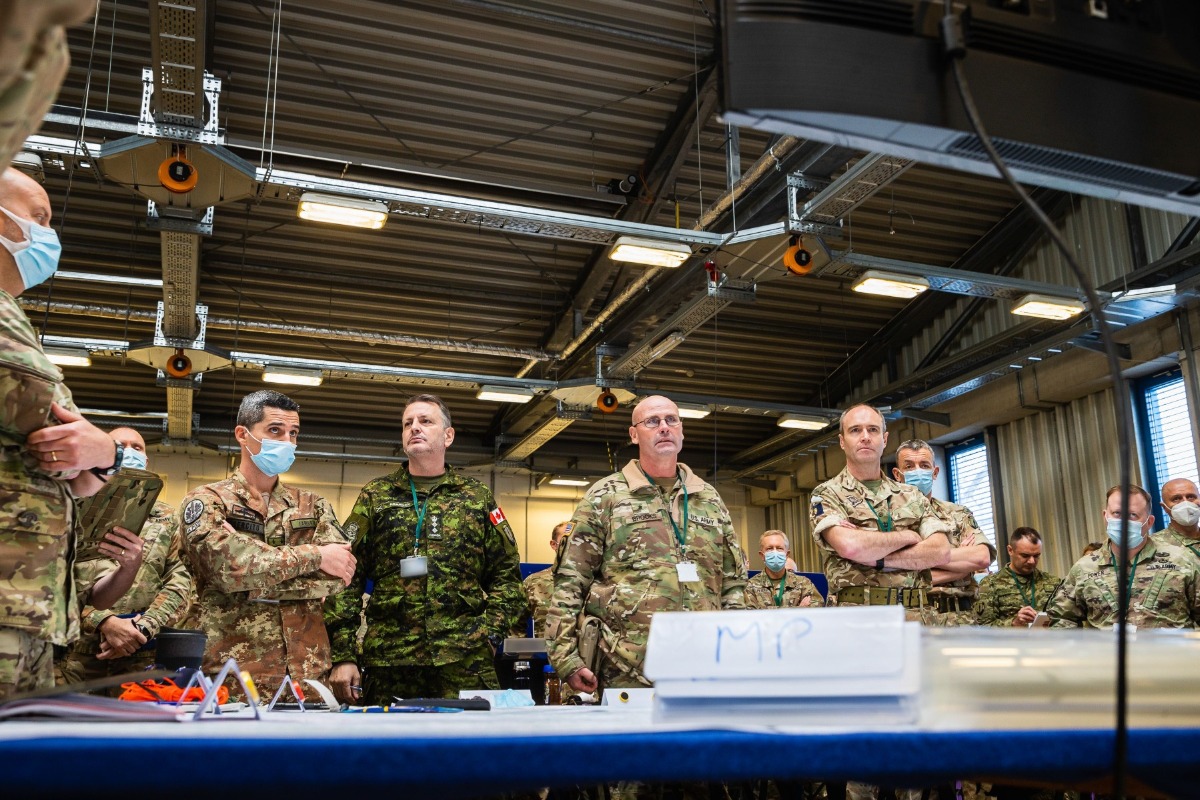
The NATO alliance should strengthen its presence in Romania by transporting at least 4,000 troops there. In addition, NATO, together with the governments of Bulgaria and Romania, will have to finance the construction of three major bridges over the Danube River near the town of Ruse to facilitate the smooth passage of NATO troops and supplies between Bulgaria and Romania.
Any reaction in practice or not on the part of the political system of Bulgaria and Romania to NATO plans should be combated in every way, both by NATO and the EU, so that Romania and Bulgaria do not become the NATO Trojan Horse in Southeastern Europe.
NATO will now have to re-adjust its military plans in the Southeast European wing, investing even more in the Greece-Bulgaria-Romania (EU members) axis as NATO’s shield in Southeast Europe. Also, however, NATO will have to invest in other countries such as Albania and Northern Macedonia, which in turn should serve as logistics bases for the support of its troops in Romania-Bulgaria and Greece respectively.