



The European elections of 26 May 2019 are crucial in many respects and given the liquidity of geopolitical developments taking place on the planet, which naturally also affect the EU. Both external and internal problems and the corresponding challenges facing the EU are many and multiple complex in solving them.
The Problems and challenges within the EU
In its internal problems and challenges, the EU (European Union) is facing the rise in popularity of nationalist parties throughout its territory due to the failure of EU policies on the crucial, for many European citizens, of a migratory issue.
We hope that both the new European Parliament and the new EU Commission, which will emerge from these European elections, will be able to devise and implement in practice a common, coherent and compact policy that addresses the migratory problem.
Certainly, the increase in the rates of nationalist parties with increased holding of seats in the European Parliament will increase tensions and any “bickering” about policies that do not have their views and positions attached.
The degree of difficulty will be increased in terms of agreeing a mutually acceptable and workable policy on the immigration issue. Here, of course, is the challenge that both the new Members of the European Parliament and the new EU Commission will have to face, as they will have to deal with vehemently populist positions.
by Thanos S. Chonthrogiannis-https://www.liberalglobe.com
Other challenges facing the new EU Commission and outside the Brexit, is whether it will be able to resist the pressure it will accept for a possible “alteration” of existing regulations that exist in the competition in its huge internal market.
In other words, the new Commission will give in to the pressures that violate the regulations to allow the creation of pan-European type companies-champions, creating oligopolies or even monopolies in specific sectors of European industry and Economy, respectively? Or will it protect the internal market from such entrepreneurial actions?
A further challenge for the EU and of course for the new Commission is whether it will be able to limit the tendency to protectionism towards other countries or to follow the imposed protectionism that the US has imposed on the inside.
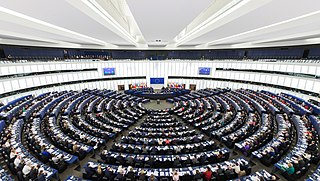
Photo by David Iliff, License: CC-BY-SA 3.0,
https://creativecommons.org/licenses/by-sa/3.0/deed.en
The problems and challenges that the EU will face from abroad
The creation and existence of a common foreign policy as well as a common security and defense policy embracing all EU member countries are one of the biggest challenges that the next four years will have to face in new European Parliament and the new Commission.
The real challenge is whether EU member countries will accept to give their powers to a new, say, EU Foreign Office that will plan in advance a common foreign policy for all EU members which the applied common foreign policy should anticipate, plan and shape the developments for the benefit of all EU member countries.
In order to achieve this, there must be create a working council which, with its work, will support the EU foreign minister. Around this working council should create a flexible bureaucracy staffed by ceiling diplomats-technocrats and be interconnected with the respective departments/Ministries of Foreign Affairs of each member country.
Only in this way could a common foreign policy be planned and use in a timely and complete manner and sufficiency any emerging geopolitical, economic and technological advantages for the benefit of its members and on the EU.
However, the common foreign policy should be accompanied and supported by a common security and defence policy for the whole of the EU.
This could, in the first instance, be shaped by, for example, a joint agency that would defend the whole of the EU’s maritime borders and fully safeguard its maritime borders and always throughout the entire EU territory.
A Coast Guard service such as Frontex but with many law enforcement powers that to be a mixture of Coast Guard and flexible naval corps. Another example is the transformation of Europol into a law enforcement agency throughout the EU and in a match with the American FBI (Federal Bureau of Investigation).
In addition, for the creation, organization and staffing of the European army and in general the EU armed forces, the reader should read the detailed analysis we published entitled “The Creation of the European (EU) Defense & its Defense Forces” on 25/10/2018 in the category: geopolitics, in https://www.liberalglobe.com.
Both the common foreign policy and the Common Security and defence policy could never be effective if there is no support in the background for a European army that can enforce its presence both at the external borders EU and military and/or peacekeeping missions abroad.
The steps taken to date by the EU in this direction and always through the European Defence Union by strengthening Permanent Structured Cooperation (PESCO) and the European Defence Fund are in the right direction, but they are incomplete policies.
In order to build, organise and staff a European army and be as an EU capable of supporting it in logistics terms, you should also accelerate developments in the partial consolidation of the multi-dispersed current European Defence industry comprising all the defence industries of EU member countries.
This should be done in a series of vertical and horizontal types of mergers and acquisitions between European defence industries so that three or four defence industries remain in each armaments sector and for the whole of the EU.
In this case, the European Army’s support with European first-rate technology with at most two types of weapons systems in each sector will increase its effectiveness. At the same time, the implementation of all these projects will require the use of an increased labour force by reducing unemployment in the EU.
In this case the European Defence Fund could acquire funds of the size of the funds of ESM (European Stability Mechanism) to finance all kinds of expenses, costs, equipment, etc. of the European army.
As most European NATO members are under-funding their base of statutes in NATO (North Atlantic Treaty Organization) and the fact that competition between the US and China will become more severe over time, increasingly absorbing forces and US funds from NATO to Asia, NATO’s European members should increase their funding to strengthen the European pillar of the NATO.
In addition, the two sides the EU and Russia must, in the first place, be genuinely willing to put a framework for a substantive dialogue between them, which will define the joint actions to be taken by both sides to improve the conditions and trust in the areas of energy, security and economic/commercial cooperation.
It will be in the EU’s interest to converge Russia towards the EU on specific and pre-agreed principles and rules, especially at this time because of the sanctions and competition that exists between Russia and United States and by which Russia is forced to approach China.
After and withdrawal of the U.S. and Russia from the Treaty of 1987 (Intermediate-Range Nuclear Forces Treaty, INF-1987 between USSR and USA) for medium-range nuclear weapons (because China manufactures such weapons) competition for nuclear equipment is coming back. This will necessarily lead the EU to create a new strategic Security Framework, including Russia, from the outset.
But nothing that we have mentioned above can be achieved on time if the Eurozone and the EU in general are not able to deepen further in order to improve its economy by creating conditions of social prosperity, if not in total at least to the majority of its citizens and its member countries.
This project can be achieved with more Europe and, above all, with more economic Europe, which will enable a federal budget to be created in the euro area and by extension to the EU.
How to create a highly functional, effective federal type budget in the Eurozone, the reader should read the series of analyses published in https://www.liberalglobe.com with title «The Proper Way to achieve the Single Operating Budget of the Eurozone-Part I, II, III, IV» in category Fiscal.
Only then will a common economic, tax and fiscal policy be achieved across the euro area and the EU, which common policies will manage to make the management of human and natural resources even more effective in the euro area and by extension of the EU. In this case, even more healthy business and economic forces will be released.
In addition, the social well-being achieved in the Eurozone and the EU will enable the new European Parliament and the new Commission to emerge from the European elections of 26 May 2019 to further improve the Democracy and the Constitutional Governance across the euro area and the EU.

Photo by Author: Arne Mikker
Source: Talign, EU 2017EE Estonian Presidency,
licensed CC-BY 2.0
https://creativecommons.org/licenses/by-sa/2.0
Choosing the future of the EU
For all these reasons and for all the people who dream of achieving these goals in the future, European citizens should vote in these European elections to the Alliance of Liberals and Democrats for Europe (ALDE) party and of course the party of Emmanuel Macron-President of France who cooperates with them. Despite their failures in the past, they remain the only hope of producing dreams for a European political, economic and military unification and as dreamed by the fathers of the EU.
Thanos Chonthrogiannis
The law of intellectual property is prohibited in any way unlawful use/appropriation of this article, with heavy civil and criminal penalties for the infringer.

