

The Azeri army captured the strategically important city of Shusha and the Armenians suffered a crushing defeat, since if there was no ceasefire the Azeri army could occupy the whole of Republic of Artsakh (Nagorno-Karabakh). That is why the war in Nagorno-Karabakh officially ended.
Russia and Turkey now appear as the region’s only security guarantors by transferring their “peacekeeping” troops to that area.
by Thanos S. Chonthrogiannis
©The law of intellectual property is prohibited in any way unlawful use/appropriation of this article, with heavy civil and criminal penalties for the infringer.

Author: Kentronhayastan, Ssolbergj, Source: Ssolbergj’s work,
licensed Public Domain
The Peace Agreement
The main points of the signed Peace Agreement between Armenia, Azerbaijan and Russia are as follows:
1. All hostilities cease everywhere and, on all fronts, while the military forces of the two warring sides remain in the positions they hold and as they exist until midnight on November 9, 2020. The occupied city of Shusha by the Azeri army is integrated into Azerbaijan’s sovereignty.
2. The Armenian army is completely withdrawn from the area and replaced by Russian peacekeepers. In this way Russia is re-playing the role of security guarantor in the Caucasus and as it was implemented by Russia in Abkhazia and South Ostia, before the 2008 war.
3. Most territories (Kelbajar, Aghblam and Lachin) are now under the sovereignty of Azerbaijan.
If these territories were not returned to Azerbaijan, Azerbaijan would not agree to a ceasefire. On the other hand, the losers of this war, the Armenians, maintain a five-kilometer control zone on the Lachin corridor, which connects Αrmenia’s capital, Erevan, by road, with the Republic of Artsakh’s capital, Stepanakert.
Along this zone, checkpoints will be set up where Russian and Turkish peacekeepers will be established.
The peace agreement will be valid for five years and will be renewed immediately for the same period without the consent of both parties and if one of the two sides does not declare six months before the end of the agreement that it is withdrawing from it.

Photo by the website www.dailysabah.com
Russia’s geopolitical benefits
Russia, with this agreement, solved the security problems in its “soft underbelly” in the South Caucasus.
First, Azerbaijan’s full occupation of the Republic of Artsakh was prevented. This became apparent after the occupation of the town of Shusha which until yesterday was occupied by the Armenians and since it would be only a matter of time before the capital of Stepanakert was taken over.
Since the Republic of Artsakh is not controlled by Azerbaijan it is a guarantee that Azerbaijan will not join NATO. In this way NATO will not have access to the Caspian Sea and the Russian border in the Dagestan region.
Since at no point in the agreement are, they mentioned that Turkish peacekeepers will take part but only Russian troops and this has to do with Turkey’s ban on access to the region and especially to the Caspian Sea.
But Azerbaijan at the last minute insists that Turkish peacekeepers be included. In this case, Turkey will for the first time have access not only to the South Caucasus but also to the Caspian Sea.
So, Turkey, which instigated the war in the Republic of Artsakh, seems that is succeeding to achieve its geopolitical objectives.

Photo by the website www.asiannews.it
The geopolitical benefits of Azerbaijan
Azerbaijan won the war and strengthened the Aliyev regime in Azerbaijan. He managed to Republic encircle the Republic of Artsakh, acquired under his control important areas that had lost them in the first war in the 90’s, occupied the city with the greatest strategic importance Shusha, which among other things is a symbol city for both the history of the Armenians and the history of the Azeris respectively.
Azerbaijan, by winning the war, ensures that it is now at its own discretion to continue the existence of self-government Republic of Artsakh.
In practice, however, this fragile survival of the Republic of Artsakh will be due to Russia’s guarantees through the presence of the Russian Peacekeeping Army.
The geopolitical benefits of Turkey
Since Turkey manages to send Turkish Peacekeepers to the South Caucasus, it means that it is gaining geopolitical advantages which translate into having access to this region and the Caspian Sea for the first time.
In addition, it strengthens its cooperation with Russia by moving further away from the West by now participating in all the Eurasian countries that are slowly and steadily rallying together.
It will now be difficult for Turkey to sell extradition to the West on the grounds that Azerbaijan will come closer to the West and given that Russia has “pulled” the rug from Armenia’s feet to maintain excellent relations with Azerbaijan.
The geopolitical benefits of Armenia
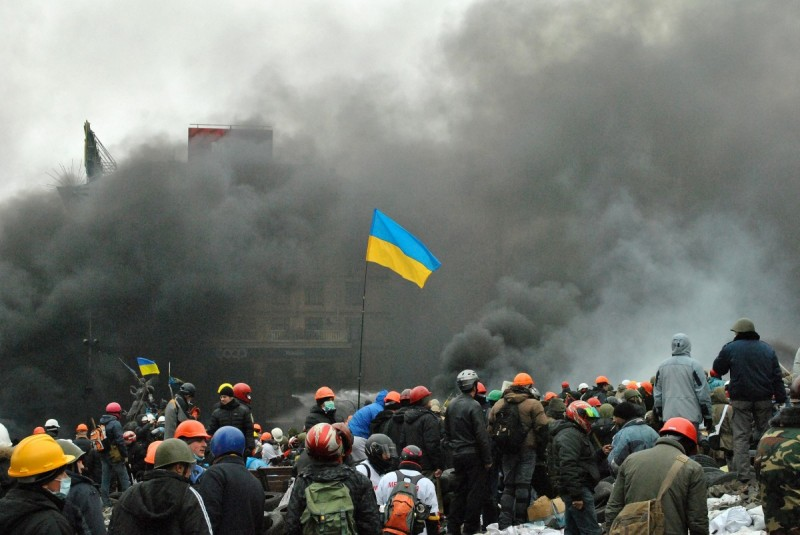
Armenian society describes the peace agreement as a “National Betrayal”. There was an uprising, and the rioting protesters stormed the seat of government and the Parliament, beating the Head of Parliament.
There is a deeply emotional connection between Armenian history and the regions that have now come under the control of Azerbaijan and given that there are living descendants of all those who gave their lives in the early 1990s to gain the independence and administrative autonomy of these territories.
The city of Shusha has a special history and geostrategic importance for Armenians; the city on the one hand, is surrounded by mountains and on the other hand can be used for a fierce artillery attack against the Republic of Artsakh capital of Stepanakert, effectively enabling Azerbaijan to occupy its entirety.

Photo by the website www.thenationalnews.com
It is difficult now for the Armenians to change the entrenched situation that has been in place on the war front so far in their favour.
In Armenia, protesters are calling for the continuation of the war and the transfer of power from the Prime Minister to the General Staff of the Armenian Armed Forces.
Armenian Prime Minister Nikol Pashinyan, of course, is politically finished and is most likely to live in self-exile abroad (Russia).
The people of Armenia will turn their pain and bitterness in the future against Russia. The anti-Russian feelings of the Armenian people will grow over time.
But the new security framework put in place in the South Caucasus is such that it makes Armenia fully military dependent in Russia. Only the Russian peacekeepers will now restrain Azerbaijan so that Azerbaijan does not proceed with the full occupation of the Republic of Artsakh.
A large proportion of Armenians will turn against Russia and in favour of the West.