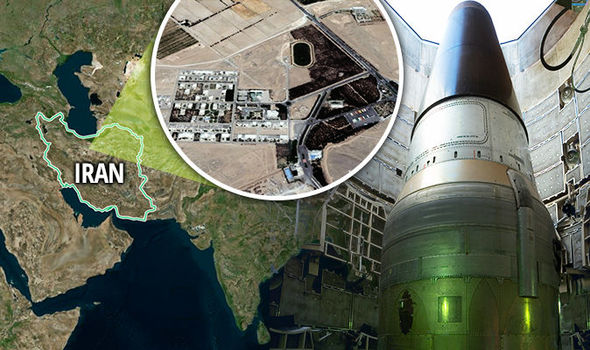
Today’s Israeli attack on Iran, with its main but not only target, its nuclear facilities, was expected – unfortunately – but also combined with the history of the development of Tehran’s nuclear program.
In fact, the coincidence that is not a coincidence, lies in the fact that just yesterday, on June 12, 2025, the board of directors of the International Atomic Energy Agency (IAEA), the UN body that has international supervision of nuclear programs, published a resolution confirming that Iran does not comply with the international NPT (Non Proliferation Treaty).
The text (voted against by representatives of Russia, China and Burkina Faso, while there were 11 abstentions and 19 positive votes), which apparently will form part of Israel’s “official justification” for the attack, stated that Iran does not implement a series of information and transparency obligations for its nuclear program. It also states that it has uranium enrichment programs and related facilities that it does not allow inspection or provide information about their progress/targeting, that it does not provide explanations or the explanations it provides are not convincing, that it does not cooperate with the IAEA. And that ultimately the Organization “cannot certify that the country’s nuclear program is exclusively peaceful, and in accordance with the requirements of the UN Security Council.”
This resolution is novel in the severity of its wording, and adds to a long-standing difficult relationship between Iran and the IAEA, which has gone through many waves, sometimes of cooperation, sometimes of inspection avoidance and attempts at deception. And Russia is already hinting that the text “paved” the way for an Israeli attack.
Let us explain here that Iran has adopted the Treaty on the Non-Proliferation of Nuclear Weapons since 1970, so its obligations under it remain in force and the country has never declared its withdrawal. Of course, we should say that Israel, which possesses nuclear weapons, for which there is a blackout regime and no international control is accepted, has not signed the same treaty. How many are they? Sources estimate them at over 100 warheads, while their destructive tonnage is also unknown.

From Obama to Trump, to Biden and back to Trump
Beyond the NPT, Iran had agreed to the… infamous Joint Comprehensive Plan of Action (JCPOA) of 2015, a complex arrangement between Tehran and the “5+1”, i.e. the 5 permanent members of the UN Security Council, i.e. the USA, Russia, China, Britain, France (eventually Germany also participated), while the “+1” was the European Union, as a supranational organization.
This agreement, which was welcomed upon its signing, was the result of a long negotiation during the era of US President Obama, and was the best possible for the time, with Tehran accepting serious restrictions on its nuclear activity. Thus, it had agreed within a decade to eliminate its stockpile of highly enriched uranium, to reduce its stockpile of low-enriched uranium to approximately 5% of its original stockpile, as well as to significantly reduce the number of centrifuges it had installed (through which uranium is enriched until it reaches “weapon” quality). The same agreement provided for inspections, financial aid to Tehran, lifting of the embargo that had been imposed, but also sanctions in the event that the promises were not kept. And when it was signed, it was also ratified by a unanimous resolution of the UN Security Council, no. 2231 of 2015.
Unfortunately, the JCPOA failed to be approved by the US Congress, where it met with strong resistance from both Republicans and many Democrats, so its legal status from the US perspective remained controversial, generating a large volume of legal regulations that attempted to reformulate it, to make it mandatory for Congress to monitor its development, and so on.
This was followed by the election of Trump, in his first term, who from the very beginning had stated that he disagreed with the agreement, and that he believed that Iran was violating it. So after some rounds of contacts, international negotiations and pressure, the US in 2018 announced its withdrawal from it and the imposition of new sanctions against Iran, demanding that it accept full control and cease all nuclear activity.
In our opinion, this is one of the most important mistakes of the first Trump presidency: not only did the US withdraw from an original international treaty, undermining its authority, but it also undermined its longevity and compliance. Where Iran, despite its internal objections (and there was difficulty in accepting the JCPOA from the regime’s hardliners), had accepted an international framework for controlling its nuclear program and had made major concessions to it, in exchange for financial aid. In other words, a functional solution, not “perfect” (there is no such thing in international agreements), but clearly better than the nuclear competition that was developing in the Middle East.
From there, the JCPOA was on the verge of collapse, as the Iran-US rivalry intensified, with harsh statements from both sides (now even within Iran, the most hardliners felt justified and were pushing for a reaction), and with cycles of new sanctions from Washington. So in 2019, Iran also declared a partial withdrawal from the agreement, increasing the number of its centrifuges, accelerating its enrichment program and creating new infrastructure for related research and work, several of them in underground mountain shelters, i.e. designed to withstand air strikes, which Israel was already studying.
After all, the latter had stated many times – and with Arab tolerance/acceptance of Sunni states, such as Saudi Arabia and Jordan, which view the radicalism of Shiite Iran with fear – that it would never accept “the existence of Iranian nuclear weapons”. The US, of course, had stated the same thing over time, so here there was a multinational convergence of views on even military strangulation of Iranian ambitions.
In the meantime, that is, during Biden’s term in the US, we again had many bilateral and multilateral contacts, in order to renew the JCPOA, but with unclear results. Sometimes Iran declared its intention to meet the relevant conditions, sometimes it was found in IAEA inspections that it did not comply with them, or was trying to avoid them, while insisting that it would maintain a “peaceful nuclear program for energy production”. From the US side, the sanctions followed the partial release of frozen Iranian funds (something that Trump had been criticizing in his 2024 election campaign). While in the complex of diplomatic bargaining, there was also the effort to maintain the international price of oil at reasonable levels, so the cooperation of Iran, which is a major producer, was needed. Russia had also entered the game, which provides Iran with military equipment, diplomatic support, but especially nuclear fuel and know-how to operate its only nuclear reactor for energy production, in Bushehr. And then Moscow agreed to build two new ones in the same complex, with work underway.
Thus, Israel’s attack on the Iranian nuclear program is a matter of many years, in constant “waiting” and with many execution scenarios, which would develop as we have seen today, at least in its air component. And with Israel also acquiring increasingly sophisticated related defense systems (the F-35I fighters that it has have a main role in the deep strike on Iran if required), but also producing many long-range weapons, which it has recently revealed (e.g. the ROCKS missiles).
How close is Iran to nuclear weapons?
The above question is crucial, but difficult to answer. What is certain is that Tehran has now set as its top priority, both politically and militarily, the acquisition of nuclear weapons, seeing in them the great leverage they can give it at the regional and international level. After all, to maintain the regime, it is necessary to have an international flow of capital, imports of critical materials and even food, to ensure the stability of the national currency and to maintain the country’s position as a major energy hub. Issues that require great power, both soft and hard, which will further “establish” Iran as a difficult but necessary international factor in understanding. Furthermore, the nuclear option is also a key element of the national imaginary, where Iran cultivates domestic Persian (and not Arab) nationalism, mixed with religious zeal.
Thus, although there is the scenario of a nuclear attack on Israel at some point, which is also manifested with many inflammatory rhetorics, for Iran, nuclear weapons are primarily a “step of ascent and stabilization” and the ability to deter Israel. After all, Tehran knows that if they attack Israel with weapons of mass destruction, this will mean their automatic Israeli and American annihilation.
Now on a technological level, the IAEA had found Iranian reserves of enriched uranium at the level of 60%, 408 kilograms and with a great acceleration of production in recent months. The weapons level of enriched uranium is 90%, but the larger the stockpile you have from the previous stage, the more it will reach 90%. So Tehran has or will very soon have material for a few dozen (?) nuclear warheads of the order of 200-300 kilotons.

In terms of carriers of such weapons, the development of ballistic missiles is also one of Tehran’s important achievements. The basis is the Shahab-3, a liquid-fueled missile based on the North Korean Nodong/Hwasong-7, which in turn is a development of the Soviet Scud missiles (the latter is the matrix for the development of ballistic weapons in dozens of countries). The Shahab-3 in different versions and codings (e.g. Ghadr-110) has been in development for 20 years and is estimated to reach a range of 2,000+ kilometers. Also under development is the heavier Khorramshahr, with a similar range on a mobile carrier, as well as the also mobile Sejjil carrier with a solid-fuel rocket engine.
Furthermore, Iran has shown great activity here with continuous experimentation and development of relevant technologies, while it has also invested in shorter-range weapons, such as the 1,000-kilometer Fateh and cruise missiles, even multi-launchers. Let us recall here that in nuclear warhead carriers, accuracy of strike is not particularly required, as the destructive power of the weapon is sufficient for the expected result.
Based on the above, Iran is indeed very close to acquiring a nuclear capability as it has both the critical uranium and the medium-range launch vehicles that cover its entire region, up to Eastern Europe (obviously the entire Middle East) and the targeting and guidance know-how.

The expected escalation
Does the above explain Israel’s current attack? If we take into account Israeli concerns and its long-standing war experiences as well as its relationship with Iran, where the latter is a constant supplier of Hamas and Hezbollah, plus Tehran’s recent attacks with ballistic weapons and drones against its territory, yes. Of course, in the well-known climate of paranoia that prevails in the country and led by the extremist-minded Netanyahu government: Which sees an opportunity to “end” the issue with Iran and its regional offshoots, if not definitively (even with the collapse of the suffocating “Revolution”), but at least for many years. That is why today’s strikes were not limited to nuclear facilities, but also targeted Tehran executives, the country’s air defense and other infrastructure.
A perception that the current US also flatters, either through friendly inaction which is correctly interpreted as “permission”, or through frivolity in the management of the Middle East. Where a few days ago they had approached Iran again for negotiations, but today they are threatening it to “compromise so that worse does not come”. While we consider it certain that they knew about today’s imminent high geopolitical risk attack, they had also begun withdrawing personnel from their embassies in the Middle East 2-3 days ago. In other words, letting the Israeli action unfold, hoping, as Trump (otherwise a “peacemaker”) directly said today, that “a weakened Iran is more likely to be forced into negotiations”.
More generally, it would be very unfair not to emphasize that the evolution of the history of the Middle East, the Arabian Peninsula, and the wider region is not a narrative of a “snapshot” and selective viewing. In a region of the world, where the USA and the USSR have intervened with the heaviest and most unilateral footprint (and Russia today with a more discreet but always visible footprint), where Arab nationalism and Israeli “survival above all else” clash, the religious bloody unilateralisms of all 3 monotheistic concepts, where there is tribalism, factionalism, religious fragmentation, civil strife, unstable and recent borders, neo-Ottomanism (another sick fantasy), broader international interventionism with bitter historical dimensions and intense cynical utilitarianism, fresh colonial memories and even great geopolitical importance and valuable natural resources, evaluating a new war development case by case is a dead end.
As we have described, just a decade ago, in 2015, a fairly reasonable solution or at least a methodology for the Iranian nuclear program was found, which subsequently failed miserably, without any “innocent” bloodshed. With Israel, for example, engaging in covert attacks against Iran, from the assassinations of its nuclear scientists to cyberattacks, with Tehran playing a cat-and-mouse game with international inspections and continuing its armaments, with the US swinging the pendulum with deep internal crises and foreign policy changes every four years without a hitch, with Europe mediating creatively, but not decisively.
And with the Arab world, in its own multidimensionality and multi-divisiveness, remaining trapped in theocracies, authoritarian regimes, skirmishes and expansionist wars (as in Yemen) and above all without a vision of peace, beyond the accumulation of wealth in the Arabian Gulf for the next day “without oil”, or for the simple survival of the regimes (as in Jordan and Syria). While the permanent wound of the Palestinian remains, without any will to heal it from all sides.
So if today’s escalation was inevitable and certainly without a guarantee that it will be the “last such”, the necessity remains to highlight the path up to this point. Which reveals both unresolved issues to this day, as well as the inability to focus on them. Since then, as a “return to the cause of things” the unfastening of the ethno-religious imaginary of the many, as well as the neo-colonial interventionism of the powerful, will be required. Something that probably seems to them more unbearable than war.