



The BRICS nations are set to meet for their 16th annual summit in Kazan, Russia, on October 22-24, 2024, and the conference is expected to discuss mainly issues related to reversing the dominance of the dollar in the financial system. .
BRICS, a fast-growing intergovernmental organization currently made up of nine member states (Brazil, Russia, India, China, South Africa, Iran, Egypt, Ethiopia and the United Emirates), has been holding regular summits since 2009.
However, many of the previous gatherings were relatively low-key, as the BRICS were primarily seen as a forum for dialogue on the Global South. However, there have been notable developments, and the group representing the Global South has become increasingly vocal of late claiming greater geopolitical power as it challenges American hegemony.
The road map
In 2009, after the 1st Summit in Yekaterinburg, Russia, the BRIC group (South Africa was not part of the organization at the time) declared the need for a new global reserve currency.
Although the official statement did not include explicit intentions or a plan of action, it was the first time the dominance of the dollar had been challenged at such a high level.
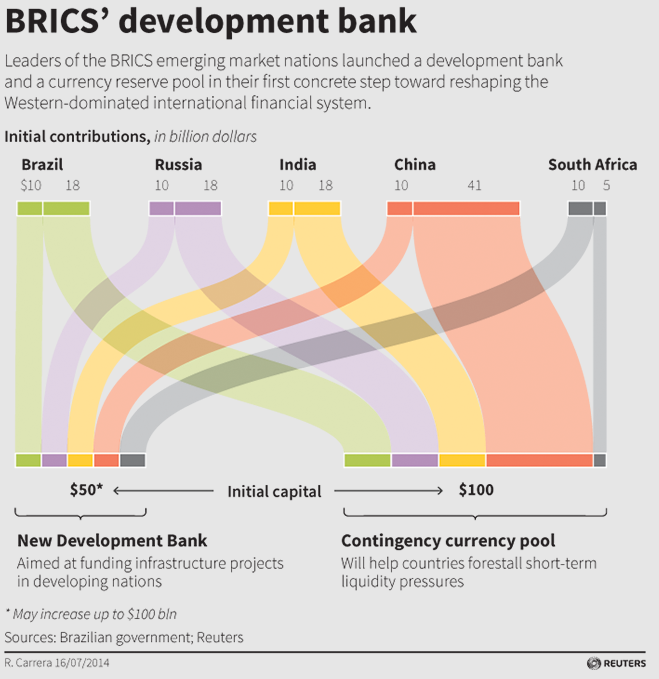
- In 2014, at the 6th Summit held in Fortaleza, Brazil, the BRICS adopted the so-called Fortaleza Declaration and Plan of Action.
- This included the organization’s plans for the future and focused on political dialogue, economic cooperation and integration, and cultural exchanges.
- The 14th Summit, chaired by China in 2022, aimed to strengthen cooperation between the then five member states. At this summit Russian President Vladimir Putin announced that the organization was working to design a new reserve currency based on a “basket” of BRICS currencies.
- The 15th Summit, which took place in Johannesburg, South Africa, in 2023 was particularly significant as five new countries were invited to join the organization (Argentina, Egypt, Ethiopia, Saudi Arabia and the United Arab Emirates). Although Argentina later declined to accept the invitation, other countries officially became BRICS members on 29 December 2023 with Saudi Arabia joining later.
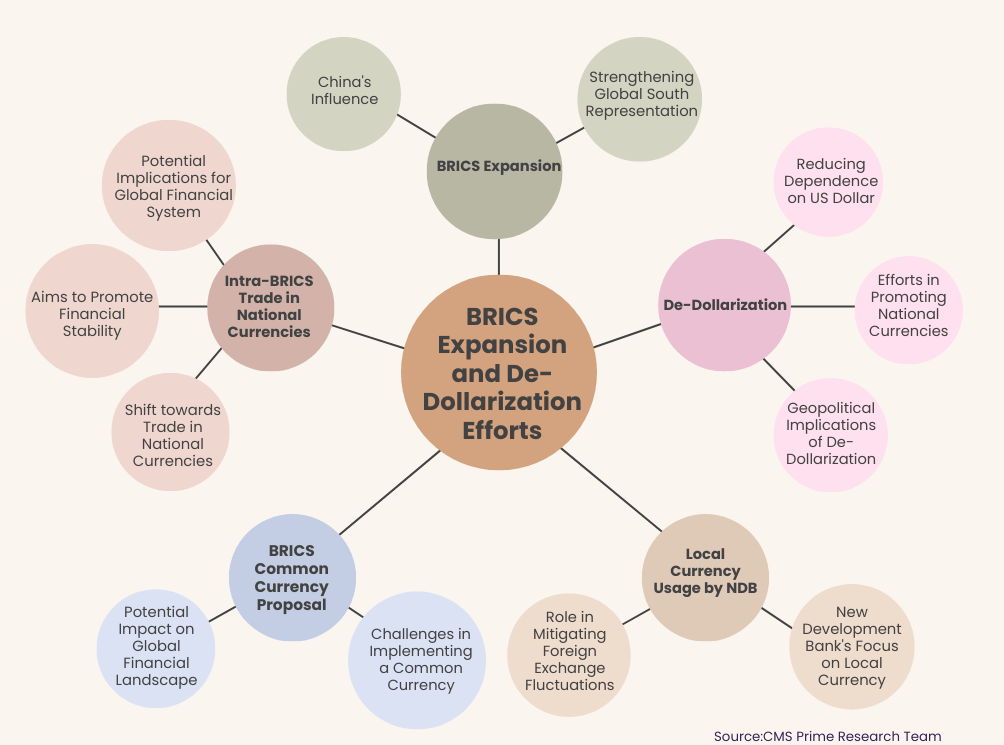
- The summit in Kazan may trigger substantial developments with significant and far-reaching implications. Specifically, the agenda is expected to include the creation of a common BRICS currency.
The most important project since the introduction of the euro
The common BRICS currency is undoubtedly the most ambitious project in the international monetary regime since the introduction of the euro in 1999.
However, it is not expected that a new currency will be fully unveiled during the summit in Kazan, but substantial progress has taken place in its design and development. Despite its many advantages, there are significant challenges to overcome before such a currency can be successfully implemented.
Furthermore, it is not entirely clear whether BRICS aims to create a simple medium of exchange between its members to settle transactions in international trade, or is building something more ambitious, such as a Monetary Union, similar to the Eurozone, with its own central bank. .
A Monetary Union would require years, if not decades, of preparation, harmonization of central bank policies, and agreement among states to replace their national currencies with a new, common legal tender.
The technical solution for cross-border trade
Indeed, the BRICS group does not seem to be aiming for economic convergence at present. Instead, it is designing a technical solution that would allow more efficient cross-border transactions.
In other words, the BRICS group wants to create a common medium of exchange that will be internationally accepted by all members of the organization, with transactions settled in an independent BRICS payment system. In fact, the BRICS are attempting to solve a very tangible problem.
When two countries trade with each other and pay each other in their national currencies (which is the case with some BRICS members), a country that sells more and has a trade surplus will end up with a surplus of another country’s currency – as happened with rupees in the case of Russia in 2013.
The BRICS currency will not be a conventional currency. It will not have a physical form, so it will be fictitious in a sense.
Its main purpose is to act as a simple technical solution to international transactions.
Indeed, at first, the BRICS common currency will likely be purely digital and will be used exclusively on the BRICS payment platform, called mBridge, supported by the Bank for International Settlements (BIS). The BRICS mBridge platform will serve as a central bank digital currency (CBD) settlement gateway. Essentially, it will act as an alternative to today’s most commonly used payment platform, called the Society for Worldwide Interbank Financial Telecommunication (SWIFT) system.
The structure of the new currency
Recent research indicates that a new BRICS currency (or mBridge currency nona) will be based on gold and a basket of sovereign currencies at a ratio of 40% to 60%—that is, 40% gold and 60% currencies of BRICS member states.
Since China is the largest BRICS economy, it is understood that under the proposal expected to be tabled, the basket of currencies will be dominated by the yuan. However, it remains to be seen whether India will support this solution, considering the tensions in its relations with China.
The dollar and gold
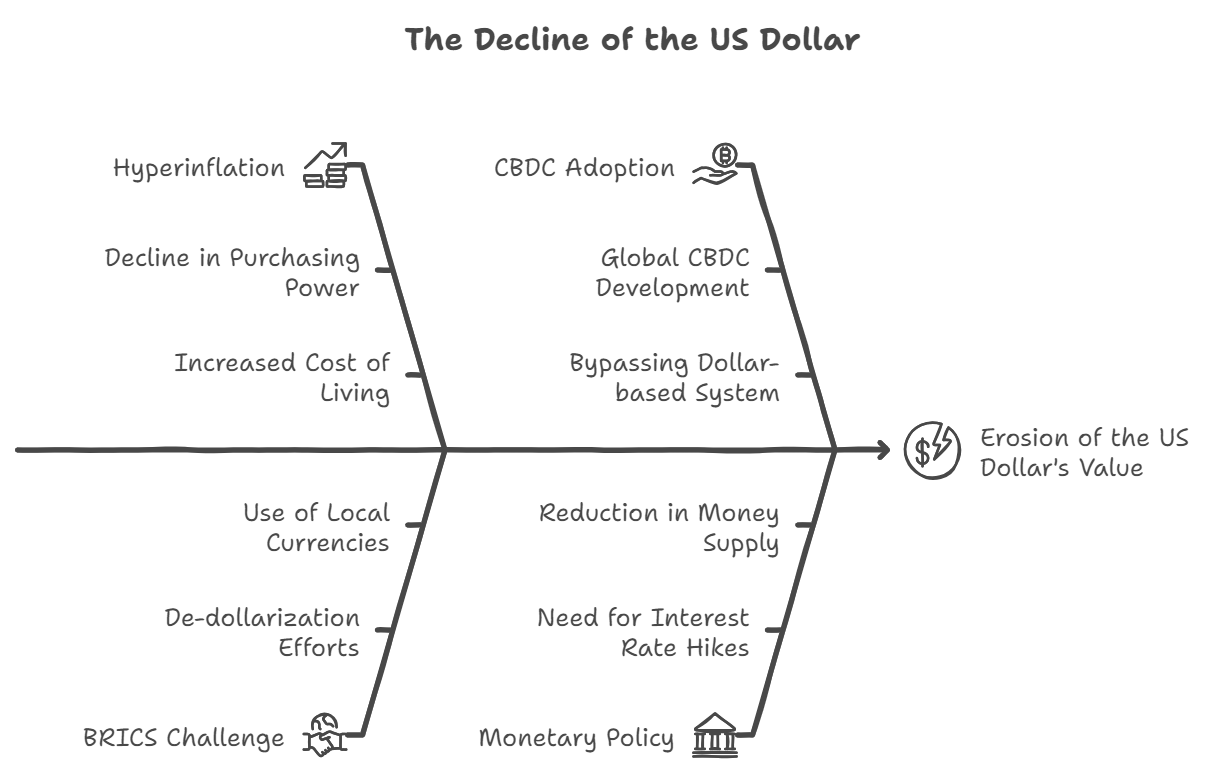
In any case, if the BRICS announce a roadmap to the common currency or otherwise make progress in establishing it, the development of a BRICS currency could affect the dollar and gold markets. Indeed, if the BRICS succeed in launching a peer-to-peer digital currency platform for cross-border payments, the demand for dollars will almost certainly decrease. On the contrary, the demand for gold will increase.
In fact, for the last year or so BRICS central banks have been doing just that – buying gold and selling US Treasuries. No wonder gold has made new highs every month since March 2024 and continues to trade near all-time highs.
Overall, a new currency will allow members of the BRICS group to make seamless payments across borders, reduce transaction costs and make them more independent.
The wider impact on a global scale is difficult to analyze, but could potentially be very significant. Never before has the hegemony of the US dollar been challenged to such an extent that its very status as a reserve currency becomes questionable.
Although the BRICS are still far from replacing the dollar as a reserve currency, the initiative may introduce new dynamics that could affect the dollar’s place in international trade and change the global financial system.


