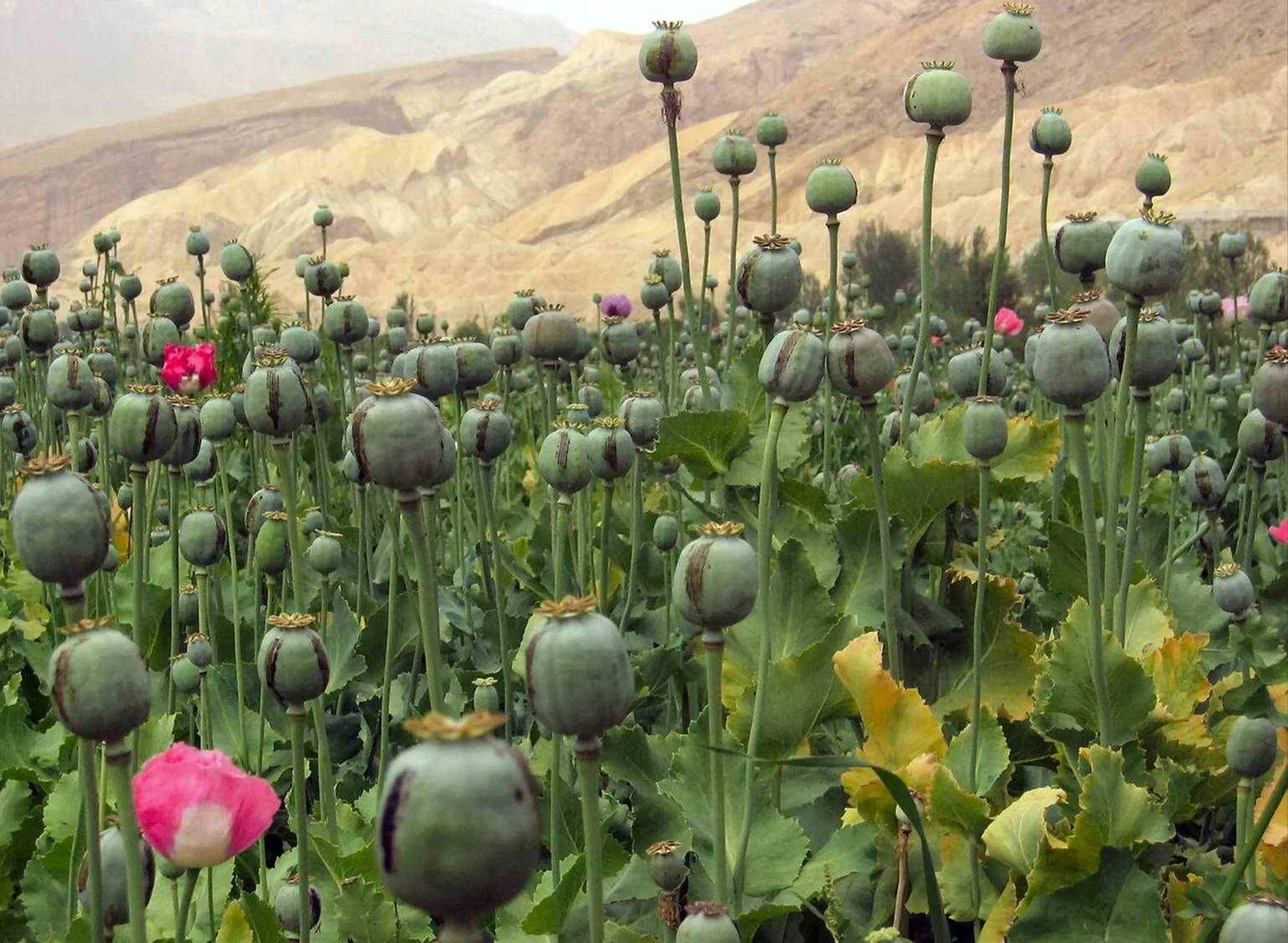
Before the Taliban returned to power in 2021, Afghanistan was the world’s largest producer of opium. It was the source of 90% of the world’s heroin, with Europe being the primary consumer.
A religious decree issued by Taliban leader Hibatullah Akhundzada in April 2022 changed the situation. It banned the cultivation of opium poppies, as well as the production, trafficking, and use of all narcotics in Afghanistan.
This decision led to an unprecedented collapse in opium production within the country, upending the economic, geopolitical, and social landscape of the region.
According to the UN Office on Drugs and Crime (UNODC), cultivation dropped by 95%—from 2,330,000 stremmas to just 108,000.
Production fell from 6,200 tons to 333. However, for the first time this year, poppy cultivation in Afghanistan is increasing rapidly.
The annual UNODC report indicates an increase of approximately 330%. Opium production increased fivefold, to nearly 1,500 tons.
This quantity is sufficient for approximately 150 tons of pure heroin—that is, the annual demand for the whole of Europe.
Desperation provides the impetus – Afghanistan is struck by successive crises
Drought has reduced harvests, and international humanitarian aid is now arriving only in trickles—all while more than six million refugees and migrants have been forced to return from Iran and Pakistan since October 2023, left without jobs or hope for the future.
For most, the solution is poppy cultivation, which yields returns many times higher than wheat.
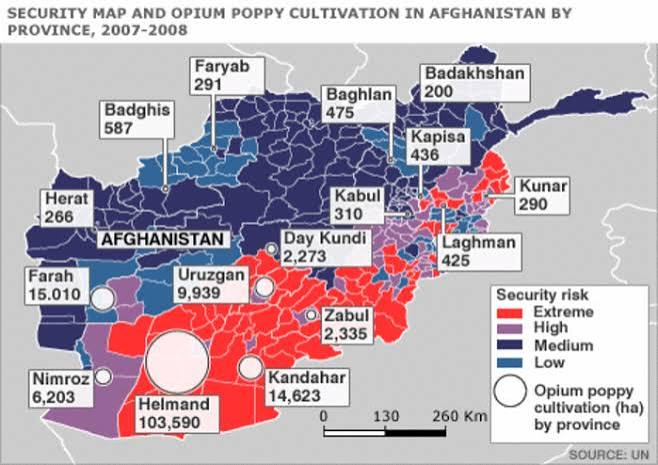
This activity is concentrated primarily in the mountainous Badakhshan region in the northeast, where the Taliban’s control is limited.
In the southwest, cultivation has nearly doubled over the past year, though it remains concealed—tucked away among wheat crops or hidden behind high walls.
Fearing unrest, the Taliban have banned house searches conducted without a judicial warrant, signaling a degree of tolerance. It has now spread beyond the porous borders.
There are various tribes in Afghanistan. The Pashtuns are one such group. Most of them reside within the borders of the artificial state of Pakistan. Peshawar is their capital.
The Afghanistan-Pakistan-Iran Border as a Narco-Hub
The flourishing of poppy cultivation in Pakistan and Iran is a cause for even greater concern.
Opium is now being produced there on a large scale, utilizing Afghan expertise.
Driven by the Taliban’s ban, Afghan opium farmers—primarily from Kandahar and Helmand—have crossed the border, renting land or entering into partnerships with local landowners.
Consequently, the border regions between Afghanistan, Iran, and Pakistan are now considered a global hub for opium production.
In the Pakistani province of Balochistan, satellite imagery from the British firm Alcis has identified over 90,000 stremmata (approximately 9,000 hectares) of poppy crops.
This area is sufficient to meet the entire heroin consumption of Great Britain.
Cultivation is concentrated in the Loralai and Killa Abdullah districts.
These areas lie at the heart of a massive shift in opium cultivation from Afghanistan to its neighbor. Cultivators have used solar-powered water pumps to transform arid tracts of land into fertile poppy fields.
In the town of Gulistan, in the Qilla Abdullah district, open markets now operate where raw opium is sold freely and funneled into international trafficking networks.
This reportedly takes place with the tacit approval of local figures and high-ranking military officials who, according to allegations, collect “commissions.”
Islamabad denies this.
The UNODC considers Pakistani production to be marginal, yet it acknowledges signs that production is shifting.
Similarly, in Iran, the eastern province of Sistan and Baluchestan remains the primary production hub.
Cultivation has also spread to other Iranian provinces along the borders with Pakistan and Afghanistan, as well as to the country’s western and southern regions—with reports indicating that landowners are investing in expensive drip-irrigation systems.
This suggests they have no fear that their crops will be destroyed.
Iranian authorities, preoccupied since late February with the conflict involving the United States and Israel, have either been unable or unwilling to intervene. In some regions, the areas under poppy cultivation have now doubled and are expected to reach much higher cultivation levels by 2027.
The Geopolitical Vicious Cycle
In a region plagued for decades by war, geopolitical volatility, and poverty, conditions are ripe for the growth of a shadow economy and criminal networks. However, the shifting of opium production is not merely a matter of establishing an illicit economy.
A regional axis of instability is becoming entrenched and reinforced—a nexus where organized crime, armed groups, and political instability intersect.
Both Pakistani Balochistan and Iranian Sistan-Baluchestan serve as hotbeds for an insurgency led by separatists from the Sunni Baluch minority.
In Pakistan, armed groups frequently attack security forces, buses, and trains, while exerting increasing control over the drug trade.
They also vie for profits from the smuggling of fuel and minerals. These revenues fund their struggle. This, in turn, weakens state control—which, in a self-perpetuating cycle, further facilitates poppy cultivation.
It is a vicious cycle that—compounded by widespread corruption—is difficult to break.
The consequences extend beyond the region
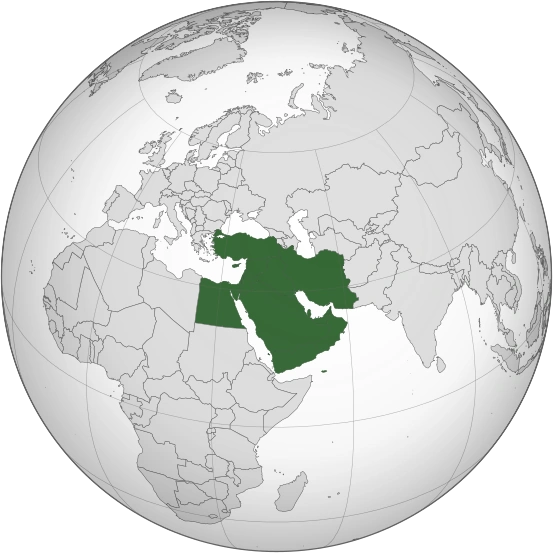
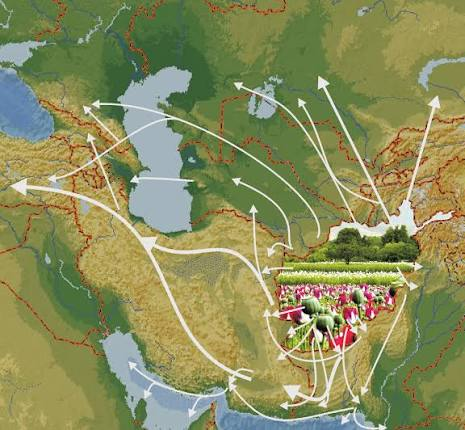
The supply of the international heroin market continues, with Europe as a key destination, while new routes are opening up via the Middle East.
For Islamabad, the security of its already tense border with Afghanistan—where hostilities have also recently broken out—is now linked to a cross-border illicit economy.
For Tehran, this problem compounds the challenges of an ongoing war and an economy on the brink of collapse. Paradoxically, the crisis strengthens the position of the Taliban.
Their ban did not eliminate the networks; rather, it highlighted that the Afghan crisis is a regional one. Counter-narcotics efforts have emerged as one of the few areas for cooperation.
This is particularly significant at a time when the Taliban—whose regime has, to date, been officially recognized only by Russia—are building bridges (including with Europe, due to the issue of migration) in an effort to gradually end their international isolation.