


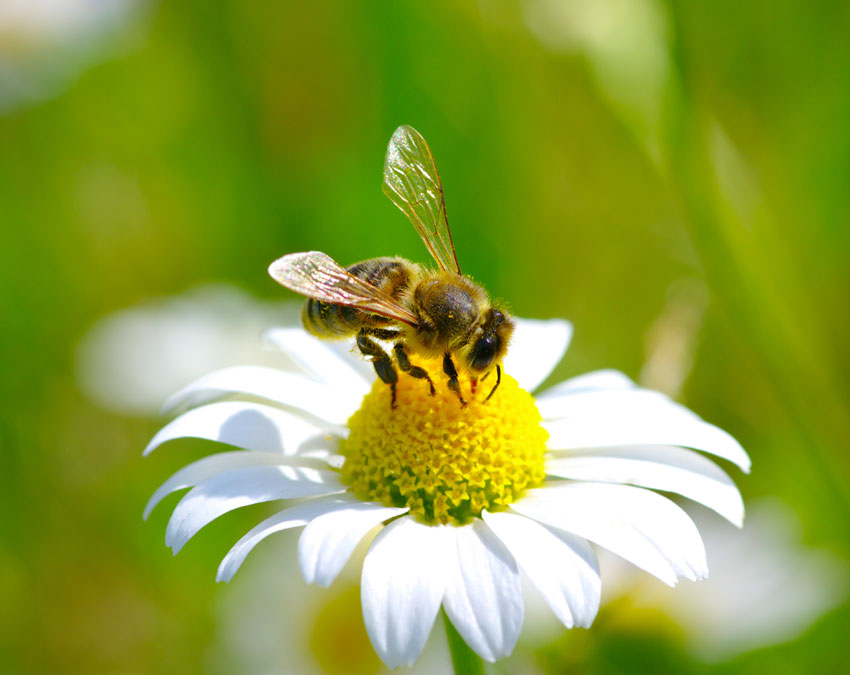
Bees can produce… eco-friendly plastics. Believe it or not, they can. Specifically, a certain type of ground-nesting bee (Colletes inaequalis) produces a natural polyester—very similar to polyethylene (a common industrial plastic widely used in packaging and many other products)—to line the interior of its nest.
This was discovered by researchers from Virginia Tech and the University of Tennessee, as detailed in a study titled “Rapid soil degradation of a cross-linked, semicrystalline polyethylene-like polyester produced by Colletes bees” published in the scientific journal PNAS (Proceedings of the National Academy of Sciences).
They were particularly pleased to discover that this natural plastic biodegrades rapidly in the soil—within a few months—rather than taking… centuries, as is the case with conventional industrial plastics.
An eco-friendly alternative to polyethylene
Specifically, scientists observed that the levels of this natural polyester—derived from bees—dropped from 73% to 40% within just four months when placed in soil samples.
As noted by the study’s lead author, Dr. Jonathan Coutts, an assistant professor in the Department of Sustainable Biomaterials at Virginia Tech, this natural, bee-derived plastic could offer a far more eco-friendly alternative to polyethylene—a material produced by the millions of tons annually that carries serious environmental consequences.
“We have a naturally produced polyester that mimics polyethylene,” Professor Coutts remarked, explaining the significance of this finding.
“Nearly one-third of global annual plastic production consists of polyethylene—we are talking about almost 160 million tons of polyethylene per year.
Polyethylene can persist in the environment for centuries; even when it does break down, it continues to burden ecosystems by taking the form of microplastics.
And it is not just polyethylene: many industrial plastics marketed as ‘biodegradable’ actually break down very slowly, or only under specific industrial conditions.”
Investigating the chemical structure of the bee’s plastic
The research team is currently working to determine the chemical structure of the natural polyester produced by the bee—a structure that enables it to break down so rapidly.
Our goal is to answer this question and subsequently replicate nature’s process on a large scale. The industry must be able to reproduce this process, rather than relying on the production of plastic by bees themselves.