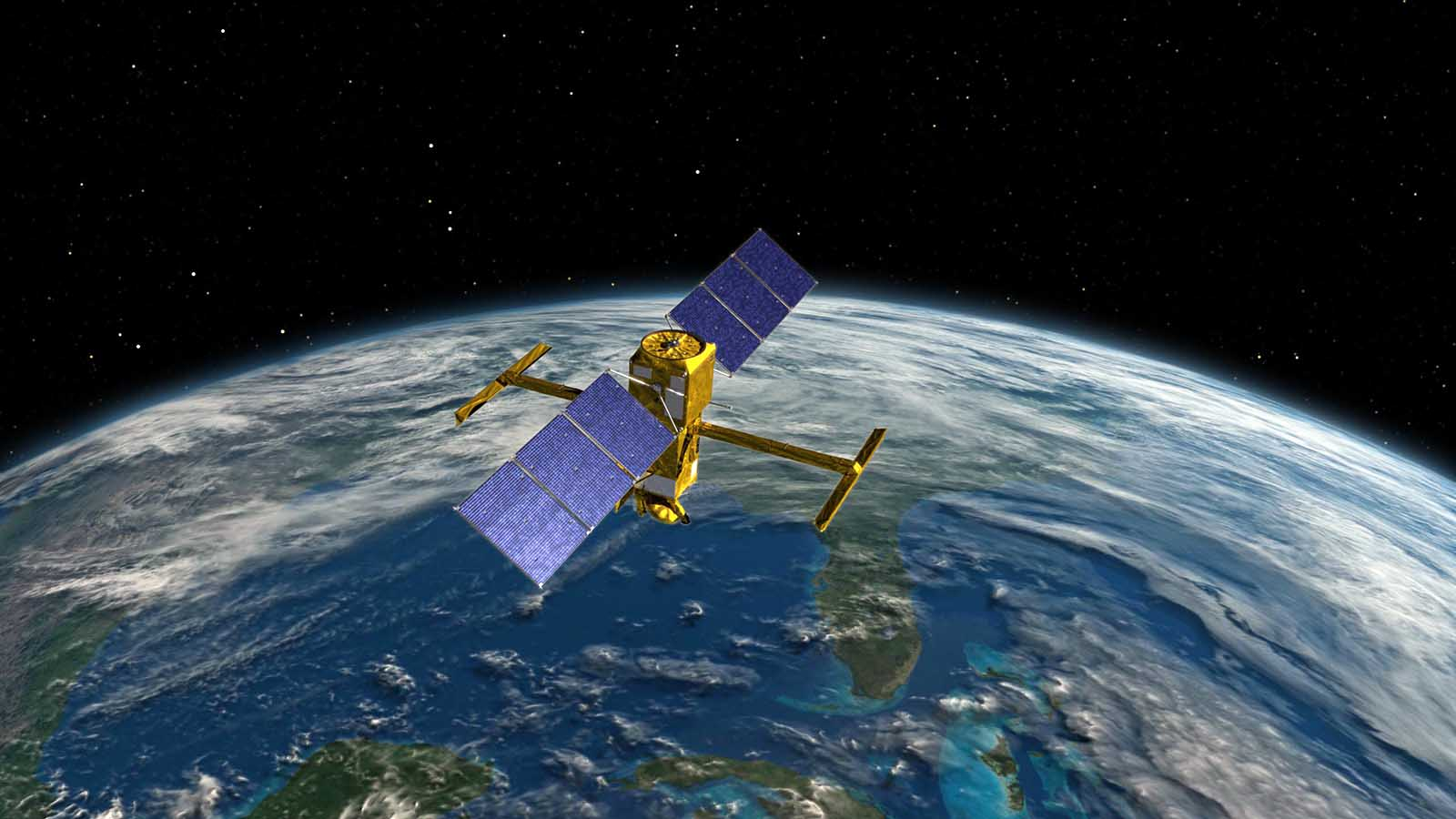
The Earth’s waters, oceans, lakes and rivers are under the microscope of a new research program. In this context, a satellite will be launched tomorrow that will collect the necessary data for the study of water and its relationship with climate change. An international NASA-led satellite mission is scheduled to launch from Southern California in the early hours of today, Thursday, as part of a major Earth science program to conduct a comprehensive survey of the oceans, lakes and rivers for the first time. in global level.
This advanced radar satellite has been named SWOT (Surface Water and Ocean Topography) and is designed to give scientists an unprecedented picture of the water that covers 70% of the planet, illuminating with new scientific knowledge both engineering, as well as the consequences of climate change.
A Falcon 9 rocket carrier owned and operated by billionaire Elon Musk’s commercial launch company SpaceX is scheduled to lift off before dawn tomorrow from the Vandenberg Space Launch Base in the US, 275 kilometers northwest of Los Angeles, to put in orbit the SWOT satellite.
If all goes as planned, the SUV-sized satellite will be collecting research data within a few months. SWOT incorporates approximately 20 years of development using sophisticated microwave-based radar technology. This technology will provide measurements of oceans, lakes, reservoirs and rivers globally and in high resolution for 90% of the planet.
The satellite was designed and built by NASA’s Jet Propulsion Laboratory (JPL) located near Los Angeles. It was developed by NASA in collaboration with space agencies in France and Canada, while the SWOT program implements one of 15 space missions listed by the National Research Council in the US as programs that should be carried out by NASA within the next decade.
“It’s really the first mission to observe almost all of the water on the planet’s surface,” said Ben Hamlington, a JPL scientist who also leads NASA’s Sea Surface Change Observations team. One of the mission’s central goals is to explore how the oceans absorb atmospheric heat and carbon dioxide in a natural process that moderates global temperatures and climate change.