
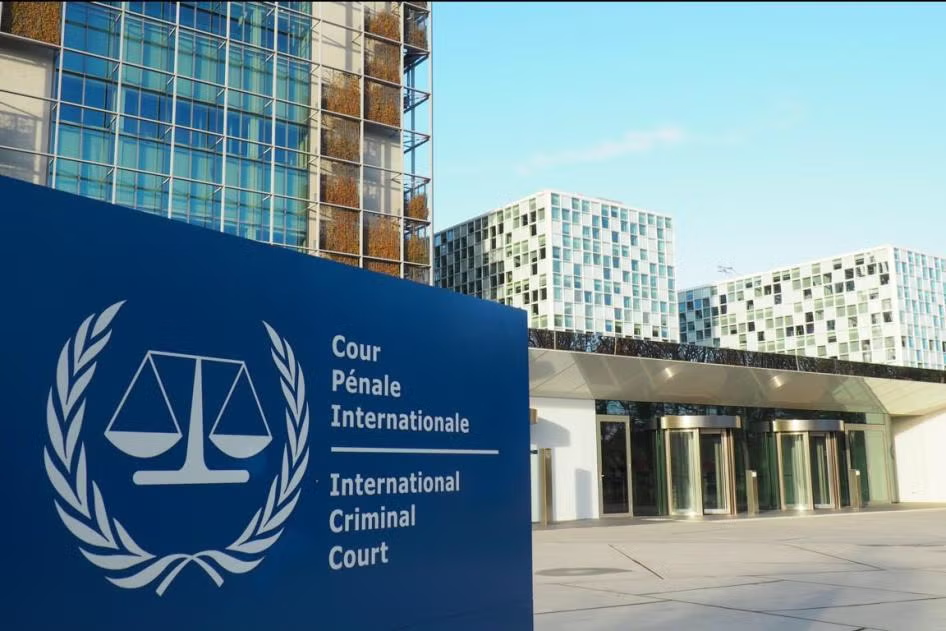
At a time when foreign ministers from US-allied nations are protesting Washington’s sanctions against the International Criminal Court, the US has already enacted legislation to address scenarios requiring the rescue of detainees held by the Court. This law applies not only to American soldiers but also to individuals from US-allied countries.
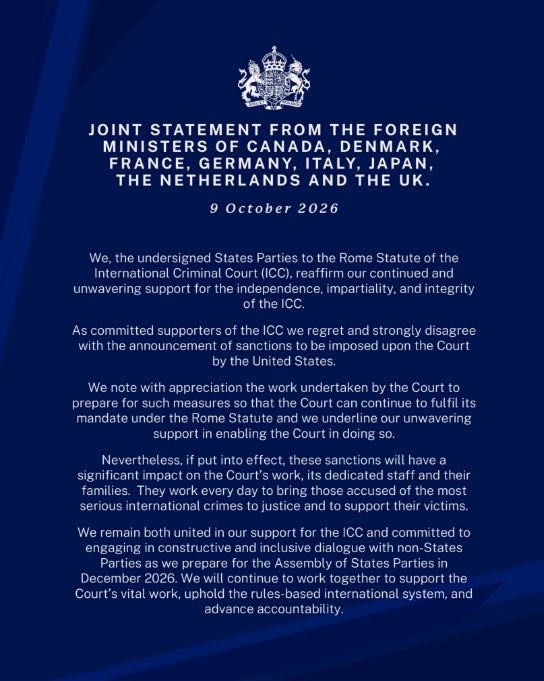
The foreign ministers of Canada, Denmark, Germany, France, Italy, Japan, and the United Kingdom expressed their appreciation for the measures the Court has taken to prepare for the sanctions; however, they warned that, should the sanctions be implemented, they would have “significant consequences for the work of the Court, its dedicated staff, and their families”—people who, as they noted, “work daily to bring to justice those accused of the gravest international crimes and to support their victims.”
At the same time, they “reaffirm their continued and unwavering support for the independence, impartiality, and integrity of the International Criminal Court.” In the concluding remarks, they pledge to “continue working together to support the vital work of the Court, defend the rules-based international system, and promote accountability.” The key phrase is the “rules-based international system.”
Nobel Peace Prize Announced and New Sanctions Imposed on the International Criminal Court
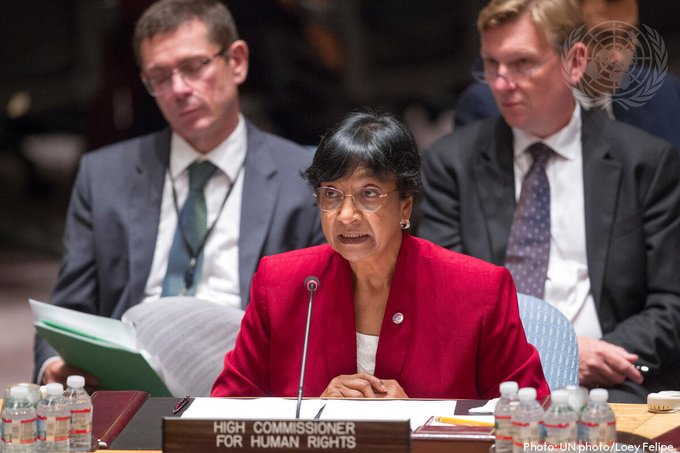
South African judge Navi Pillay, former UN High Commissioner for Human Rights, has been awarded the world’s highest honor for peace: the Nobel Peace Prize. Pillay was honored “for her efforts to promote peace and international law,” as announced on Friday by the prize committee in Norway.
Shortly after the announcement of the Nobel Peace Prize, the US administration announced the imposition of sanctions on the International Criminal Court.
“President Trump will never allow the International Criminal Court to prosecute Americans,” Secretary of State Marco Rubio said in a statement. No one moved to impose sanctions—though perhaps they should have in many documented instances—including for the supply of 900-kilogram bombs to Israel that leveled city blocks in Gaza, the attack on the Larak volleyball court where young female athletes were killed, or the attack on the school in Minab.
Yet now that the full picture has emerged, what remains unknown is that the US has been making provisions against potential sanctions or arrest warrants targeting its own officials and allies for more than two decades.
The American Service-Members’ Protection Act (ASPA)
The American Service-Members’ Protection Act was signed into law by President George W. Bush on August 2, 2002, and is also known by its nickname: the “Hague Invasion Act.”
The U.S. withdrew its signature from the Rome Statute two months before it entered into force and immediately enacted the Hague Invasion Act.
The law prohibits U.S. federal, state, and local authorities from cooperating with, exchanging information with, or extraditing suspects to the International Criminal Court.
The law authorizes the U.S. President to use “all means necessary and appropriate to bring about the release of any U.S. or allied personnel being detained or imprisoned by, on behalf of, or at the request of the International Criminal Court.” The Rome Statute has been signed by 125 countries. Twenty-nine countries have signed but not ratified it; of those 29, the United States is the one that withdrew. This is also the reason why the law restricts US participation in UN peacekeeping operations unless US personnel are granted “immunity from prosecution by the International Criminal Court.” The US seeks immunity from war crimes charges in order to participate in UN peacekeeping operations.
The law prohibits the United States from providing military aid to the government of a country that is a member of the International Criminal Court. Exempted from this provision are NATO members (all NATO members except Turkey and the US have signed the treaty) and major non-NATO allies (specifically Australia, Egypt, Israel, Japan, Jordan, Argentina, the Republic of Korea, and New Zealand are listed, while Taiwan is explicitly exempted).
Trump: I don’t know the lady
After first describing Navi Pillay as a mysterious figure, the US President said, “The Nobel Prize was awarded today to a liberal individual working at the United Nations whom no one has ever heard of. I personally have never heard of her. I know a lot of people, but I’ve never heard of this particular person—anyway, congratulations. In all the wars I’ve resolved, I never turned to the United Nations. They were of no use to me whatsoever.”
He went on to say, “The United States of America, which I represent as your president, should have received the Nobel Peace Prize, but didn’t. This is an indelible stain on Norway.”
He then claimed to be making billions a day from Venezuela and to have acquired Greenland for the right price—”zero.” These moves, evidently—along with the war against Iran—worked against his candidacy for the Nobel Peace Prize.

