




On the modern battlefield, the power of a weapon system is no longer measured solely in terms of horsepower, speed, range, or explosive payload. It is increasingly measured in kilowatts. Radars, jammers, sensors, mission computers, self-protection systems, and—increasingly—directed-energy weapons all demand ever-greater power reserves; indeed, these demands are becoming a decisive factor in the design of the weapon system itself, which must incorporate the necessary infrastructure and space for generating electrical power.
Furthermore, for a combat platform, simply having the required electrical energy available is not always enough. It must be capable of delivering the necessary power at the moment of engagement—which necessitates an electrical energy storage system—while the cooling of electrical circuits and devices is also a critical factor. Consequently, the issue becomes increasingly complex, often creating an intractable vicious cycle involving weight, volume, and performance.
The F-35 and the Cost of Excessive Heat
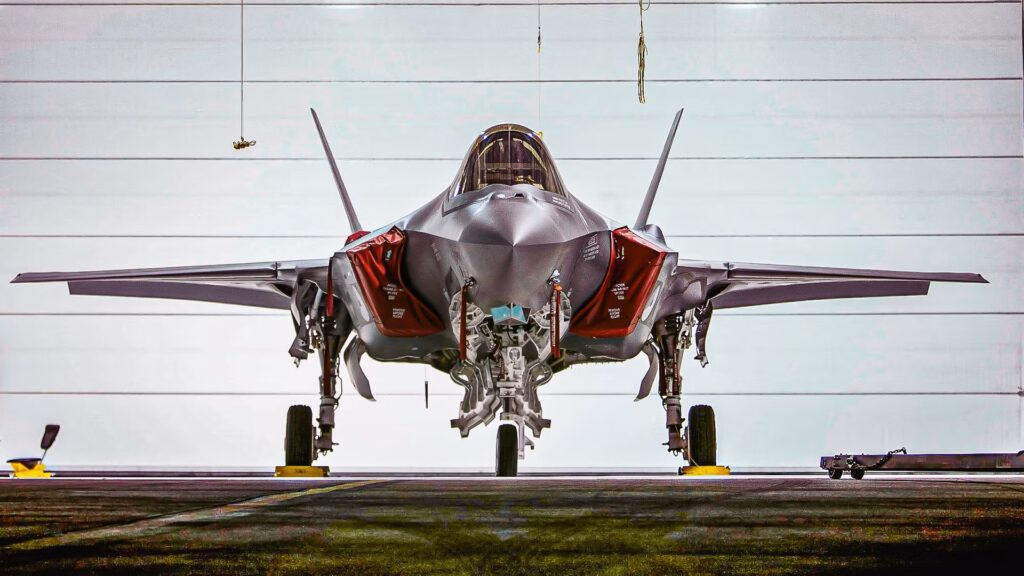
The F-35 serves as a prime example. The fighter jet features two main electrical power generation channels of 80 kW each, providing a total nominal capacity of 160 kW at 270 volts DC. While this system was impressive at the time of its design, a significant portion of the power is consumed by the aircraft’s core functions: flight control mechanisms, fuel pumps, computers, sensors, communications systems, and electronic warfare capabilities.
The issue extends beyond mere electricity generation. The onboard electronics convert a large share of the power they consume into heat. According to a report by the U.S. Government Accountability Office, the F-35’s existing cooling system is already overburdened. To cope with the load, it requires additional power extraction and airflow from the engine, forcing the engine to operate beyond its original design parameters; this results in increased long-term wear, a need for more frequent maintenance, and higher-than-projected costs due to the requirement for more spare parts and inspections.
This does not mean that the F-35 constantly flies with afterburners engaged to power its electronics, as is sometimes claimed. It means that the engine is subjected to a heavier load than originally anticipated for power generation and cooling. The GAO estimates that this additional wear and tear could increase fleet maintenance costs by approximately $38 billion.
Furthermore, the system’s current cooling capacity stands at around 30 kW. For future Block 4 configurations—featuring a new radar, more powerful computers, and additional electronic warfare capabilities—the target has been raised to between 62 and 80 kW, as all these functions require continuous, high-capacity heat dissipation.
Jammers and the F-16 Viper
The challenge is particularly acute regarding airborne electronic warfare systems. A modern jammer must detect, classify, and counter radars that constantly change their frequency, waveform, and operating mode. Digital Radio Frequency Memory (DRFM) enables the creation of convincing false returns but requires powerful processors and high-power transmitters.
As transmission power increases, so does the jammer’s ability to affect a hostile radar from a greater distance. However, this simultaneously increases the system’s energy consumption, heat generation, and cooling requirements. Consequently, in a single-engine fighter with a compact airframe—such as the F-16—every kilowatt counts.
F-16C/D aircraft are equipped with a main generator rated at 60 kVA, compared to the 40 kVA found on the early F-16A/B models. There is also a 10 kVA backup generator. However, the power outputs cannot simply be combined, as backup sources are intended to maintain critical functions in the event of a failure, rather than to power additional systems during normal operation. Furthermore, the main generator’s 60 kVA output is not entirely available for the electronic warfare system, as it already powers the flight controls, instruments, pumps, communications, Link 16, displays, computers, and the APG-83 AESA radar. The latter was specifically designed to fit within the F-16’s existing power and cooling constraints.
While the maximum power consumption figures for the various electronic warfare systems proposed for the F-16 have not been publicly released, the evaluation must clearly go beyond simply determining which jammer is the most powerful. Crucial factors include the ability to integrate the system into the aircraft and maintain peak operational performance without degrading radar functionality or overloading the cooling system—and, above all, the capacity for uninterrupted operation for the entire duration of a mission.
Frigates and Destroyers
French FREMM frigates are equipped with four electrical generators—each rated at approximately 2.2 MW, for a total of 8.8 MW—because they utilize electric motors for economical propulsion. The newer German F125-class ships feature four 2.9 MW generators, providing a total power output of 11.6 MW.
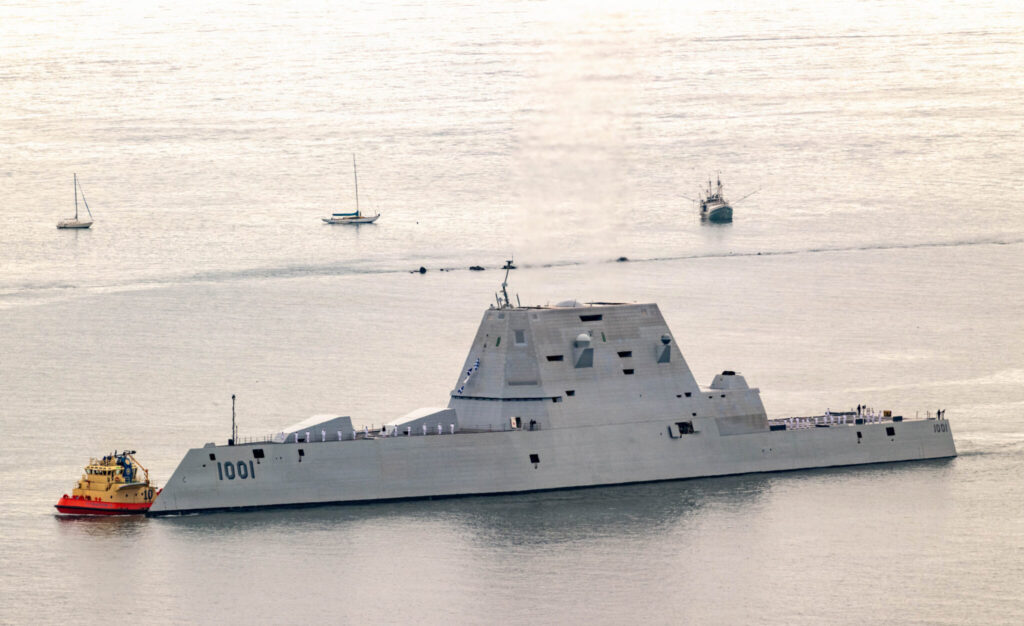
A prime example, however, is the US Zumwalt-class destroyer; designed from the outset as an “electric ship,” it features integrated electric propulsion and a total power generation capacity of approximately 78 MW. Yet, this came at a very high price, as the costs associated with developing, controlling, and maintaining the vessel’s electrical power system reached exorbitant levels.
Leopard 2A8: just 20 kW with the engine off
In armored vehicles, the scale is much smaller. The Leopard 2A8’s main engine delivers approximately 1,100 kW of mechanical power, but the most critical figure for its electronics is the auxiliary power unit (APU). The latest configuration features an APU with an output of around 20 kW, compared to 17 kW in some Leopard 2A7V models and even less in older versions.
This 20 kW output allows sensors, communications, and other systems to operate while the main engine is shut down, thereby limiting fuel consumption, noise, and the thermal signature. However, it does not represent a large reserve of power. The Leopard 2A8 incorporates the Trophy active protection system—comprising four radars, computers, and countermeasure launchers—alongside new cameras, thermal sights, a command system, and air conditioning.
Consequently, if a high-power broadband anti-drone jammer is added, the margin of available electrical power is severely restricted or even eliminated. Consequently, there is an international discussion regarding the addition of extra power generators to older tanks to ensure sufficient power for stationary operations—without relying on the main engine—or to power the drone jammers that are increasingly becoming standard equipment. In this area, Greece’s own Intracom Defense is doing notable work by developing such solutions, such as the GENAIRCON auxiliary power system for main battle tanks and armored vehicles, as well as the HEPS generator family designed to support field deployments.
Lasers, Radar, and the Megawatt Battle
The demand for greater electrical power is particularly evident in laser systems. Systems in the 30 to 50 kW range are suitable primarily for small drones. Power levels of 150 to 300 kW are being considered for cruise missiles and more resilient targets, while countering ballistic or hypersonic threats pushes the discussion toward the one-megawatt mark. In these cases, too, electrical consumption exceeds the nominal beam power.
With an efficiency of, say, 30% to 40%, a 300 kW laser might require an electrical input of 750 kW to 1 MW. The remaining 450 to 700 kW is converted primarily into heat. Consequently, a ship seeking to integrate a modern high-power laser may face a requirement for nearly a megawatt of power—plus a battery system to store energy for peak consumption, essentially for each “shot.” These additional generators and batteries, in turn, necessitate robust power management circuits and, of course, industrial-scale cooling.
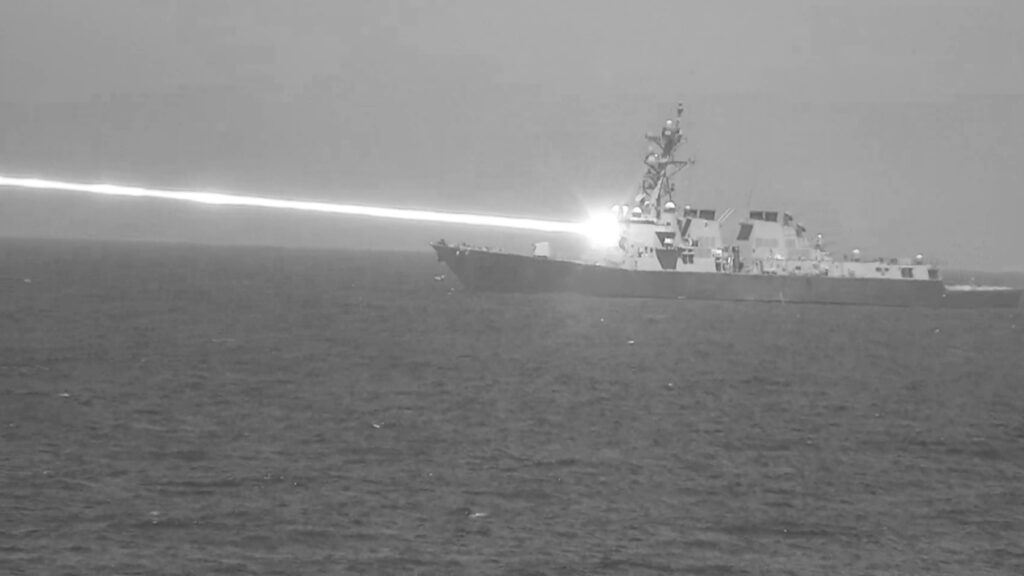
Similarly, new AESA radars impose significant power demands. On Arleigh Burke Flight III destroyers, electrical generation capacity was increased to three 4 MW generators—totaling 12 MW—primarily to support the more powerful AN/SPY-6 radar. Nevertheless, US Navy officials have warned that adding high-power lasers would require either shedding other loads or employing extremely aggressive power management.
Electrical power is increasingly evolving into a form of “ammunition.” Those possessing adequate generation, storage, distribution, and cooling capabilities can detect targets sooner, jam more effectively, and execute successive engagements. Those lacking these capabilities will be forced to choose which systems remain active.
For future weapon systems, energy reserves must now be factored into the design process alongside weight, space, and stability. In the conflicts of the coming decade, the critical question will not merely be how many weapons a platform carries, but how many kilowatts it can generate, distribute, and dissipate—and for how long it can keep its weapons electrically and thermally “alive.”
