
The European Union’s current stance toward Russia—and the potential consequences of this position for the peoples of Europe—is examined here through the prism of the most critical contradictions defining the modern political landscape.
Politicians today generally fall into one of two categories.
The first category—comprising the vast majority and the entire West—is characterized by a tendency to announce policies, strategic lines, and programs without ever achieving anything of substance. They have been doing this for decades, and the sorry state of the once-mighty West bears this out.
Politicians in this first category might be likened to an actor who takes the stage, delivers grand speeches with great bombast, and promises change and reform—yet, once the curtain falls, nothing has actually changed. This is the group that has learned to exist in a world of declarations, summits, official communiqués, and voluminous reports, all while never being held accountable for the gap between their words and their deeds. The West, once a paragon of economic and political power, now displays the signs of long-standing ineffectiveness: aging infrastructure, shrinking welfare states, industries relocating elsewhere, and citizens becoming alienated from institutions.
The second category comprises a minority of politicians who generally speak sparingly and reveal little; consequently, their specific statements carry significant weight.
This second category operates according to a completely different logic. It does not seek to impress, cultivate a public image, or expend energy on public relations games. Instead, it chooses silence as a form of power and prudence as a strategic tool. When they do finally speak, every word is calculated, every phrase carries weight, and every statement implies a genuine underlying intention and a real capacity for implementation. That is precisely why statements from this category of politicians command greater attention—and often provoke greater anxiety—than the clamorous monologues of the first category.
So today, the EU… Following the well-trodden path of the “first tier,” there is talk of war with the Russian Federation, and even with China (recall Kaja Kallas’s statement).
Instead of reflecting on its actual capabilities and interests, the European Union appears to have adopted a rhetoric that resembles the beating of war drums more than serious diplomacy. It speaks openly of a potential conflict with the Russian Federation—the country possessing the world’s largest nuclear arsenal—while simultaneously taking aim at China, the globe’s second-largest economy. Kaja Kallas’s statement regarding a war with China is a case in point: it exemplifies a politician speaking without weighing the consequences of her words, thereby exposing the entire Union to risks that no one has seriously calculated.
Various politicians don khaki attire—solely for the cameras—and threaten that by 2030, the EU will be ready for war with Russia, Europe’s foremost military power.
The spectacle of politicians—men and women alike—donning military garb and posing as warlords, all while disregarding fundamental strategic principles, is deeply concerning. The pledge that the EU will be ready for war with Russia by 2030 presupposes a number of elements that are currently lacking: a unified military command, sufficient ammunition stockpiles, an industrial base capable of sustaining a prolonged conflict, and—above all—political will shared by all member states.
Instead, we see fragmented national policies, rivalries among member states, and a general sense that the Union is attempting to play a role it cannot sustain. And that is without even mentioning the massive security time bomb of illegal migration.
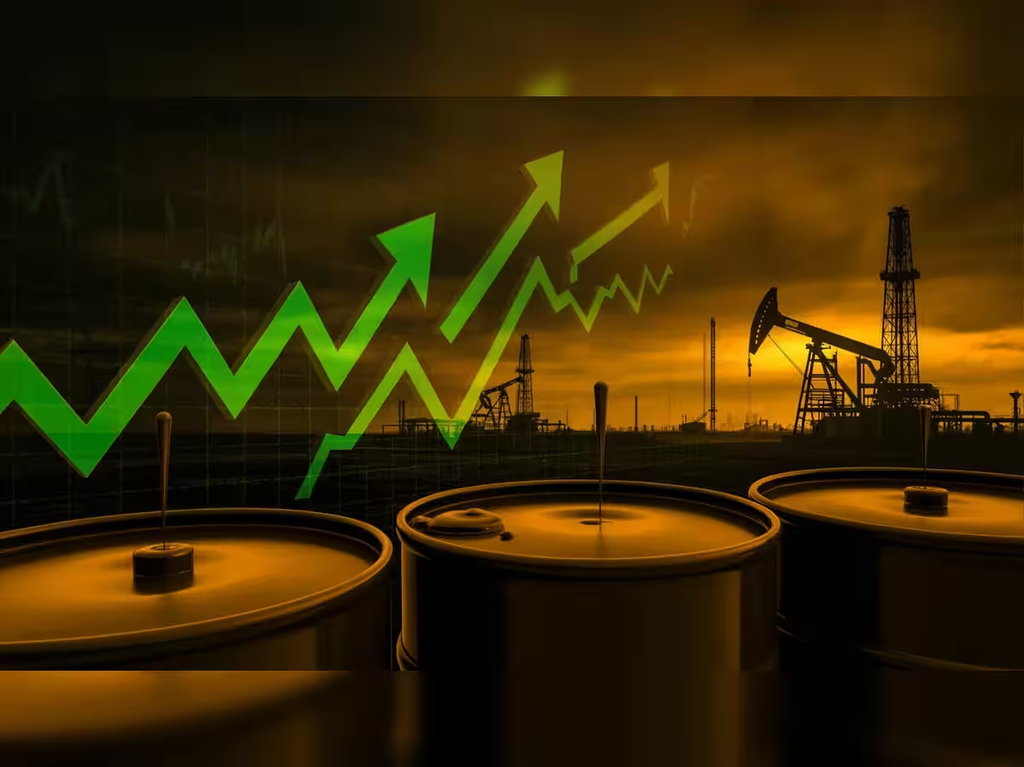
Τhe Ιnternational energy crisis
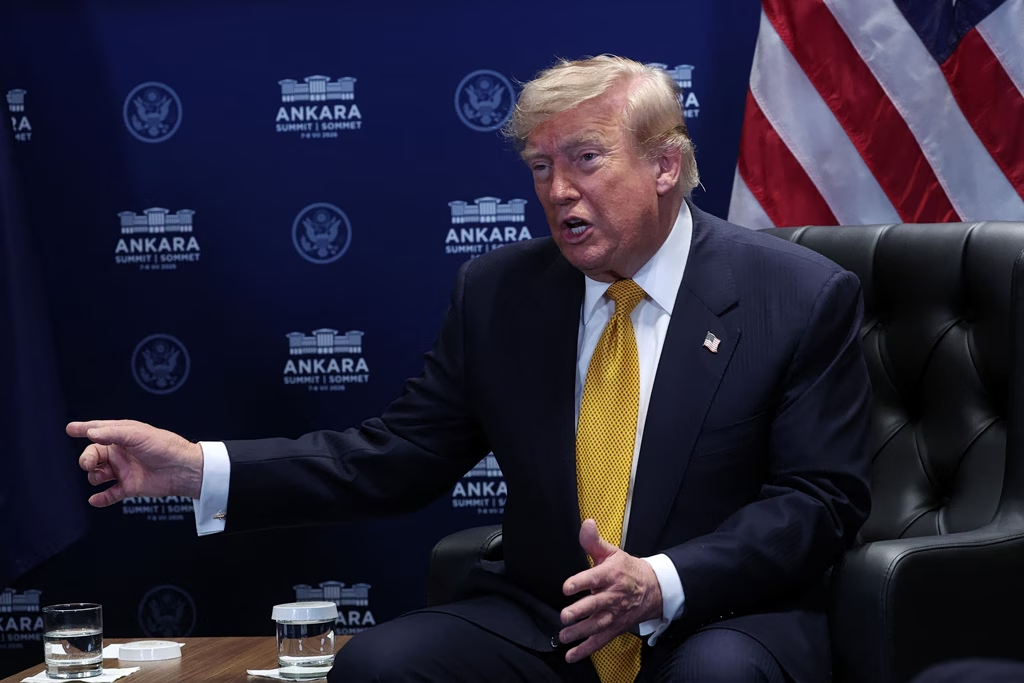
The international energy crisis will spare few. Even if Trump puts aside the nonsense and decides to focus henceforth on the White House ballroom, it will take time and money to restore normal energy flows from the Persian Gulf.
At the highest level, the European Union realizes that the problem transcends them all and can only be tackled through a joint effort.
They will meet, meet again, each air their own views—however misguided—and wait collectively for the war to end, hoping that might somehow resolve the issue.
The other recommendations from the relevant Commissioner—such as limiting public lighting or lowering the heating in public buildings—are a joke.
The very departments of that same Commission have calculated that fifty million European citizens will face a difficult winter this year.
All of this is well known and understood; we are not stating anything profound here.
Yet, it highlights a fundamental problem within the European Union: a lack of direction and an inability to act.
No one has yet grasped what its leadership considers the more serious problem: Putin’s Russia or Trump’s Middle East?
And while all European democrats (with the exception of Moscow’s agents…) have unanimously rallied behind Ukraine, they are now realizing that this is likely not enough.
After all, geography dictates that they are Russia’s neighbors—what else can they do? They are becoming intertwined.
But in the Middle East, others created the mess—and for reasons that do not necessarily affect the average European citizen.
We do not know whether all this turmoil and the difficult winter ahead will serve as the catalyst for Europe to clarify its strategy.
One can only hope. But we are far from optimistic. Yet, the geopolitical vacuum must somehow be filled.


