



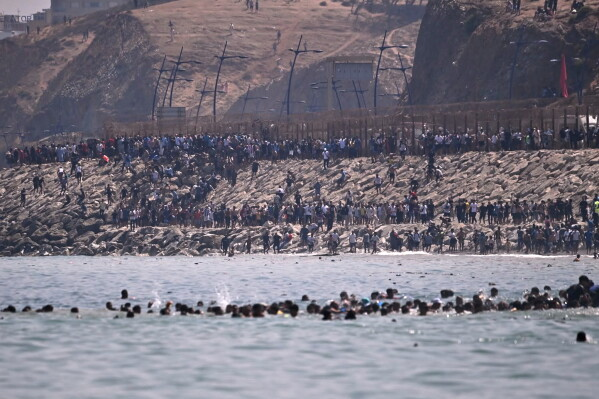
The geopolitical reality of the western Mediterranean is at one of the most critical junctures in its recent history. The assumption that Spain is the target of coordinated pressures is not disconnected from reality, but is the result of a sequence of strategic reshuffles. At the center of the network are Madrid’s new energy agreements with Algeria, but also the rupture in its relations with Washington.
According to information from Spanish officials to The Liberal Globe, there was behind-the-scenes coordination between the United States, Israel and Morocco, in order for Rabat to use the “weapon” of migratory flows, opening its borders in a controlled manner.
The aim of this coordinated move was to provoke an artificial crisis and destabilize the Madrid government, exerting direct blackmail pressure on it for its autonomous choices in foreign policy and energy, which conflict with both the US and Morocco.
The refusal on the bases and the Iranian front
The tension between Spain and the US hit “red” after the Spanish government’s firm refusal to grant the use of military bases on its territory (such as Rota and Morón) for American operations against Iran. This autonomous stance by Madrid caused the strong dissatisfaction of Washington, which is now looking for ways to put pressure on the Spanish leadership.
The Rabat – Washington – Tel Aviv axis
At the same time, the strengthening of Spanish-Algerian relations is causing immediate embarrassment for the Kingdom of Morocco. Following the “Abraham Accords” and the recognition of Moroccan sovereignty over Western Sahara by the US and Israel, a powerful tripartite axis was created
On the other hand, the agreement for the Medgaz submarine pipeline directly connecting Algeria (Beni Saf) (which maintains close ties with Russia) with southern Spain (Almería) is becoming the main artery through which Spain imports Algerian natural gas.
The Spanish energy company (Naturgy) has multi-year contracts with the Algerian state company (Sonatrach) for the uninterrupted flow of gas and the fixing of prices.
In the past, Algerian gas went to Spain through a pipeline that passed through Morocco. Algeria closed this pipeline in 2021 due to its hostility with Morocco, leaving only the undersea Medgaz.
When Spain (under Pedro Sánchez) suddenly changed its stance and supported Morocco’s plan for Western Sahara, Algeria was outraged. It froze the friendship treaty with Spain, threatened to raise gas prices, and limited trade relations.
Gradually, and especially after pressure for energy independence from Russia, Spain returned to the table with Algeria. The two sides agreed to new adjusted prices and renewals of gas flows, reaffirming Algeria as a key energy pillar for Spain.
For Morocco, Algeria’s energy upgrade is a threat, while for its allies, Spain now appears as an “unruly” player. Putting pressure on Madrid – whether through migratory flows or diplomatic maneuvers – becomes a strategic tool.
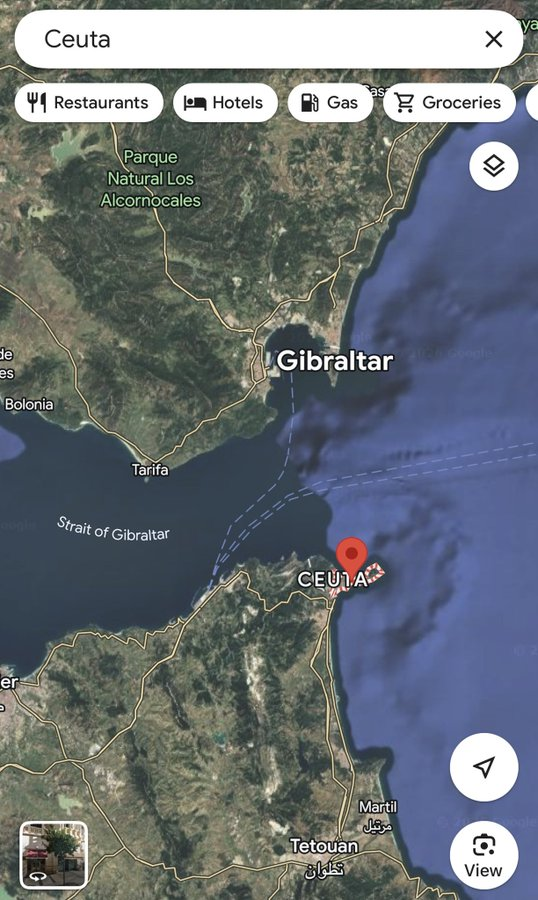

Ceuta is an autonomous Spanish enclave located on the northern coast of Africa, directly opposite Gibraltar.
Although it shares a land border exclusively with Morocco, it is a territory of Spain and the European Union.
It has been a Spanish territory since the 17th century (it originally came under Spanish control in 1668 after Portuguese rule).
Why it is of immense geopolitical importance:
Control of the Straits: It is located at a key point on the Strait of Gibraltar, directly controlling the eastern entrance and exit of the Mediterranean Sea to the Atlantic Ocean. Together with Melilla, it is the only land border of the EU in Africa.
The point of friction with Morocco: Rabat openly claims Ceuta (and Melilla), considering them “occupied African territories”.
The “weapon” of immigration: Precisely because it is European territory in Africa, it is surrounded by double, reinforced security fences. Morocco often uses the relaxation of controls on the Ceuta border as a means of pressure and blackmail against Madrid, allowing thousands of migrants to cross the border in a few hours when it wants to send a political message to Spain.
The domestic front and the role of VOX
In the domestic field of Spain, criticism focuses on the role of the popular right. The rhetoric of Santiago Abascal and the VOX party is accused by their critics of acting as a “Trojan Horse” for foreign interests.
Despite their patriotic crown, their close ties to international ultraconservative networks and constant questioning of the government’s foreign policy are considered by analysts to weaken the country’s negotiating power.


