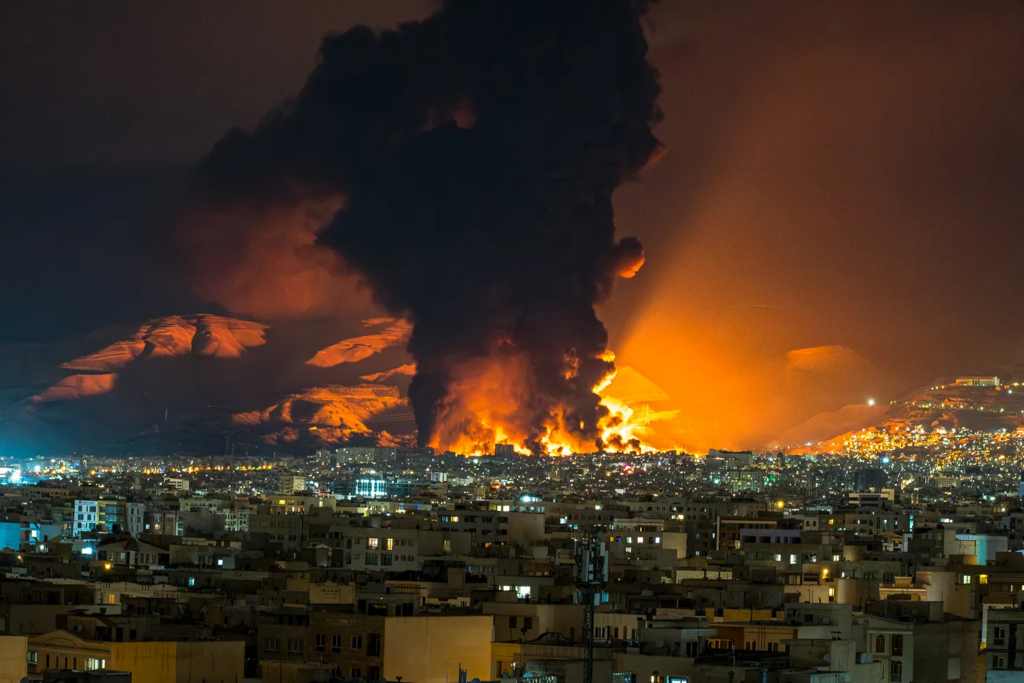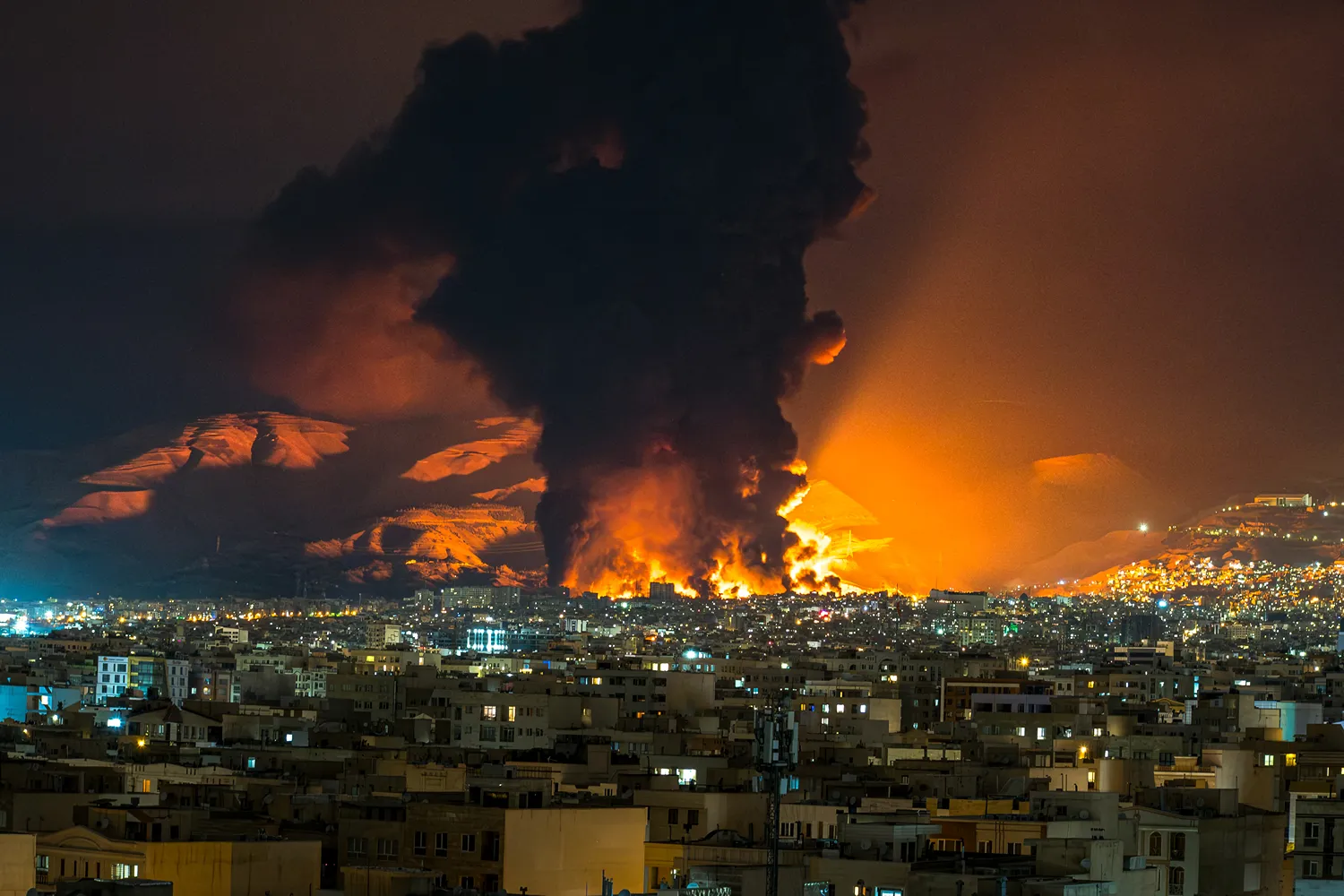
We risk facing an absolute geopolitical impasse. If Washington and Tehran continue this blind path of escalation, we will soon pass the point of no return. Right now, logic says that it is still possible to silence the guns and find a diplomatic way out. But if Iran crosses the “red lines,” the United States will feel compelled to seek regime change, lest it become a laughingstock to the rest of the world. Iran may risk it because it knows the political cost that President Trump will face in the November midterm elections.
If regime change becomes the ultimate goal, then the White House will be forced to choose between a full-scale ground invasion or the use of nuclear weapons. Needless to say, the use of nuclear weapons should not even cross anyone’s mind, because Russia will use it as a proxy in Ukraine, without this precluding the use of tactical nuclear weapons by China in Taiwan. However, the alternative of a ground intervention is the absolute military nightmare (for more analysis please read the article titled “Trump is considering implementing in Iran the plan that Carter rejected in 1979 as a “slaughterhouse for the US military“).
Iran’s mountainous terrain and the trap for the White House
A ground invasion of Iran would quickly turn into a slaughterhouse. The regime can immediately mobilize more than a million fighters, while the rugged, mountainous terrain that covers most of the country is ideal for defense.
History has repeatedly shown that foreign armies fail miserably in such terrain on the planet. And yet, developments in recent days show that President Trump appears determined to hit Iran even harder, driven by anger over the losses of American forces.
The US Central Command (CENTCOM) confirmed the scale of the tragedy:
Horror in Jordan: Unidentifiable bodies were found at the site of the Iranian attack on July 17, with the identification process underway, while another soldier is missing.
Casualty in Iraq: A member of the US armed forces was killed on July 18 in northern Iraq, during a controlled explosion of unexploded ordnance from a downed Iranian suicide drone.
Every time an American soldier loses his life, Trump’s desire for “swift punishment” intensifies. On Saturday night, the airstrikes went to another level, leveling Iranian missile depots, drones and air defense systems of the Islamic Revolutionary Guard Corps (IRGC).
The Darhovin Strike and the Asymmetric Water War
The most dangerous spark, however, was ignited when American bombs hit the Darhovin nuclear power plant under construction in southwestern Iran. This attack, the eighth consecutive night of bombing, provoked the wrath of Tehran, with the Atomic Energy Organization of Iran denouncing the international violation of a “peaceful facility under international safeguards.”
Trump seems determined to go all the way, believing that the bombs will force the Iranians to their knees. But Tehran is not giving up; it is responding harshly, striking military targets in Kuwait and Bahrain, and is now targeting civilian infrastructure.
For two consecutive days, Iran has been striking power and water desalination plants. In a region where Kuwait relies on desalination for 90% of its drinking water, this move is a stark threat. If Iran decides to up the ante, it could cross Iraq’s narrow strip of land and invade Kuwait by land — an option that many Iranian voices already strongly support. If that happens, the United States would be dragged into a land war with no return.
On the brink of an expanded and indefinite war
At the same time, the Islamic Resistance in Iraq is threatening to enter the conflict with “full force” against American bases if Washington continues its attacks, while Israel is signaling through Defense Minister Israel Katz that it will respond “with full force” to any Iranian missile attack, following the incident over Aqaba.
We are at a historic turning point. One wrong move—such as the possible sinking of a US aircraft carrier or a strike on sensitive commercial infrastructure in the Gulf—will mean all-out war. Of course, if chemical, biological, or tactical nuclear weapons are used, the situation will escalate to levels that the human mind refuses to comprehend.
As missiles tear through the sky and new explosions rock the Strait of Hormuz, it’s clear that this war won’t just raise the price of oil. At the same time that the Russia-Ukraine front is burning and China is furious with the West, we are literally watching an indefinite War unfold before our eyes. Unfortunately, most people around us still don’t realize it.