

The development and duration of the Covid-19 pandemic is very difficult to predict and, like the economic and political developments it will cause in the various regions of the world. The ugliest event will be the problems Covid-19 will cause to countries of geostrategic importance located in the Middle East region, further away from returning to normally after the end of this pandemic.
by Thanos S. Chonthrogiannis
©The law of intellectual property is prohibited in any way unlawful use/appropriation of this article, with heavy civil and criminal penalties for the infringer.
The Oil Price War
The Covid-19 pandemic has dealt a major blow to Saudi Arabia’s state revenues from oil sales. Sunni Saudi Arabia has the largest oil fields and of course the world’s largest oil exports, an undeniable fact that makes this country a shaper of the international oil market.
The Covid-19 pandemic, among others, caused a collapse in aviation and serious problems in the supply chains of developed economies due to a drastic drop in demand in many sectors of economies, culminating in all kinds of transport and production.
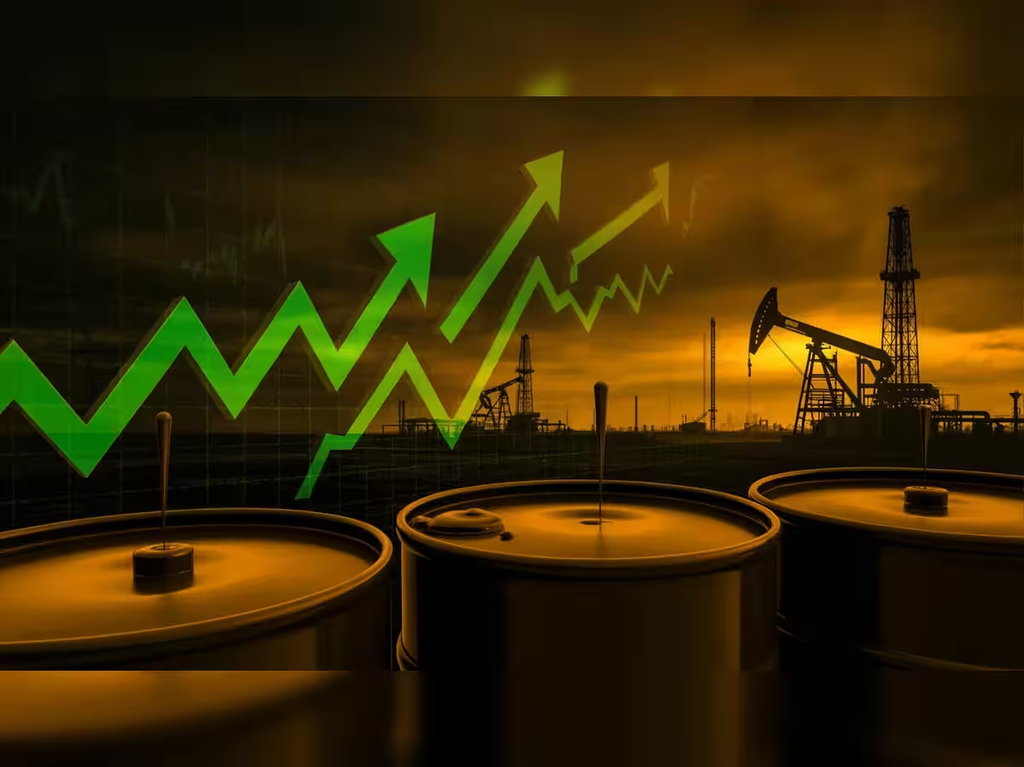
Alongside the Covid-19 pandemic, there is also the oil price war that broke out between Saudi Arabia, Russia with trophy the American companies producing oil from shale rocks. On Tuesday, March 31, the three-year OPEC-Russia agreement to control oil production expired.

Photo by Unknown US Government employee, Source: US Environmental Protection Agency
licensed Public Domain
Russia has called as a strategic move the failure to renew the agreement with OPEC aimed at causing a strong drop in international oil prices to drive an increasing number of American companies producing oil from shale rocks bankrupt.
The share held by these American companies on the international oil market is quite significant and it is the production of these companies that have made the US fully independent on oil imports. A drastic drop in the international oil price close to $10 per barrel will lead most of these American companies to bankruptcy.
The strategic move by Russia and Saudi Arabia respectively aims to reduce and divide the share held in the international oil market by these American companies while do not care if drastically reduce their state revenues from the oil price war. In fact, both countries achieve an indirect subsidy of the low oil price for a certain period until these US companies go bankrupt.
Both Russia and Saudi Arabia have been able to withstand this fall in the price of oil and natural gas respectively for a long time, because both countries have set up their own national investment funds with funds of the order of $450-$500bn.
The price of Brent oil from $70 per barrel is currently move between $21-$24 per barrel, while the next target price is projected to be $20 per barrel.
Saudi Arabia
To get smoothly as far as possible Saudi Arabia through this oil price war, it has already revised its annual state budget for 2020, initially reducing its public spending by $13bn. The fall in the price of oil from $70 per barrel to $30 per barrel has caused an around 12% fall in the GDP of oil-producing Persian Gulf countries.
This fall in the price of oil is making it difficult and constantly postponing the financing of the “Saudi Vision 2030” program developed by the Saudi King with a view to transforming the country’s economy and rehabbing it from sales of oil and their derived products.

Photo by website www.researchgate.net
The Political Transformation of Saudi Arabia
The crown-prince of the King Salman bin Abdul’s Aziz Al Saud, Mohamed bin Salman, a 30-year-old dynamic and at the same time pro-ambitious leader, is constantly investing in competition with Saudi Arabia’s natural rival Iran, while Iran has expanded its influence in the Middle East region (Iraq, Syria, Lebanon, Yemen, Palestine, Gaza Strip, Qatar).
Saudi Arabia’s war with its allied Arab states against the Houthi rebels in Yemen, Houthi rebels variously backed by Iran, is not directed in Saudi Arabia’s favor. The troops of Saudi Arabia and its Arab allies are retreating and have heavy losses from Houthi rebels.
The economic and political difficulties and obstacles for Saudi Arabia are enough. If Covid-19 pandemic is spread to a country that relies heavily on the foreign workforce, there will be high tensions because the huge social contradictions that are currently under hypnosis will be alleviated.
As these social tensions will be stifled at birth, they will force Saudi Arabia’s crown prince to move on to a larger confrontation with Russia and Iran and their respective allies.
Iran
Shiite Iran is Sunni Saudi Arabia’s main rival in the Middle East. Iran has already been hit hard by the Covid-19 pandemic (until 26 March, 29,406 susceptible cases and 2,234 deaths) while facing huge economic and social problems resulting from the successful economic and political embargo imposed on it by the United States.
Iran’s successful expansive strategy in the Middle East is mainly based on the excellent exploitation of the most serious strategic mistakes of the US and the West in general in the Middle East region.
The fall of the regime of Saddam Hussein Abd al-Majid-al-Tikrit by the US and its allies has created a political vacuum that has taken advantage of Iran on the basis of full control of Iraq’s Shiite militias, Shiites who make up two-thirds of Iraq’s population. This control has created an obvious parallel power in Iraq, which is a state with two governments.

In Syria, Iran has seized the opportunity with the outbreak of the “Arab Spring” and the West-inspired civil war in Syria, supporting the Syrian Opposition. Now Iran and Russia are the main backer of the Assad regime that is winning the civil war in Syria.
In Lebanon, Iran variously supports (financing, war material, education-training, etc.) the Islamic organization Hezbollah, which operates as a parallel and shadow government of Lebanon, and to increase its membership in Lebanon’s political arena. Hezbollah has instructed its political members to volunteer in the fight against Covid-19 pandemic, creating all the necessary “roots” in the Lebanese people’s political mnemonic.
Through Lebanon and Syria, Iran is gaining access to the Mediterranean Sea, creating the conditions for full control of the Lebanese army in the next phase. Specific weapons systems will then be transferred to Lebanon by Iran in order to “fix” and create a new front against Israel.
Due to the successful implementation of the US economic embargo on Iran, Iran was forced to request a $5bn loan from the IMF with aim to obtain on the international market the necessary medical material for the effective treatment of the Covid-19 pandemic.
Hardline MPs and supporters of Iran’s theocratic regime hold 217 seats out of a total of 290 seats in the Iranian Parliament.
The inadequate treatment of the Covid-19 pandemic, which is causing economic and social upheaval in Iran, will force Iran’s regime to export this economic and social pressure abroad with even greater aggression. This aggression is concentrated in the unstoppable attacks carried out by Iraq’s controlled Shiite militias against US troops and their Western allies in Iraq, with the aim of being forced to leave Iraq.
So far Iran’s specific strategy is attributable to forcing the US to shrink its troops and leave part of its bases in Iraq. What the same thing about the US are France and the UK doing in Iraq.
The areas of confrontation that Iran can choose are quite in number, but its highest goal is Saudi Arabia’s oil facilities, to bring the country to its knees economically, politically and socially.
Iraq
Corruption and incompetence of the political system caused large popular protests last year, which riots were unleashed in a bloodbath. The Shiite militias in Iraq controlled by Iran are the real regulators of political developments in the country. Depending on their interests, they create social upheavals in order to gain an ever-stronger negotiating position vis-à-vis the Government of Iraq.
Most Iraqis agree that all foreign troops should be withdrawn from the country but are not able to enforce developments for the benefit of Iraq.
The Covid-19 pandemic in Iraq, with a population that is not well informed about this disease, whose people do not trust their government and do not discipline, with a health system in meltdown, with the proceeds from oil sales being at the nadir, raise reasonable concerns about how to deal with the humanitarian crisis caused in Iraq by Covid-19 pandemic.


