
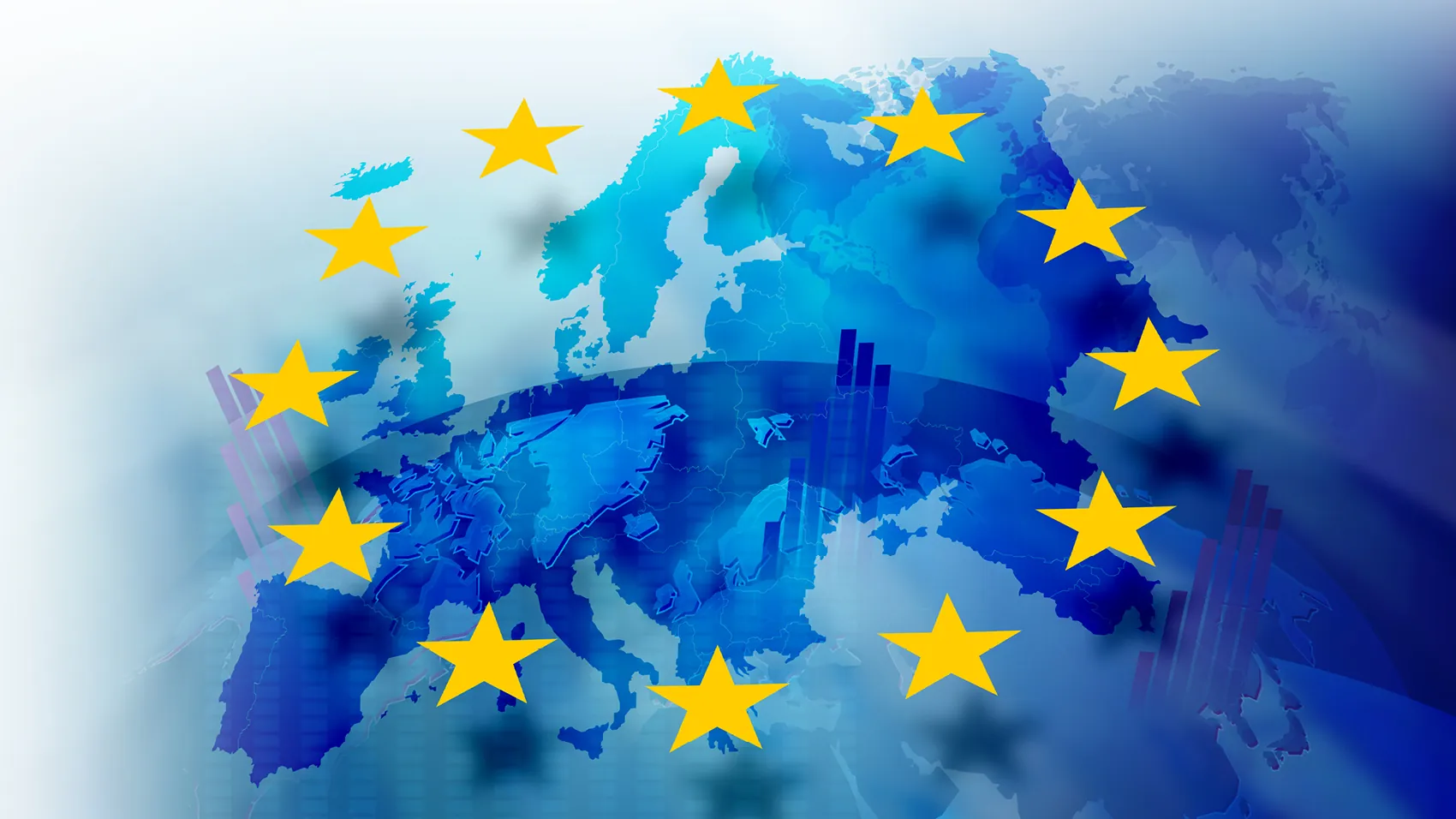
The very recent developments with the ceasefire and the prospect of an agreement between the US and Iran, provided they do not prove fragile, may allow for a more positive reassessment of the prospects, but the main question is the medium-term resilience of the European economy and its potential, given that external crises (such as the one in Ukraine) will not stop, but also that it still has inherent weaknesses.
In a central assessment, the current trend of the Eurozone economy is expected to continue over the next several months. In summary, it is going through a period of stability, with a credible fiscal balance and a systematic normalization of financing costs. Also, with improved employment conditions, a gradual reduction in unemployment levels and an increase in the wages of most workers.
At the same time, however, the performance of the European economy is still far from desirable. Given the need to attract investment and boost exports, external developments will be of crucial importance.
The essential questions regarding medium-term resilience are two.
- Whether the particularly increased uncertainty that has become embedded in the global context and which will not easily subside can lead to severe crises in the foreseeable future, not only in the energy sector but also in international capital markets.
- Even if such severe crises are not triggered, the increase in uncertainty can gradually make investment plans and the attraction of capital more difficult, especially as the eurozone economy still presents some structural weaknesses compared to the other major economies of the planet.
The challenges from the external environment are not few. Although, given current data, the rise in costs in energy markets is expected to gradually reverse, the normalization will not be abrupt and the burden on the current account balance will be recorded significantly higher than previously forecast. In many supply chains there are difficulties and cost changes that require alternative routes.
In Europe, defence spending is a priority and inevitably European funding to other regions will be relatively lower. While just a few days ago there was an increase in the European Central Bank interest rate in response to higher inflation, even if this has arisen primarily from the cost side.
Given the stabilisation of the eurozone economy that has been achieved in recent years, attention is turning to member states that need to improve in order to have strong growth in the future.
The macroeconomic expression of the issue is the level and composition of investment, which is lower than that of the economies we would like to approach. This is an expression of the productivity and competitiveness of the economy, which remain relatively weak.
The second level is that of households. Despite rising wages, job creation and a large increase in the value of houses, the main asset of individuals in the Member States, many households still have real incomes and savings that do not ensure prosperity.
Looking ahead, there are three main areas where appropriate interventions can increase resilience and improve medium-term growth prospects.
- Given the need for fiscal surpluses to support Member States’ debt servicing, it is crucial that the tax mix supports economic growth, notably by significantly, even gradually, easing the relative burden on wage labour from middle income earners. This is a prerequisite both for attracting skilled human resources from abroad and, of course, for maintaining the relevant domestic potential.
- Encouraging productive investments, through tax incentives and simplification of the regulatory framework, which will strengthen the productive fabric, especially by integrating new technologies, such as artificial intelligence systems. The significant increase in productivity that can be achieved in this way, in addition to increasing incomes, will also contribute to autonomy in critical sectors so that there is no excessive dependence on abroad in the event of a crisis.
- Systematic strengthening of the new generation, through a high-quality preschool education system and upgrading of educational systems in order to stimulate creativity and attract children and young people from other countries in Europe. It thus has the potential to strengthen itself as a center of global geography.
The European economy as a whole is at an interesting and critical juncture, where it can conditionally strengthen its growth momentum, building on the fiscal and macroeconomic stabilization that has been recorded in recent years. However, this will not happen automatically and there is a significant road ahead to close the productivity and prosperity gap with the other major economies of the planet.