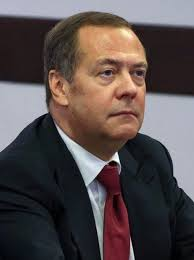
Russian President Vladimir Putin’s decision to appoint Security Council Deputy Chairman Dmitry Medvedev as a special envoy to the official mourning ceremonies in Tehran is a diplomatic move with particular political and geostrategic weight.
In international diplomatic practice, the person chosen to represent a head of state on such a highly symbolic occasion conveys messages that go beyond standard protocol.
Medvedev’s choice is not considered accidental
He is one of Putin’s closest associates, a former president and prime minister of Russia, who in recent years has become one of the most characteristic voices of Russian strategic thinking.
His public interventions are often particularly sharp against the United States, NATO and Western governments, which makes his presence in Tehran politically weighty.
Moscow, by choosing such a high-ranking representative instead of a minister or other government official, shows that it attaches particular importance to its relations with Iran.
The message being sent is that bilateral relations are not limited to ad hoc cooperation, but are part of a broader strategic convergence that has strengthened in recent years.
The Russian-Iranian relationship is taking on a strategic character
Since the start of the war in Ukraine and especially after the imposition of extensive Western sanctions against Russia, relations between Moscow and Tehran have expanded significantly.
The cooperation covers areas such as energy, transport, trade, financial transactions and, according to public reports from Western governments, defense and military-technical cooperation.
At the same time, the two countries participate in broader cooperation schemes, such as BRICS and the International North–South Transport Corridor, which aspires to connect Russia with the Persian Gulf and India via Iran, reducing dependence on sea routes controlled by Western naval powers.
In this light, Medvedev’s presence in Tehran takes on broader significance. It is not just a highly symbolic ceremony, but is part of the gradual deepening of a relationship that both countries present as strategic.
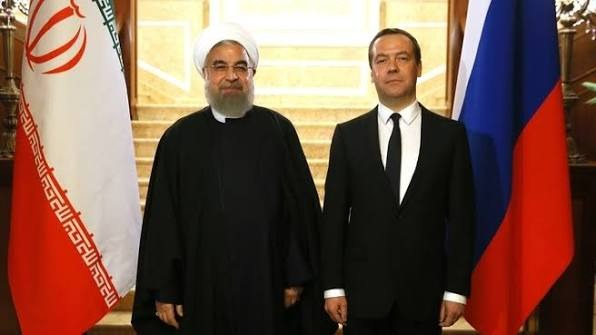
A Message to the West
The mission comes at a time of intense geopolitical confrontation between Russia and Western states.
Moscow is trying to show that sanctions and pressure have not led it to diplomatic isolation, but instead are strengthening its cooperation with countries that pursue an independent foreign policy.
From a Western perspective, the increasingly close cooperation between Russia and Iran is viewed with particular concern, as it is estimated that it may affect the balance in Eurasia and the Middle East.
The convergence of the two countries is complicating the efforts of the United States and its European allies to limit the influence of Moscow and Tehran through economic and diplomatic measures.
Political message to Trump too – “Retaliation for Alaska has begun”
Medvedev’s mission also functions as a political message to Washington, at a time when contacts between Russia and the United States remain complicated and disagreements over Ukraine continue to dominate.
The timing is particularly important. Despite occasional expectations for a possible de-escalation of relations following the contacts between the two sides, there has been no public confirmation of any broader strategic agreement.
At the same time, the United States continues to support Ukraine militarily and economically, a fact that Moscow considers a key obstacle to any substantial normalization of bilateral relations.
Moreover, the American leadership is moving away from the Alaska agreements, which it does not even recognize. This development is leading many Russian analysts to declare that “retaliation for Alaska has begun.”
In this context, the dispatch of one of Vladimir Putin’s closest associates to Tehran can be interpreted as an indication that the Kremlin does not intend to revise its strategy towards Iran under the weight of American pressure.
On the contrary, it shows that Russia seeks to deepen its cooperation with countries that it considers crucial for the formation of a more multipolar international system.
On a symbolic level, Medvedev’s presence also reinforces the image that Moscow wishes to demonstrate that it has alternative centers of strategic cooperation and that its foreign policy is not determined by the course of talks with the United States.
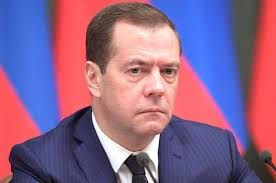
Medvedev as a political mediator
Dmitry Medvedev is not just a former president. As deputy chairman of Russia’s Security Council, he participates in critical discussions on national security and strategic issues.
His status as a special envoy allows him, in addition to public appearances, to hold private meetings with the Iranian leadership on issues that are not usually discussed publicly.
Although there have been no official announcements about the agenda of such meetings, issues of economic cooperation, energy projects, regional security and bilateral relations are likely to be discussed, given the importance that both sides attach to the further development of their cooperation.
Historical depth to the relationship
Medvedev has played a role in previous phases of bilateral relations. During his presidency, the first reactor of the Bushehr nuclear power plant, a project of the Russian Rosatom, was commissioned, while during his term as prime minister, agreements were promoted for the International North-South Transport Corridor, the development of railway infrastructure and the strengthening of economic ties between the two countries.
His participation in these initiatives enhances the symbolism of his presence in Tehran, as he is considered a politician who knows in depth the history of bilateral cooperation.
The international presence in Tehran
According to Iranian authorities, delegations from neighboring states, Middle Eastern countries and BRICS members are expected to participate in the ceremonies.
The presence of representatives from different regions of the world is also intended to highlight Iran’s diplomatic relations despite ongoing international tensions.
Dmitry Medvedev’s mission to Tehran is a move with strong symbolism and broader geopolitical implications.
Regardless of the different interpretations given by Russia, Iran and Western countries, the choice of such a high-ranking official underlines that Moscow-Tehran relations remain important for the strategy of both states.
In a period in which international balances are changing, such diplomatic moves function not only as a sign of political support, but also as a message about the way in which new alliances and geopolitical balances of the multipolar international system are being shaped.