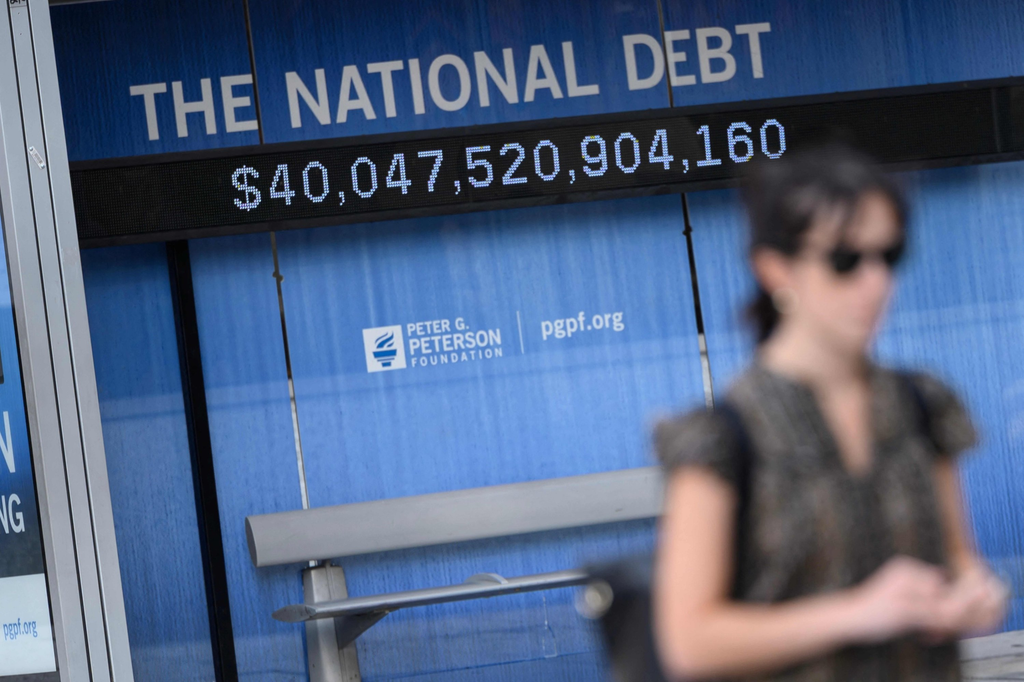
The economic suffocation is returning more severely, as the new wave of price increases threatens to flatten consumers’ purchasing power.
With wages stagnating and the prices of basic goods soaring, everyday life is turning into an endless struggle for survival. An uncontrolled increase in the cost of living is already at the gates, ready to sweep away family budgets.
More specifically, inflation is returning dynamically worldwide, to 2022-style levels. The war with Iran is only half the problem. The prospect of inflation above 2% has been looming over the global economy since the pandemic.
But just when it seemed the Fed and ECB had managed to escape unpopular interest rate hikes, the war with Iran dragged them back on that path.
For example, producer prices rose 6.5% over the past year, according to the US Bureau of Labor Statistics, the steepest annual increase since November 2022.
A day earlier, consumer prices rose 4.2%, the highest level since 2023. Both increases are due to soaring energy costs, as the Strait of Hormuz remains effectively blocked.
The wholesale price of gasoline jumped more than 23% in a month, according to the same agency, dragging up everything that depends on fuel: jet fuel, freight, road transport, diesel. Agricultural raw materials as a whole rose by 14% in May alone.
The so-called “structural” producer price index, which excludes volatile food and energy prices, rose by 0.4%, below the average estimate of 0.5% — which suggests that inflation is not expanding from month to month.
Referring to the price outlook, Lagarde stressed that overall inflation is expected to average 3.0% in 2026, but the American tsunami of increases will not leave us unscathed.
Trust Economics said in a note that the data was “higher than expected overall, but softer at the core” — a sign, it wrote, that “the pass-through of producer inflation from energy to broader prices remains relatively limited for now.”
For now, much of this pass-through is being absorbed, Trust Economics said, by “margin pressures”: companies are absorbing higher costs rather than passing them on to consumers.
But that cushion is showing signs of weakening: trade margins fell in May at the fastest pace in nearly a year.
But more broadly, this is not a May or April problem; it is not even a purely American problem. Inflation is making a strong comeback globally.
Beyond the core figure, the measure that excludes food, energy and trade rose 5.1% year-on-year, the biggest increase since October 2022.
Deeper down the trade chain, prices for processed goods used by businesses rose 13.3% year-on-year, the strongest gain since August 2022, while raw, unprocessed inputs jumped 22.2%, the fastest pace since September of that year.
To be fair, U.S. consumer inflation at 4.2% remains less than half the high of 9.1% in June 2022, while prices in the eurozone are rising at a rate of 3.2%, compared with the more than 8% the European Central Bank was targeting the last time it raised interest rates. But the shape of this shock is beginning to take shape.
Europe raises interest rates
The European Central Bank raised interest rates for the first time since 2023 on Thursday, June 11, just minutes before the US data was due to be released.
ECB President Christine Lagarde made it clear that the move was a result of the war in Iran, calling it a “major energy shock” and warning that price stability was at risk: “We have inflation that is too high for our citizens.”
Unlike US central bankers, the ECB made it clear in its statement that this was not a temporary effect but a more permanent change — “resilient across all scenarios” — and markets got the message, pricing in further hikes later in the year.
The same forces are at play in Asia. China, which has been struggling to combat deflation for years, posted its highest wholesale inflation in nearly four years, partly because of the war in Iran, which is driving up the cost of goods.
But the Chinese data revealed a second inflationary force: the global boom in artificial intelligence, which is driving up the prices of chips and equipment — and, as newly wealthy tech workers cash in on vested shares, fueling a spending spree on luxury goods that is further fueling demand.
Infrastructure development is starting to have the same effect on the other side of the Pacific.
As companies plan to spend trillions on data centers, memory and semiconductors — while chip supply is flat in the short term — prices have risen rapidly.
These components have risen nearly 27% in a year, and the increases will soon affect cellphones, laptops and other personal technology. Households don’t have to wait to feel the pinch.
Real weekly wages fell 0.7% last year, the worst decline since early 2023, meaning prices are rising faster than wages, so the average worker can buy less than they did a year ago, despite earning more in nominal terms.
The increases are hitting consumers hardest where they can’t avoid them: fuel, electricity, food, health care.
With Americans watching an upper-class tech elite become incredibly wealthy from stock gains, it’s perhaps no wonder that consumer sentiment has hit a nadir.
The political fallout is further weighing on the White House. Trump’s net approval rating has fallen to -25 points in The Economist’s index — the worst performance for any president since he took office in 2009 — and just 22% of Americans approve of his handling of the cost of living, according to Reuters/Ipsos data.
Warsh inherits Powell’s problem — and Powell too
The data leaves the new Fed Chairman, Kevin Warsh, with the same problem that his predecessor, Jerome Powell, had: are these inflationary shocks temporary spillovers or are they embedded in the price structure?
An oil shock is not something that interest rate hikes can fix.
But if inflation is the result of a broader overheating economy — too much easy money, explosive demand without matching supply — then the Federal Reserve should raise interest rates.
And Warsh, whom Trump installed hoping for rate cuts, instead inherits an economy where cuts would seem reckless. Whether Warsh can move flexibly is another question. He arrives at a Federal Open Market Committee that is the most divided in a generation — four of the twelve members dissented at the April meeting, the deepest rift since 1992.
The committee is more hawkish than Warsh and may view the newcomer with suspicion. The May report even contains the “Weber position” in miniature.
If you look at the commodity data, the redistribution mechanism is right there in front: pork prices fell 10.1%, and residential electricity prices fell — little consolation for households — while the biggest contributor on the services side was investment portfolio management fees, up 4.8% on a strong stock market rally.
In the same month that real wages recorded their worst annual decline in three years, the service that rose the fastest was wealth management fees.
Markets are now pricing this week’s meeting as a near-certainty of a rate hike, with a growing minority betting on the next move as a hike.
The easing everyone had been waiting for in 2026 has vanished. The president, for his part, is not worried. “I love inflation,” Donald Trump told reporters on Wednesday, June 10, predicting that prices will “drop like a stone” once the war is over.