



The global economy is at a major crossroads, and we must prepare for rapid economic change. The world is moving from having enough goods and services for everyone to not having enough to meet needs.
The dynamics of the economy are very different when there are not enough goods and services for everyone. The sought-after solution of raising prices does not solve the situation; after a point, adding more purchasing power mostly causes inflation. Other solutions are needed. The global economy is reaching what has been called the “Limits to Growth.”
Economic Cycles
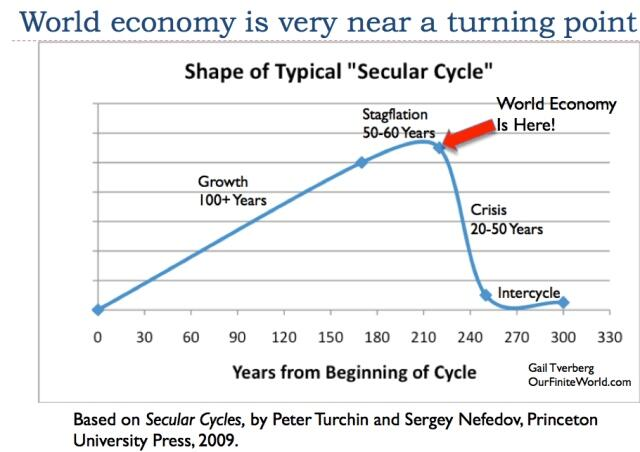
The economy has grown through the ages until populations grow too large for the resources available. Researcher Peter Turchin has studied the general pattern of booms and busts. The chart shown in Figure 1 is based on an analysis of eight such cycles in the book Secular Cycles.
The fossil fuel era began over 200 years ago and now appears to be coming to an end. It is of course questionable whether President Donald Trump thinks in terms of secular cycles or booms and busts. But the tariffs and government spending cuts handled by the Department of Government Efficiency (DOGE) appear to be approaches that will allow the global economy to contract in a way that may help prevent a bust from happening too quickly.
The Essence of the Problem
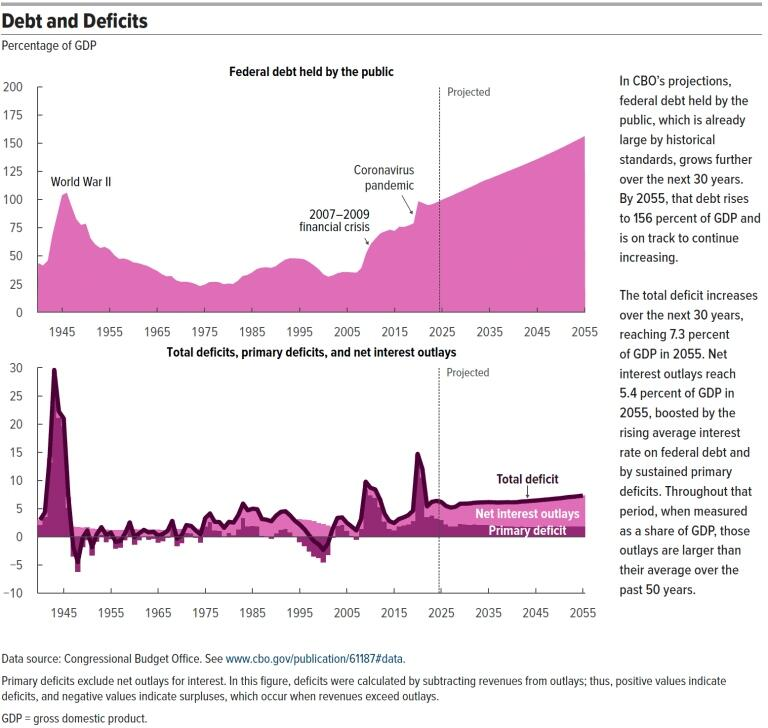
To understand the problem, one must take a physical approach. Governments can print money, but they cannot print resources, especially energy resources.
Human bodies are accustomed to having a certain amount of cooked food in the diet. This, in itself, encourages population growth and the eventual overshoot of the resource base.
The self-organizing system somehow chooses its own downward path, not falling any further or faster than necessary, according to the Principle of Maximum Efficiency. That is what we are dealing with now.
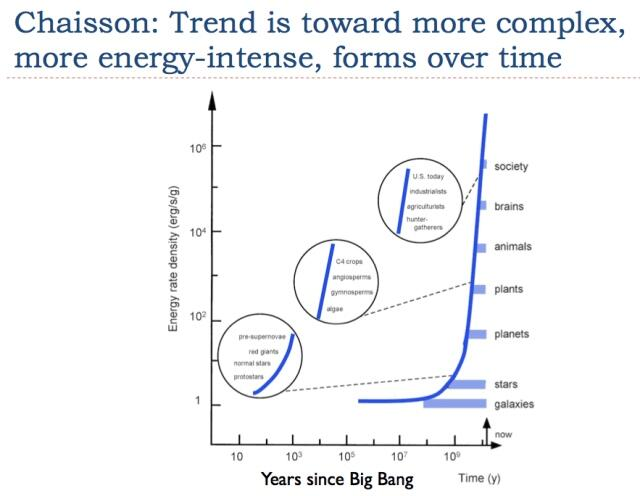
In the terms of physics, the economy is a dissipative structure. Dissipative structures are self-organizing structures that require energy to grow, but they are only temporary. The universe is full of dissipative structures.
- Humans are dispersive structures, as are all plants and animals.
- Hurricanes are dispersive structures, as are star systems.
- Ecosystems are dispersive structures. All of these things are temporary.
- Even economies are temporary.
The type of energy required varies depending on the dispersive structure. Green plants use solar energy. Animals need plant or animal food. Humans have evolved to consume a mix of cooked and raw foods.
While a few raw foodists can get away with using a blender to break down foods into small pieces, the general pattern is that our modern brains require the nutrition that cooked food can provide.
The Need for Energy
Thus, people need both food and some kind of fuel to cook at least some of their food. Fuel is also useful for heating homes, disinfecting water, and providing transportation. Many things we think of as man-made are dissipative structures.
Governments are dissipative structures. Governments grow and often become too expensive for citizens to support. The energy that governments use is obtained indirectly through the use of taxes.
A small portion of the energy that governments use is purchased directly by governments to power their vehicles and heat and light their buildings. Much more of the energy needed by governments is consumed indirectly.
For example, a portion of the taxes collected go to pay civil servants. This pay is used for things that civil servants use, such as food, transportation, and housing. All three of these require energy in many phases of their “life”.
The Transition
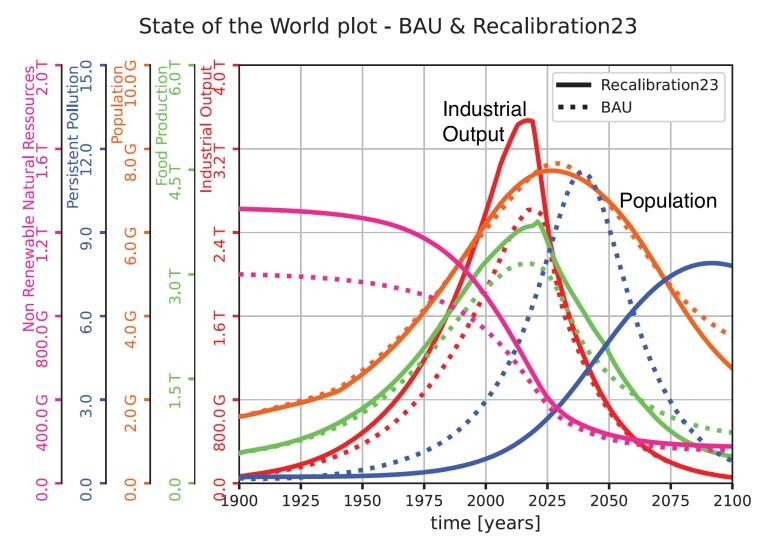
The transition from an economy with sufficient resources to one where resources are limited can cause serious disruptions on many levels.
The analysis of “Dissipative Structures” helps us understand how economies, states, and societies are organized around energy and resources, but they are not eternal. As resources are depleted, these systems inevitably lead to collapse.
These dissipative structures, such as governments, businesses, cities, and religious organizations, are extremely vulnerable to changes in external conditions, such as limited natural resources.
Energy shortages can disrupt every aspect of the economy, from basic needs for food and shelter to the functioning of infrastructure and government services. Examples of the dissipative nature of systems can be seen on many levels.
The energy sector and the production of natural resources, such as oil, coal and natural gas, clearly show the trend of decreasing reserves.
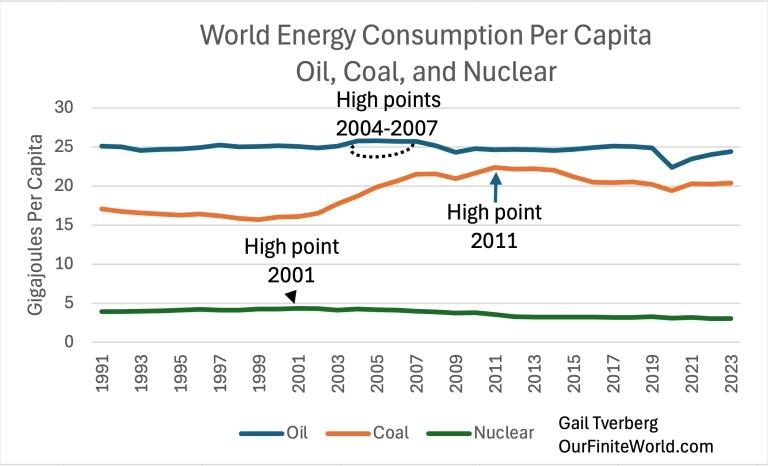
In particular, oil and fossil fuels remain crucial for maintaining economic growth, but also for the global trade chain, which is sustained by fuel-based transport. The decline in energy consumption per person, as seen in the observations on oil and coal consumption, shows a worrying trend for the global economy, which directly affects the ability of countries to develop new infrastructure or maintain existing ones.
These economic challenges are linked to the contraction of trade and the growing resistance to globalization through political restrictions, such as tariffs and sanctions.
These measures limit the global flow of goods and investment, leading to increased costs and shortages of basic products in the market. The more restrictions are imposed, the weaker supply chains become and the more difficult it becomes to maintain the economic status quo.
Signs of Crisis
The global trade stagnation, as shown by the graphical representation of global trade activity (Figure 3), demonstrates that rising tariffs, geopolitical tensions and limited energy are seriously affecting the ability to exchange goods and services internationally.
It is also important to note that the decline in oil reserves and the increasing shortage of important fuels such as diesel (Figure 5), are having serious consequences for the production and global movement of goods.
The dependence on key types of fuels makes the world more vulnerable to price increases and supply constraints.
As traditional economic indicators show signs of crisis, governments and economists are trying to find solutions to limit the deterioration of this trend, but many of the solutions, such as digital currencies and government interventions, are questionable and do not seem to provide a sustainable solution in the long term.
The overall picture for the future of the global economy does not look optimistic, and the prospects for the immediate future include:
- A decline in industrial production and trade activity, which will continue with increasing intensity.
- A decrease in global trade due to political barriers, such as tariffs and sanctions, which limit the exchange of goods between countries.
- An increased possibility of inflation or hyperinflation if monetary measures fail to address rising prices and falling production.
- Bank and insurance company failures, with the risk of a generalized economic crisis that cannot be covered by government interventions.
- Changes in the global economic map, which will lead to a more localized and limited market, will cause even more turmoil.
Governments will not be able to support all failed economic structures, and will probably have to focus on securing basic resources for their communities.
This transition signals the need for new strategies for adapting to evolving conditions, with a focus on local production, renewable energy, and the restructuring of social and economic structures. It is clear that the economy faces serious challenges and we must prepare for major changes, which may include the transition to new forms of energy and economic systems.
Accepting these challenges and the right strategy could offer some way out, however, the future remains uncertain.
The global economy is self-organizing
The universe is constantly growing and expanding. Many believe that the universe sprang spontaneously from nothing and began to grow, others believe that there was a Creator.
A complex system of evolution is evolving, with new diffusion structures emerging and old ones coming to an end. The diffusion structures that endure are those that are best adapted to the ever-changing environment of the Earth at that time.
In a way, the global economy (and other ecosystems) maximize the total output of each part of the system, according to the Principle of Maximum Efficiency.
This does not depend on whether one system is more efficient or works better than another. Rather, the global economy tends to maximize the total output of the system, given the available energy resources (and other resources, such as water).
Thus, global production of goods and services is unlikely to decline catastrophically enough to quickly wipe out most of the Earth’s population.
For example, if industrial production were to be curtailed, it could be concentrated primarily on spare parts for current machinery and on machinery needed for food production. The complex nature of evolution and the many diffuse structures that are created, combined with the Principle of Maximum Efficiency, leads to the belief that the Creator is still “active” today.
It seems that the self-organizing economy uses whatever leaders are available. They do not necessarily have good intentions for their actions.
This does not mean that Donald Trump is a better leader than others or that his ideas, as they are put forward, will prevail. The system operates through many leaders of various political parties. Each leader can be replaced to some extent by other leaders.
The underlying physics of the system is what drives the changes that occur. Religions seem to be all created by the same Creator. They seem to have many functions, such as uniting groups, teaching “best practices” about harmonious coexistence within a group here on Earth, and (when resources are limited) fighting against other religious groups. Religious organizations seem to be part of the self-organizing economy, too.
What lies ahead?
The steps we will see in the future are as follows:
1. A recession seems likely, starting almost imperceptibly, but will get worse over time.
2. The world’s production of natural goods and services will begin to decline almost immediately. In particular, products manufactured in the United States with imports from China will become difficult to obtain, as will goods imported into the United States from China.
3. Commodity prices will fall. Deflation seems more likely than inflation. If inflation occurs, it will take the form of hyperinflation, with central banks printing vast amounts of money, but there will not be enough goods and services to buy with that money.
4. Many banks, insurance companies, and pension plans will fail. Governments will not be able to bail them all out. If governments try to bail out all these failed institutions, the result is likely to be hyperinflation.
5. Many governments have plans for digital currencies to replace the currencies we have today. There are doubts, of course, that these plans will work. For one thing, intermittent power supplies are expected to become an increasingly serious problem. Also, organizations such as the European Union, the World Trade Organization, the World Bank, and the United Nations are likely to begin to collapse. Even the United States is likely to become less “united,” or consist of fewer states.
6. Gold will not be very useful in the long run. It seems that small silver coins will be much more exchangeable in the future. What we will really need is food, water, and shelter. These goods will be given primarily to workers who produce these essentials, rather than to those who maintain the system.
7. Some businesses may do well. Finding a way to produce food in bulk, locally, may be helpful. Converting unused buildings into housing for poor people may also be helpful. Private “protection services” may also prosper.
8. The stock market provided large returns to American investors in the period 2008-2024, but this cannot be expected to continue. The most likely outcome is that returns will fall very low or become negative, as.
(i) Lending is likely to remain difficult, or worsen. Lenders will increasingly recognize the risk of default. Some lenders may close.
(j) Within a few years, trade will change and become more local. The US will lose its status as the reserve currency holder. It will no longer try to be the world’s policeman.
There are many things we really don’t know…
- The Creator may be creating a religious end that we don’t know about.
- In fact, such an end may come very soon.
- Otherwise, diffuse structures are often replaced by other diffuse structures.
- New economies may gradually develop in different parts of the world.
- Perhaps the new economies will find new sources of energy that we don’t know about, or make better use of the types of energy that are diminishing.


