



The withdrawal of Russian forces from Kindal, a key stronghold in northern Mali, marks a serious operational and political setback for Moscow in sub-Saharan Africa. It directly damages its narrative as a reliable security provider for Sahel regimes at a time when Western influence in the region is clearly in decline.
Specifically, on April 25, forces from the Tuareg separatist alliance, the Azawad Liberation Front (FLA) and the al-Qaeda-linked jihadist group Jama’at Nusrat al-Islam wal-Muslimin (JNIM) launched large-scale coordinated attacks on military targets in northern Mali.
During the attack, forces from the Africa Corps — the mercenary formation directly under the Russian Defense Ministry and the successor to Wagner — found themselves isolated in Kindal. Thus, under the threat of encirclement, they negotiated a safe withdrawal from the city, which was once again under rebel control. Videos circulating on social media of Tuaregs taunting a Russian column as it withdrew dealt a blow to Moscow’s prestige.

Kidal was captured in 2023 by the Malian army with the assistance of Russian mercenaries, in an operation that was then presented as proof of the effectiveness of the Russian strategy against Western intervention. At the same time, the assassination of the Malian Defense Minister, Sadio Camara — a key architect of the Bamako-Moscow rapprochement — in a suicide attack near the capital further exacerbated the sense of destabilization. JNIM even threatened to blockade the capital Bamako, calling on the population to revolt against the military junta.
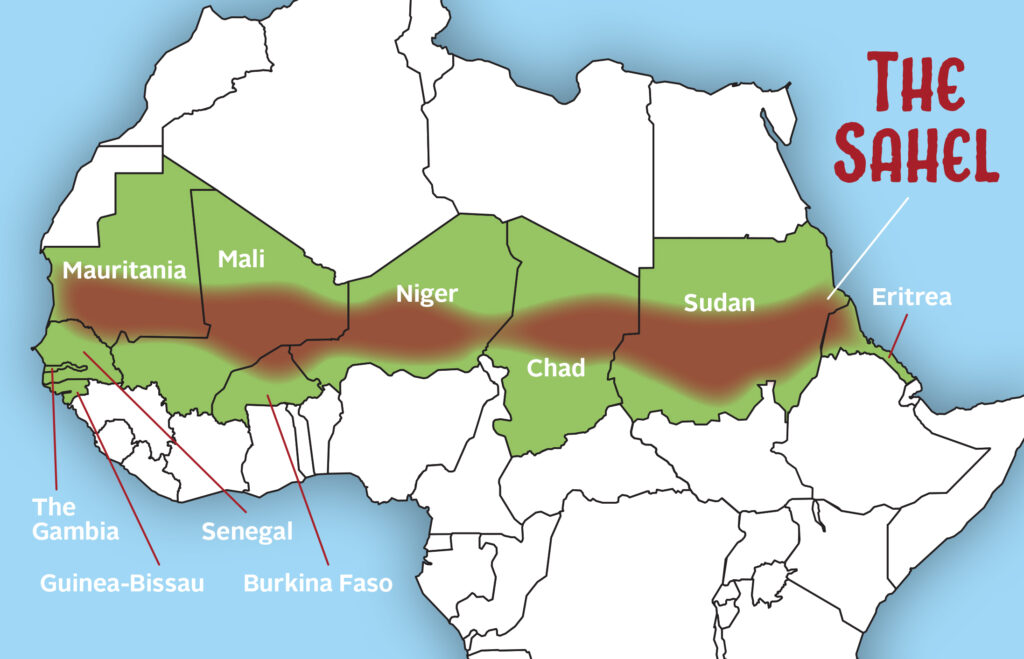
The Sahel is a semi-arid zone that runs across the African continent, separating the Sahara Desert in the north from the fertile savannah in the center. Mali is rich in uranium and other precious metals, but like its neighbors, it is plagued by chronic problems of poverty, political instability and social unrest, between warring factions and tribal conflicts, and with intense activity by jihadist organizations. Military coups in recent years have installed fragile dictatorships in Burkina Faso, Niger and Mali, with a turn towards Moscow and the expulsion of the French, who until then had provided military support against the Islamists.
Despite its losses and tarnished image, Russia remains a key partner for Mali. Unlike Western countries, Moscow remains willing to get directly involved in front-line operations, providing military power without political preconditions on democracy or human rights. However, the crisis in Kindal demonstrates that even Russian military power has clear limits.


