




As is well known, cosmogenic changes are taking place in the Arctic. The melting of the ice in large areas have become the last front in the growing Cold War, between Russia and China on the one hand and the United States and its allies on the other.
Even as Russian troops on the front lines in Ukraine’s Eastern Donbass region appear ill-equipped for the coming winter, the Kremlin continues to prepare for a potential conflict in the mineral-rich Arctic. In recent years, Moscow has made it clear that it views the region as its own and has stepped up its military presence.
Moscow is strengthening its footprint
This includes an expansion of Nagurskoye Air Base, which is located in the Franz Josef Land archipelago about 600 miles south of the geographic North Pole.
The base, which was first built in the 1950s as a weather station and communications outpost between the Eurasian mainland and the North Pole, features a “trefoil-shaped facility” consisting of three large pods extending from a central atrium called Arctic Trefoil. The structure is painted in the white-red-blue colors of the Russian national flag, to make sure anyone who sees it knows that this is Russian territory.
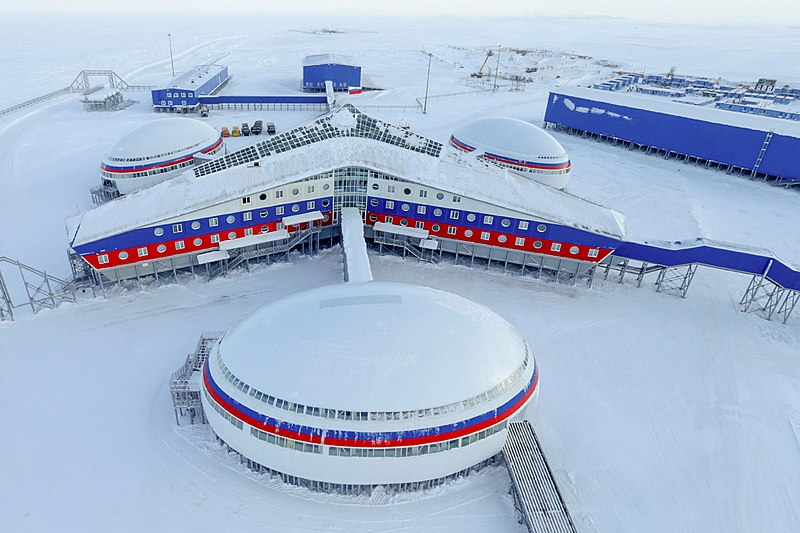
The Russian military is significantly lengthening the runway at Nagurskoye Air Base, the remote northernmost military outpost located in the increasingly strategic Arctic region.
The facility, which operates year-round, looks set to soon be more capable of supporting aircraft such as the MiG-31 Foxhound interceptor. Extending the runway by 1 km (4 km total), makes it capable of supporting any Russian military aircraft with ease.
The increasingly powerful air base at Nagurskoye raises the possibility that the fighter jets will actually be permanent, or at least on rotation, at some point in the near future. As of 2016, the Russian Ministry of Defense published plans to build special heated hangars there to accommodate Su-34 Fullback aircraft, as well as Il-78 aerial refueling tankers. There have been constant reports since then that a unit of MiG-31s could eventually be based permanently or on a rotational basis at the Arctic Air Base.
Even using Nagurskoye as a base for interceptor aircraft would mean that Russia has the only tactical air combat capabilities permanently located in the entire region. A combination of interceptors as well as airborne early warning and maritime patrol aircraft would give Russia the ability to reach from its northernmost base and control the skies and seas at great distances around it.

This, combined with any future ground-based defenses, would give the Kremlin an edge against access/disposal of the area and what might happen in that corner of the globe, and would present significant operational challenges to adversaries without similar established physical presence in the area.
The harsh reality of the Arctic
The base is far from ideal, with temperatures regularly dropping to minus 42 degrees Celsius in winter and snow disappearing only from August to mid-September. However, Russian units continue to train in the extreme cold and even the Russian Air Force has conducted operations with the MiG-31 long-range fighter jets.
Of course, defending the region will require more than controlling the air, and Russian engineers announced this week that they are developing armored vehicles to operate in harsh Arctic climates. Armored vehicles, tanks and other military vehicles will be significantly modified.
“We are replacing today’s vehicles with upgraded models and buying modern production models. This will help us reach the required share of modern vehicles. Armored vehicles and their weapons that lack the latest technology are being phased out,” said Major General Alexander Shestakov, head of the Main Vehicles and Armored Directorate at the Russian Defense Ministry.

Shestakov further explained that, all weapons and equipment were standardized by placing them on basic interchangeable platforms. “We are working to fully re-equip our ground forces with modern weaponry. At the same time, we are implementing research projects to develop advanced weapons and military equipment,” he said.
Armoured Battle Tanks for the cold
Among the vehicles now being developed are advanced tanks, wheeled infantry fighting vehicles and armored personnel carriers under the Armata, Kurganets-25 and Boomerang research projects.
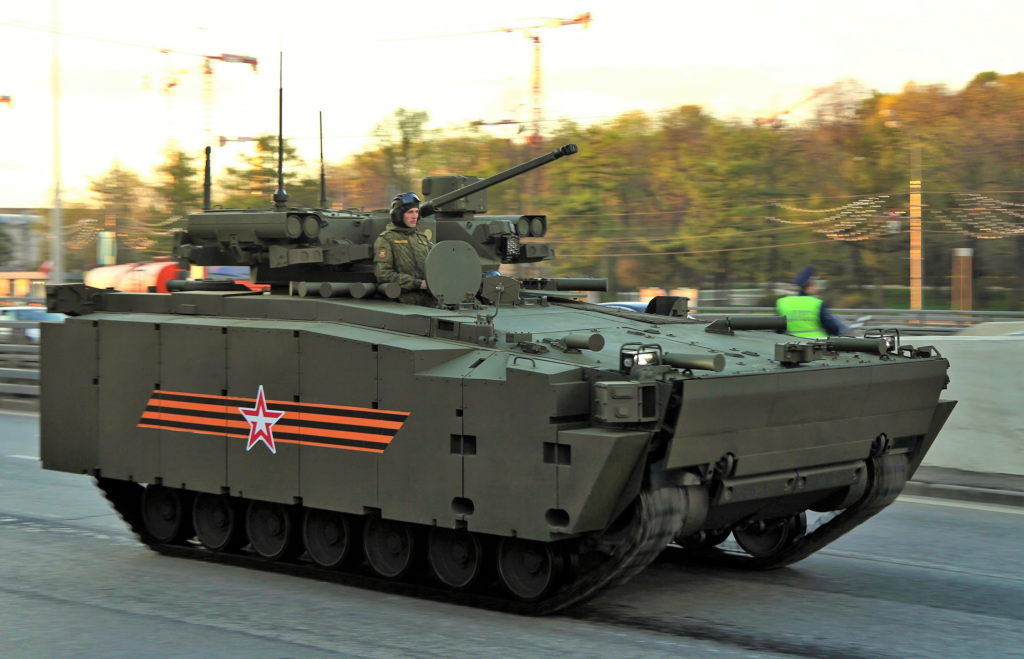
Moscow has also adopted a new type of tank support combat vehicle, which could effectively suppress and destroy an enemy’s anti-tank weapons, tanks and other armored targets.
When these vehicles could actually be deployed in the Arctic is unclear. As with other Russian military programs, these sound capable, but it is unclear whether Moscow maintains the resources to produce the vehicles in numbers. Most likely, it is the latest propaganda from the Kremlin that sounds good in the releases, but will take a long time to actually materialize.

