
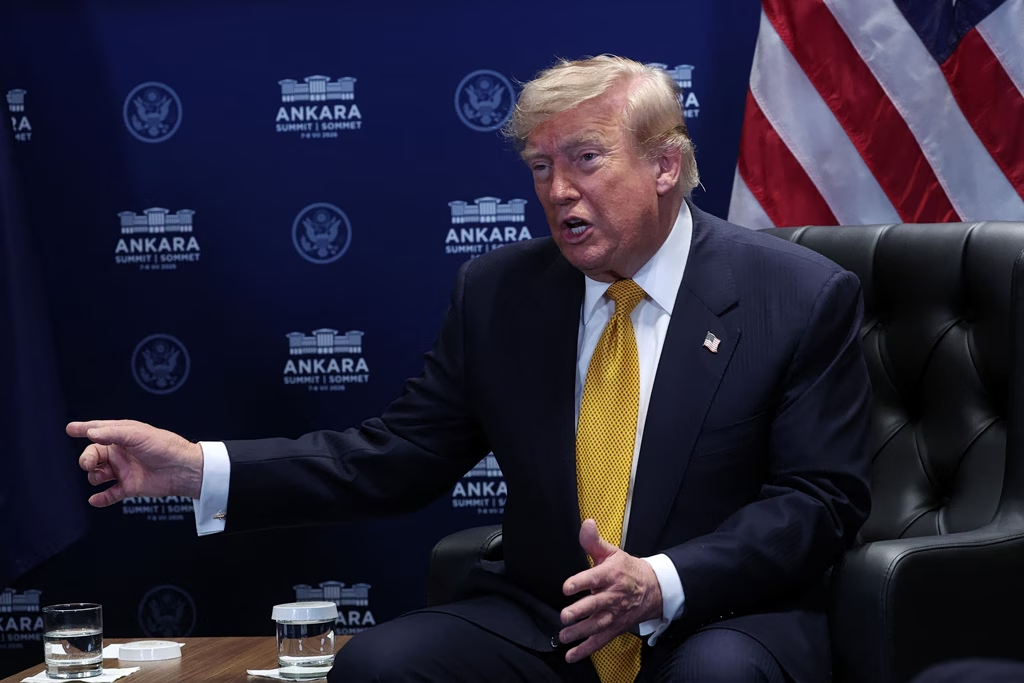

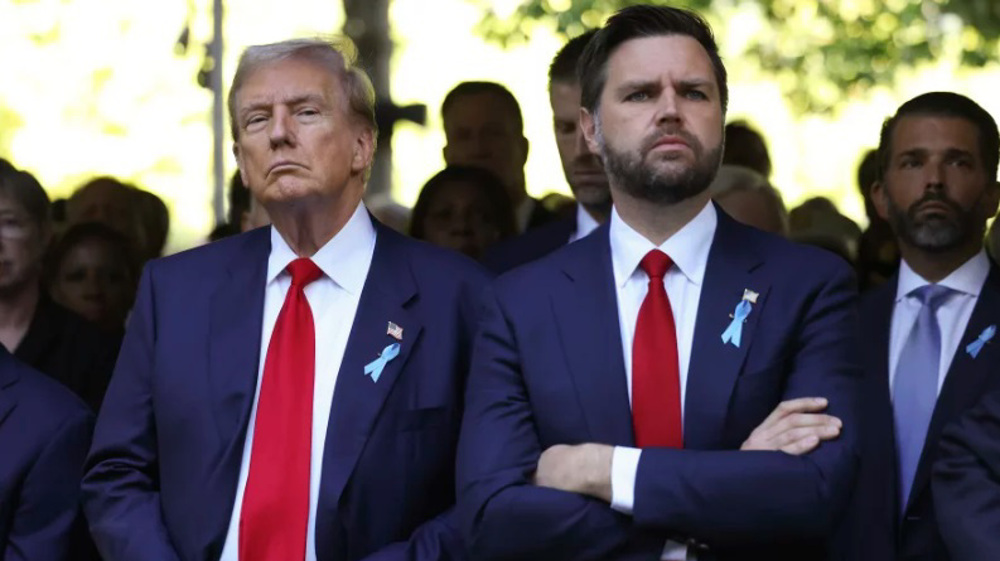
The revelation that US President Donald Trump has left written instructions for his Vice President J.D. Vance in the event that he is assassinated during his second term is causing a sensation.
Reports of increased security protocols surrounding Donald Trump, combined with public statements by US administration officials about mechanisms to ensure government continuity, bring back to the fore a question that would have seemed unthinkable until a few years ago: what happens when the political security of the President of the United States is transformed from a personal protection issue into a factor of international stability?
The discussion is not just about the personal security of a leader. It concerns the stability of the most powerful state on the planet, the functioning of the American institutional mechanism and the consequences that any serious political turmoil could cause in an international system already burdened by wars, economic rivalries and geopolitical conflicts.
The US has been developing plans for the survival of the state structure in the event of a crisis for decades. The logic is simple but fundamental: the state must continue to function regardless of the circumstances. The concept of “Continuity of State” was not created to protect an individual but to maintain institutional stability.
From the nuclear threat of the 1960s to the era of the counter-terrorism campaign after September 11, Washington has always considered that the most serious scenario is not the attack itself but the possibility of an administrative vacuum.
Trump is not an ordinary political figure
However, in the current context, the debate takes on different dimensions. Donald Trump is not an ordinary political figure. He remains perhaps the most divisive political figure in American public life in recent decades.
For millions of his supporters, he expresses resistance to the traditional political establishment. For its critics, it is a destabilizing factor. This intense polarization creates an extremely charged political environment. American society is experiencing unprecedented levels of political tension.
Elections are no longer seen as simple democratic processes but as existential conflicts for the future of the country. In such conditions, the risks of radicalization also increase. American history has witnessed political assassinations that have marked entire eras.
From Abraham Lincoln to John F. Kennedy, and the attempts on Ronald Reagan and other leaders, the physical security of the president has always been a matter of national importance.
The US wants to forestall the shock
Today, the situation is even more complex. The United States is facing crises on multiple fronts at the same time: Ukraine, the Middle East, the Indo-Pacific, trade competition with China, and domestic political polarization. Any shock in Washington could affect much more than the domestic political balance.
International markets operate on the basis of predictability. The American presidency remains a key pillar of this predictability. A scenario of political unrest could have immediate effects on stock markets, energy markets, exchange rates, and international investment flows.
Washington’s geopolitical rivals would also be watching any developments extremely closely. On a global level, the stability of the American administration is not an exclusively American affair.
It affects the strategic decisions of great powers, the functioning of alliances, and the balance of power. The real story is that our era has entered a point where a president’s political security is now directly linked to the overall stability of the international system.
And that perhaps reveals something deeper: that the world has become so interdependent that even an event in Washington can set off geopolitical earthquakes thousands of miles away.

