



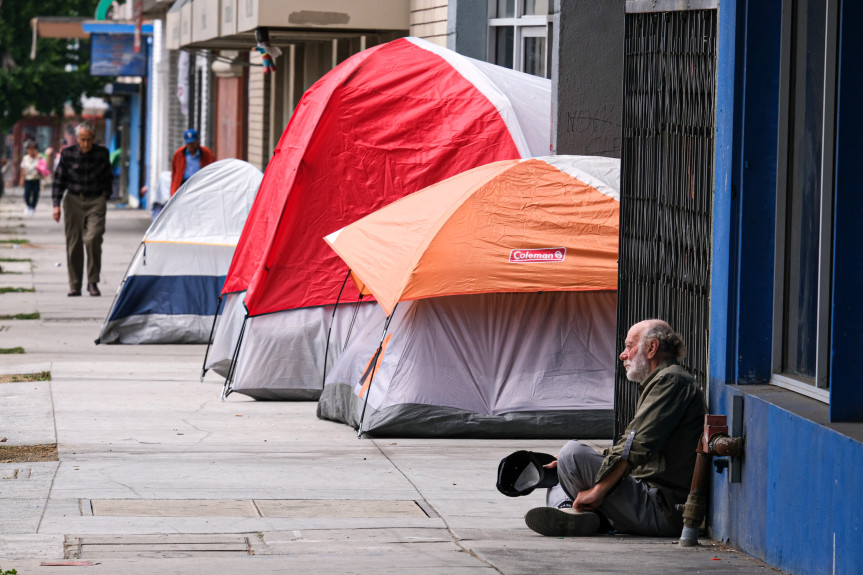
Today’s 60s and older – were the first generation after the end of World War II to see an improvement in their standard of living. But its members, on the other hand, as they are now mass retiring, are creating new “armies” of homeless people in the USA.
They are now “arguably the fastest growing group” in this population segment. Homelessness in New York, Los Angeles, and Boston is projected to likely triple by 2030.
Until 1990, those considered chronically homeless were in their 30s, but “today the average is 62,” says the organization AARP (American Association of Retired Persons), which focuses on the problems of Americans over 50. This aging homeless population brings additional challenges to dealing with a problem that has already reached the proportions of a humanitarian crisis in major American cities.
Many of the baby boomers are dealing with health problems, for which most – and already saturated – homeless shelters are not even prepared.
Some have expanded medical services and others have created special areas without bunks where older people who are confined to wheelchairs or have other severe mobility problems can stay overnight. Homelessness for many is equivalent to.. a death sentence. Research has shown that the average life expectancy for older people who do not have a place to live can be 10 to 20 years shorter than normal.
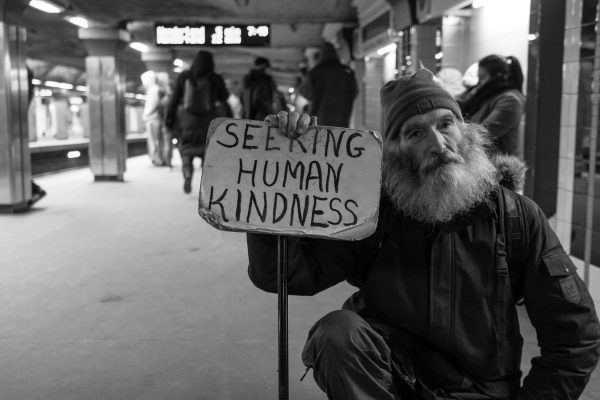
“Legacy” of crisis
In total, the 72.5 million Americans born between 1946 and 1964 – as the baby boomer generation is broadly defined – are considered among the most well-off.
But while the first “bakery” of this generation came of age in a climate of economic prosperity, the second – those born after the mid-50s – found themselves as young adults faced with a series of crises.
When they entered the labor market they were faced with the recession of the 70s. Later, as 50-somethings, they received another blow with the financial crisis of 2007-2008. Some are estimated never to have recovered.
Now, as they enter the senior age group, many are faced with the lack of a strong social security network, as well as affordable housing.
The reasons that ultimately lead them to the road are also many. Nor do they necessarily have to do with individual bad choices.
It could be a mortgage that they eventually couldn’t repay, the loss of a partner or job, an illness or chronic health problems that led to unaffordable medical debt.
High inflation, the shrinking supply of affordable housing, but also the supply of jobs, combined with the end of the pandemic moratorium on evictions are now estimated to be exploding the elderly homeless population. But the continuation and growth of the problem into a modern scourge is due to the fact that, despite escalating urbanization, no care was taken by successive governments.
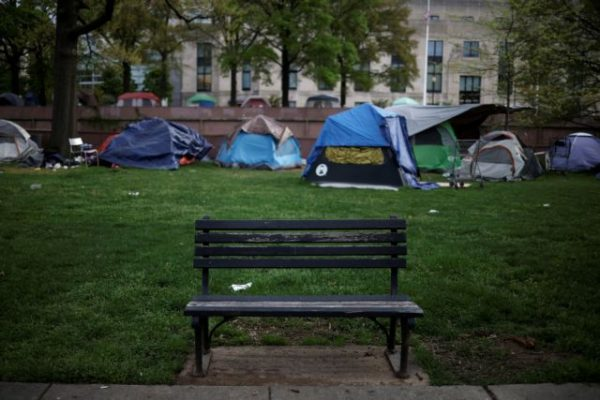
Only 36 affordable rental homes for every 100 poor households
According to data from the National Coalition for Low-Income Housing in the US, across the US today there are an average of only 36 affordable rental homes available for every 100 poor households. In some states, such as Nevada and California, the ratio is even less than 25.
The provision of federal Supplemental Security Income (SSI) for the needy, meanwhile, is made by very strict conditions and is now deemed insufficient, due to inflation.
President Biden has announced a plan to reduce homelessness by 25% by 2025, focusing on those most affected, including veterans, adults with disabilities and the elderly.
But the agreement already approved by Congress with the Republicans to increase the US debt ceiling puts “scissors” in spending on programs like these.
Individual efforts at the state level or initiatives to alleviate the problem by philanthropic organizations clearly do not constitute a comprehensive solution.
Especially when there is no clear picture of the problem. To date, there are no federally aggregated data on homeless Americans by age group.
The annual reports of the Ministry of Housing and Urban Development categorize them between those aged up to 25 and those older, with no figures for the elderly.
This, while figures from the Center on Budget and Policy Priorities—a Washington-based progressive think tank—show that 73% of Americans living at or below the poverty line pay more than half for housing of their income.
