

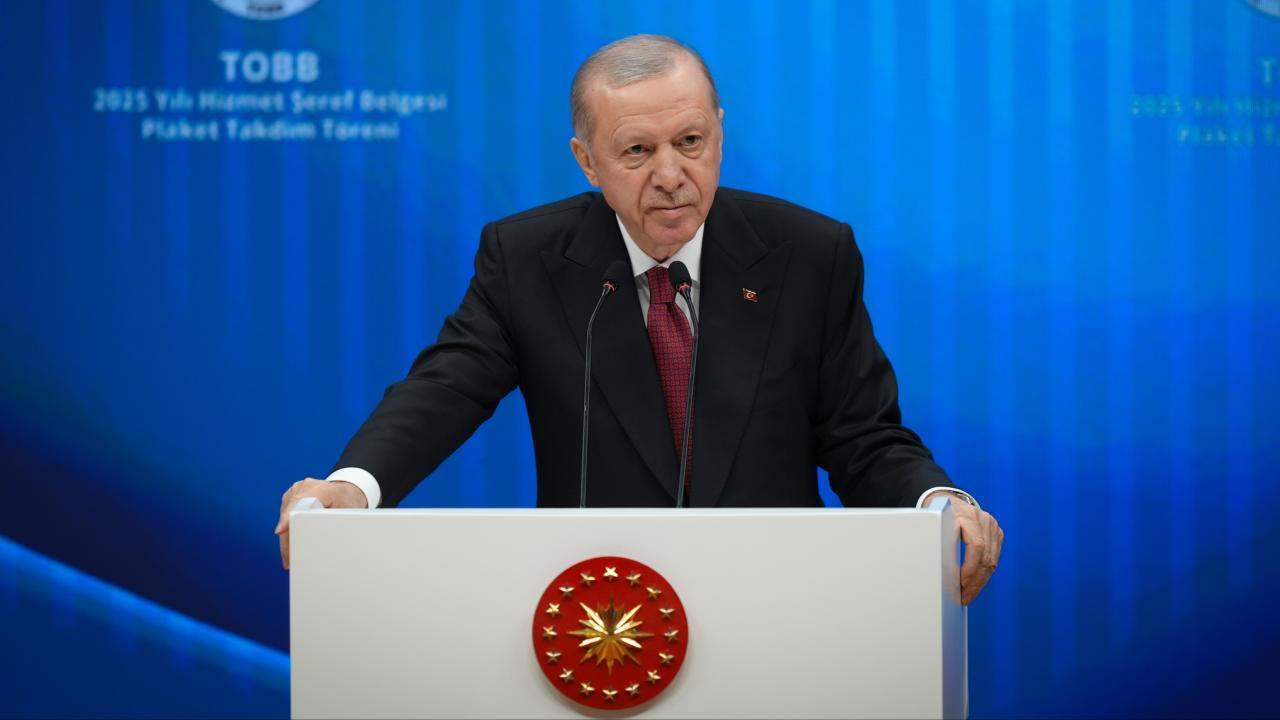
The crisis with the war in Iran was perhaps seen by Ankara as another opportunity to assume a role, filling the geopolitical void that Iran would leave behind and at the same time giving it the opportunity to develop a new framework of alliances that would contribute to its effort to emerge as a regional leading power.
Two months later, “taking stock of what has happened,” the Turkish leadership finds that things are not developing as it had perhaps planned. The way in which the confrontation in the Persian Gulf is developing is also affecting its own economy, as is happening globally.
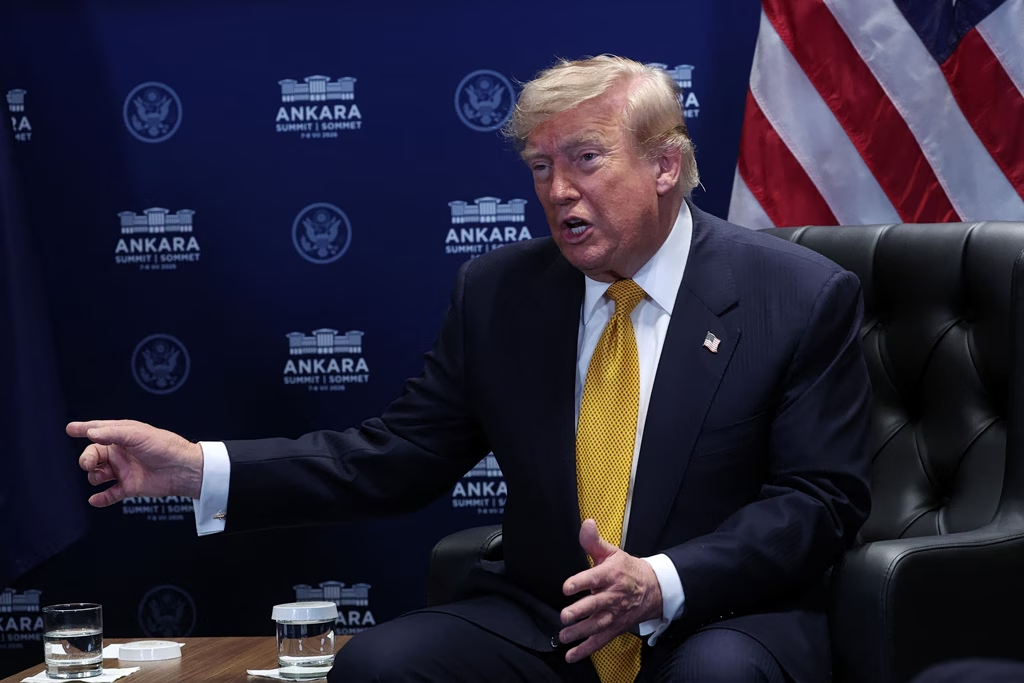
The Americans and President Trump ignored her offer of mediation, choosing Pakistan for this role, while Erdogan’s demonization of Israel may touch the Muslim world and some elites in Europe, but it revives the traditional suspicion of him by the Washington establishment. And especially at a time when President Trump has made a clear choice and has identified with Israel in the Iran war but also on other issues, such as Gaza.
For Ankara, the quest to play a role of “wake-up call” for the Arab world is also proving to be a difficult equation, as Arab suspicion of Turkey’s involvement in intra-Arab affairs remains high, while Gulf countries such as Qatar and Saudi Arabia, which have excellent relations with Ankara, as well as the UAE, which has invested heavily in the Turkish economy, saw that in the difficult moment when they were under attack, the “friendship” with Turkey proved to be empty.
Ankara was unable to protect its own borders and was forced to resort to help from NATO, let alone help its Arab “friends”. Even its efforts to form a “Muslim NATO”, with Egypt, Saudi Arabia and Pakistan, cannot bear fruit due to serious deeper contradictions, ideological, economic and geostrategic, mainly with Cairo and Riyadh.
In fact, at the moment when T. Erdogan has taken over the “holy war” against Israel, he finds that the UAE not only maintains the spirit of the “Abraham Accords”, but also goes a step further that leads to a strategic relationship with depth.
The Emirates, as revealed in recent days, received assistance from Israel that is crucial for their defense against Iranian attacks, including Iron Dome and an advanced drone detection system called “Spectro”, while with the presence of Israelis, the new Israeli air defense system with Iron Beam laser was also deployed on their territory.
In this environment, Turkey is simultaneously monitoring movements in the Eastern Mediterranean and the Aegean, where it is finding that, on the occasion of the war in Iran, a new framework of cooperation is being formed that can create what it considers to be the imposition of faits accomplis to its detriment.
And through this prism, it now also sees its relations with Greece and Cyprus. The redeployment of Greek defense capabilities, with the use of Karpathos and Lemnos, the upgrading of the role of Souda in American planning, the presence of Greek forces in Cyprus, are moves that Ankara understands will not be revoked, at least as long as the unrest in the Middle East lasts.
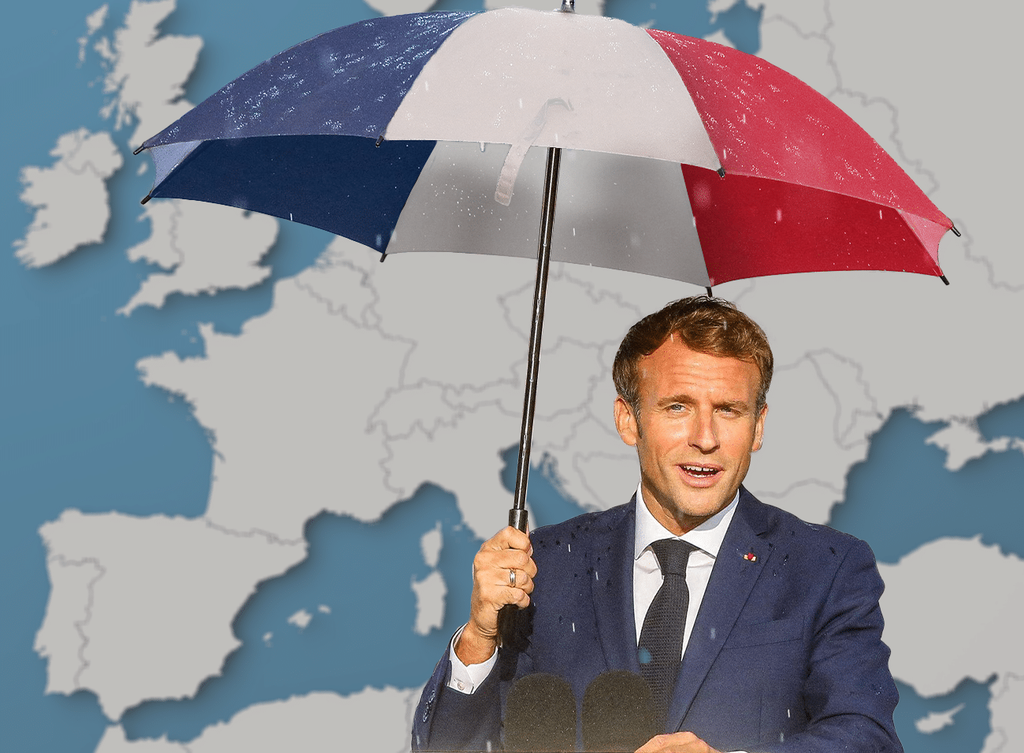
The agreements between Athens and France to strengthen the alliance, with the official and public reaffirmation of the mutual assistance clause, are causing concern in Ankara.
Also, in Cyprus, the expected signing of a SOFA agreement with Paris next month provides for the possibility of the presence of French forces on the island (for humanitarian reasons), while moves are already being made by the US and France to secure infrastructure that will allow the presence of their forces on the island.
Ankara also notes that despite efforts to undermine Greece’s relationship with the Arabs, by highlighting the country’s relationship with Israel, these relations remain strong, with Qatar and Saudi Arabia expressing their gratitude for the assistance Greece provided in their defense against Iranian attacks, as well as its support for the UN Security Council, where Greece is a non-permanent member.
As for Israel, efforts to undermine the Tripartite Cooperation between Greece, Cyprus and Israel are not yielding results. On the contrary, Ankara sees that this cooperation is also gaining depth in the “Defense” chapter, with the procurement of advanced Israeli missile systems by Greece and Cyprus.
The results of Turkey’s foreign policy are not encouraging, given that the West (USA, EU-France, etc.) is trying in every way to “neutralize” it, without allowing it to become further involved, either as a guarantor or mediator in their actions and interests in the Eastern Mediterranean, the Middle East, but also in the Eastern Balkans, where the importance of the Bosphorus Straits is systematically bypassed, through the Greek port of Alexandroupolis. If Iran manages to establish a transit tax through the Straits of Hormuz, for the reconstruction of its infrastructure, then it is very likely that Turkey will do the same in the Bosphorus Straits, while also allowing the selective passage of ships through them. For this very reason, the West seems to have “sidelined” any importance of Turkey, both in NATO and in the Middle East.
This situation is creating pressure on Ankara, which, although cautious so far, limited to rhetorical reactions, is estimated to be studying its next moves in order to attempt to overturn the supposedly “fait accompli” and reposition itself in the new scenario that is taking shape after the war in Iran.

