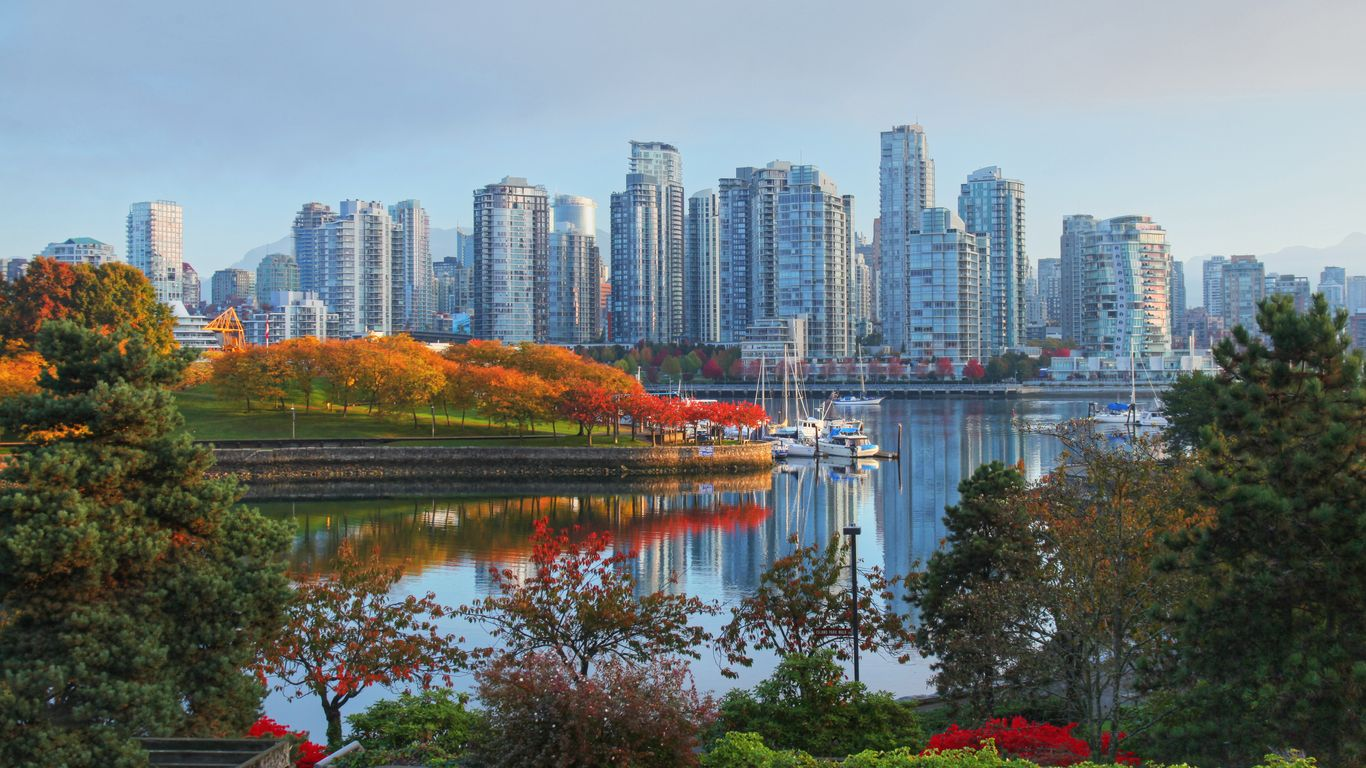
In Vancouver, the picture is completely different, the magnificent natural landscapes still define the city’s identity: On one side it is washed by the Pacific Ocean and on the other the often snow-capped mountain peaks rise, creating a setting that is difficult to find in a metropolis.
The three characteristic peaks of the Coast Mountains that stand out in the background – Grouse, Cypress and Seymour – are no more than an hour away from the city center, which is built on a narrow peninsula embraced by the sea: to the north is the natural Burrard Inlet, where the large commercial port is located, and to the south is False Creek with its marinas and pedestrian walkways. Vancouver’s opening to the Pacific is English Bay, where the city’s most famous beaches are located and is the starting point of the popular route around Stanley Park.
Despite its natural beauty, Vancouver is not a city exclusively oriented towards outdoor activities for which British Columbia is famous. It is a modern metropolis with one great characteristic: that it has been consistently ranked among the cities with the highest quality of life in the world for more than two decades.
Another special feature is that it is one of the most multinational cities in Canada, bringing together 200 ethnicities with 170 different languages spoken to date! The diversity is corresponding in terms of festivals, arts and cuisines. It all started in the 1850s, when Chinese came to British Columbia, initially because of the “gold rush”. In the 1880s, thousands of workers from China worked on the construction of the Canadian Pacific Railway and then settled permanently, creating the core of Vancouver’s historic Chinatown. From the 1880s to the early 20th century, the Japanese came to work in shipping and fishing, and then to trade. After 1960, the lifting of immigration restrictions and the city’s strategic location as a gateway to Asia, reinforced successive waves of settlement – not only from Asian countries, but also from Europe.
A walk is enough to see how all these different cultural characteristics are reflected – with the difference that, apart from the historic Chinatown, the other ethnicities do not live in specific neighborhoods, but are scattered throughout the city.
Another special feature is that it is one of the most multicultural cities in Canada, bringing together 200 ethnicities with 170 different languages spoken to this day! The diversity in terms of festivals, arts and cuisines is similar. It all started in the 1850s, when Chinese people came to British Columbia, initially because of the “gold rush”. In the 1880s, thousands of workers from China worked on the construction of the Canadian Pacific Railway and then settled permanently, creating the core of Vancouver’s historic Chinatown. In the 1880s until the early 20th century, the Japanese came to work in shipping and fishing and then to trade. After 1960, the lifting of immigration restrictions and the city’s strategic position as a gateway to Asia, reinforced successive waves of settlement – not only from Asian countries, but also from Europe.
A walk is enough to see how all these different cultural characteristics are reflected – with the difference that, apart from the historic Chinatown, the other ethnicities do not live in specific neighborhoods, but are scattered throughout the city.
Another characteristic of Vancouver is its youthful identity and vibrant nightlife with independent galleries, small exhibition spaces, vintage shops and live scenes coexisting in many places: From Commercial Drive, historically linked to the Italian community, where a bohemian, alternative atmosphere prevails, to Mount Pleasant and along Main Street with design studios and microbreweries.
One of the results of the international exposure that the city received thanks to the 2010 Winter Olympics was the development of its gastronomic scene that brought it to one of the first places in Canada, with a wide variety of options without particularly high costs. Chinese and Japanese cuisine are dominant – especially sushi – and Vietnamese, Thai and Korean are very popular. The so-called “West Coast cuisine” also holds a special place, based on local products such as salmon, oysters and shrimp. A peculiarity of the city is the many food trucks (mobile or fixed street food canteens) that operate as small and organized businesses. They were established after 2010 and are a key element of urban culture.
Getting to know the city centre
To get to know the city, start in the city centre (Downtown), a network of avenues and shopping centres centred on Robson Street. On warm summer evenings it is reminiscent of a modern version of La Dolce Vita as it is a lively meeting place, full of bars, restaurants, shops that stay open until late and young people drinking bubble tea – the drink that is closely linked to Vancouver’s Asian identity and was invented in Taiwan.
A characteristic of the area is that the so-called “Vancouverism” (tower podium) developed there. It is an urban planning model that was developed from the 1990s onwards with the aim of developing dense buildings without degrading the quality of life and is based on a clear separation: tall residential towers, usually 20-40 floors high, are built on wider bases (podiums) of 2-6 floors that host shops, cafes, offices or public buildings, creating a single front at street level, enhancing pedestrian movement and access to the coastline. The skyscrapers are thin and spaced apart so that the apartments have light and views.
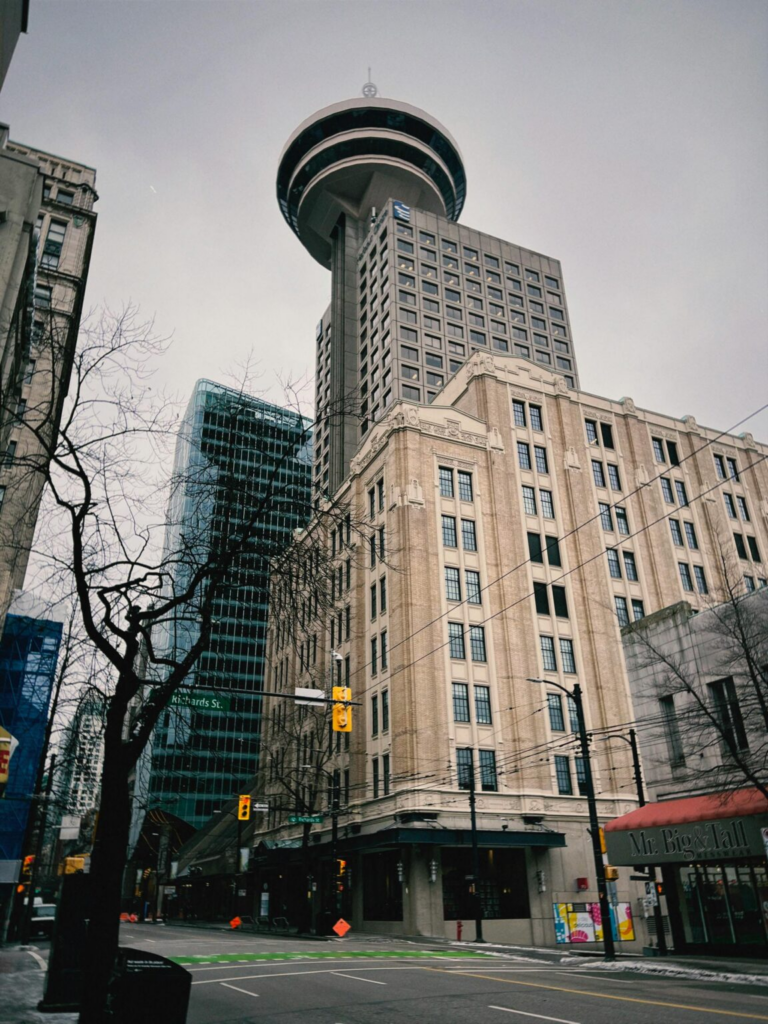
The busiest street in the center is Robson with international fashion chain stores and restaurants, while Granville and Alberni are home to luxury brands.
In the heart of Downtown, at the intersection of Georgia and Hornby streets, next to Robson Square, it is worth stopping to visit the Vancouver Art Gallery, in an imposing neoclassical building that once housed the courthouse. It houses one of the most important collections of Canadian art that will help you understand the artistic identity of the West Coast. Among the many works by contemporary artists, those of Emily Carr, who captured the forests of British Columbia and villages of indigenous peoples in an intense, almost expressionistic style, hold a dominant position. The museum organizes many exhibitions of artists from Canada and other countries with an emphasis on issues such as ethnic identities, the environment and colonial heritage.
After the museum, you can stop at Robson Square to try the famous Japadog – a Japanese-style hot dog – which is one of Vancouver’s most iconic street foods with a devoted following.
Stroll through Gastown
A few minutes’ walk east of Downtown, Gastown is a prime example of urban renaissance and is known for its cobblestone streets, early 20th-century red brick buildings, chic shops and some of Vancouver’s most interesting cafes, restaurants and bars.
The name comes from “Gassy” (a word of mouth) Jack Deighton, who came to the area by canoe from New Westminster and set up a saloon near the sawmills of Burrard Inlet, in a spot where there was only a makeshift workers’ camp. His presence was a catalyst as people began to gather around his shop and commercial activity developed. This settlement became known as “Gassy’s Town” and, although it was destroyed by the Great Fire of 1886, is considered the beginning of modern Vancouver.
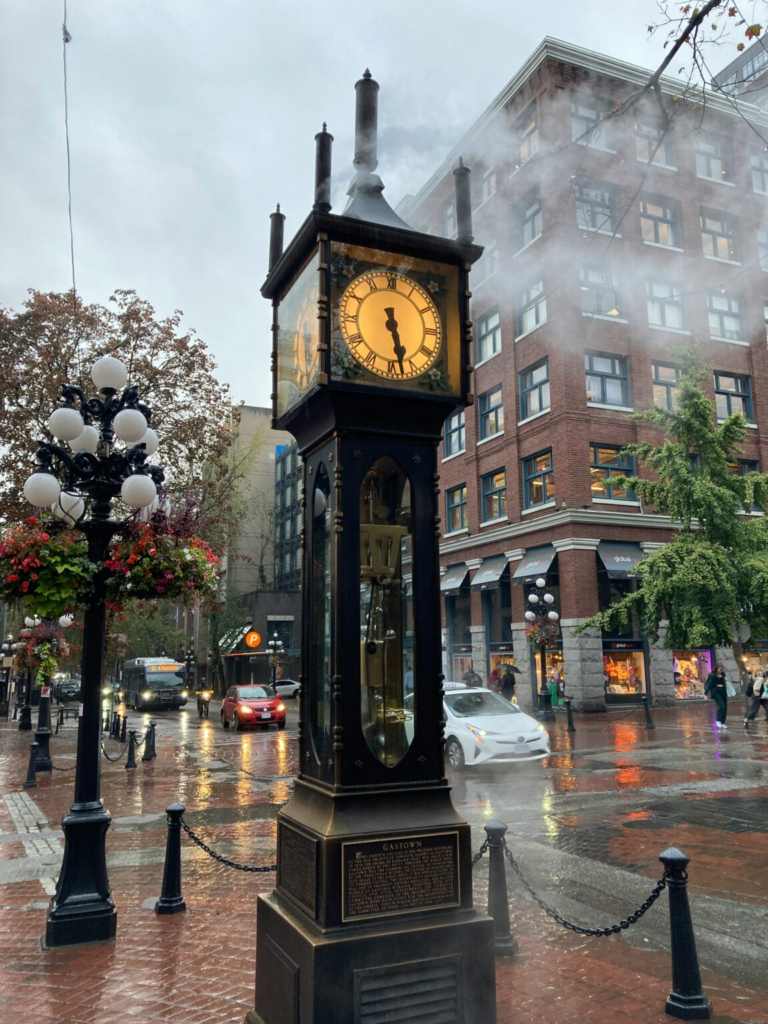
Later, as the city’s commercial center moved further west, the area deteriorated, but in the 1970s, it was declared a historic district and systematic restoration began that transformed it into the vibrant neighborhood it is today. In addition to the statue of the famous Jack Deighton in Maple Tree Square, another landmark is the Gastown Steam Clock, on the corner of Cambie and Water Streets: the characteristic clock, built in 1977, has a mechanism that works with the help of steam and releases it every 15 minutes to the sounds of the Westminster melody that can also be heard from Big Ben in London.
The great Museum of Anthropology in Vancouver
About 20 minutes from downtown, on the campus of the University of British Columbia, you will find the Museum of Anthropology, one of the most important in Canada. Its ethnographic collections consist of 50,000 objects and its archaeological collections of about 500,000.
The most important exhibits include monumental totems of the indigenous Haida people, wood carvings and sculptures, among which the works of artist Bill Reed stand out, such as the emblematic “Raven and the First Men”: inspired by Haida mythology, the work depicts a raven, a central figure in their traditions, at the moment when it frees the first people from a shell. The rooms also host objects from Asia, Africa, Oceania and the American continent.
The building that houses the museum, designed by Arthur Erickson, is also particularly impressive, an emblematic example of modern architecture, constructed with exposed concrete and large glass facades.
At the markets of Granville Island
Under the Granville Bridge, south of downtown, this island is one of Vancouver’s most vibrant and diverse areas, where shops, markets, galleries, a marina and many outdoor spaces coexist in an environment with obvious industrial elements. It is no coincidence that it is described as a “people’s place”, as it is a daily meeting point for residents and visitors.
Granville was not originally an island. It was created between 1916-1917 by filling in False Creek and developed into a center of industrial activity with warehouses, factories and shipyards. By the late 1960s, it had been abandoned, but in 1972 an ambitious government-backed redevelopment program began with the aim of repurposing the old buildings.
Today, the island’s centerpiece is the public market, housed in a former warehouse with a metal frame and high ceilings. There, producers and artisans sell food, other products and fresh ingredients that come directly from the sea, the bakery, or their fields. There are also cultural venues, such as the Arts Club Theatre, the largest non-profit theatre organization in Western Canada, which presents a wide repertoire of contemporary theatre, new Canadian productions, classics in modern settings, as well as more commercial performances. There are also artist workshops with ceramics, wood carvings and glass works, small galleries, restaurants, small bars, food stalls around the market, microbreweries (brewpubs) and more.
Stanley Park, the “green heart” of Vancouver
With an area of almost 4 square kilometers, this park is one of the most important urban lungs in the world and combines a dense forest with centuries-old trees, wetlands, open recreational spaces and three popular beaches: English Bay, Second Beach with organized facilities and the quieter Third Beach. It still retains parts of virgin forest, as the area was protected when it was officially declared a park, thus avoiding the extensive logging that occurred in other areas of British Columbia.
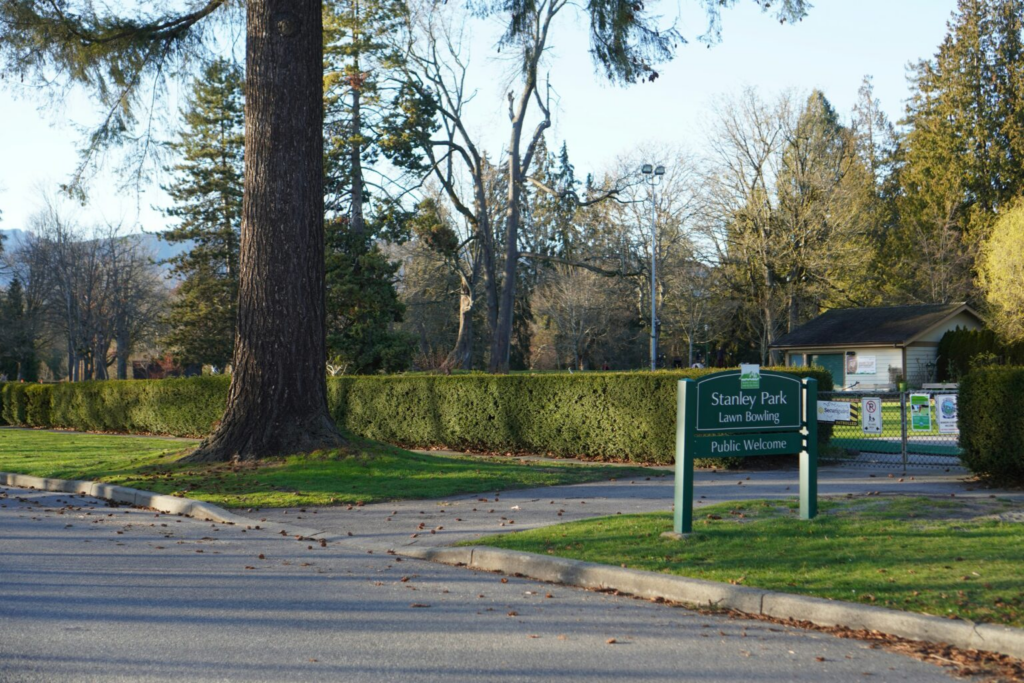
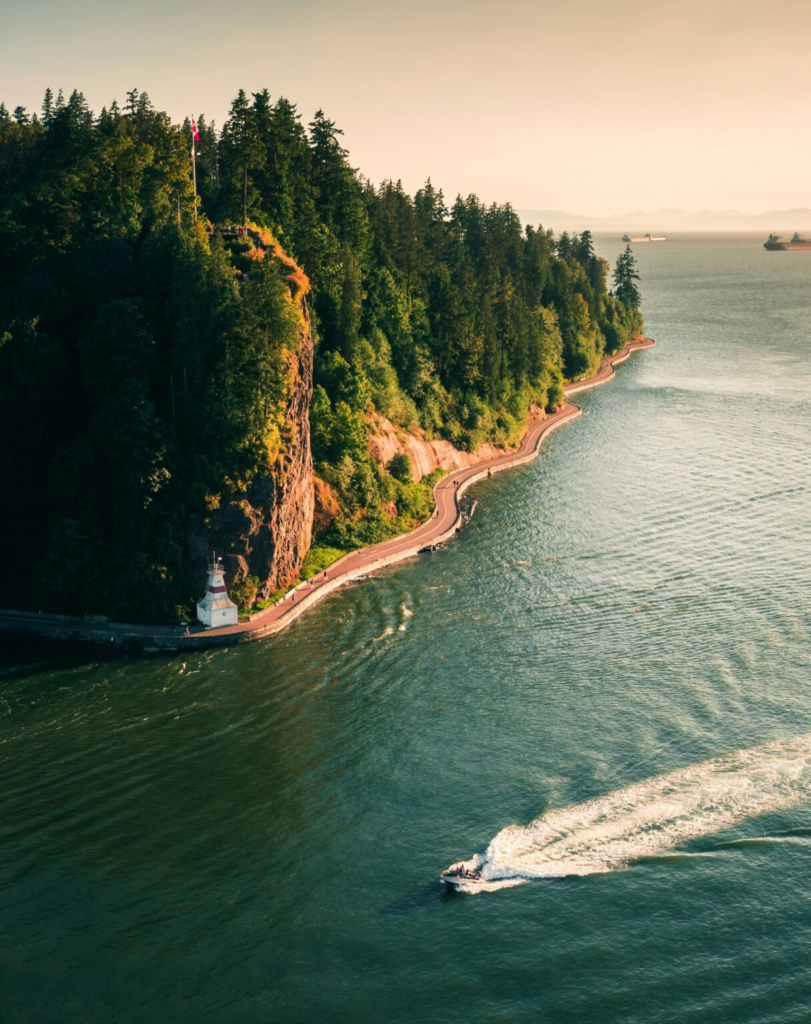
You can start your tour at Lost Lagoon, a tranquil lagoon that is now an important habitat for birds such as herons and eagles. Nearby, the Cathedral Trail leads to more “wild” areas of the park, while to the east is a lovely rose garden. The most popular activity in Stanley is walking or cycling along the Seawall, a circular coastal path-cycle path, about 9 kilometers long, that hugs it and offers sweeping views of the city skyline and the North Shore mountains. Along the route, at Brockton Point, are the emblematic totem poles of the indigenous peoples, who were moved there in the 1920s and the collection was later enriched with newer works.
Inside the park, the landscape changes: quiet trails cross a dense cedar forest, and open spaces are ideal for relaxing and picnicking. At the northern end, Prospect Point offers views of Burrard Inlet, while to the southwest, Siwash Rock dominates, one of Stanley Park’s most recognizable natural landmarks.
It’s also worth including a visit to the Vancouver Aquarium, located inside the park, which is one of the most popular attractions and one of the most important aquariums in North America. It is home to more than 65,000 marine and aquatic species – from jellyfish and octopuses to otters, seals and sea lions. Thematic sections cover different ecosystems, from the coast of British Columbia to the Amazon, with modern, interactive exhibitions. The experience includes a 4D viewing experience and there is a café and restaurant on site.
Walk the famous Capilano Suspension Bridge
Capilano Suspension Bridge Park is one of the most popular destinations in the Vancouver area, combining stunning scenery with organized exploration experiences. The main attraction is the Capilano Suspension Bridge, originally built in 1889 and now spanning 137 meters, approximately 70 meters above the canyon of the river of the same name. Crossing the bridge with its gentle sway and view of the dense forest is an experience in itself.
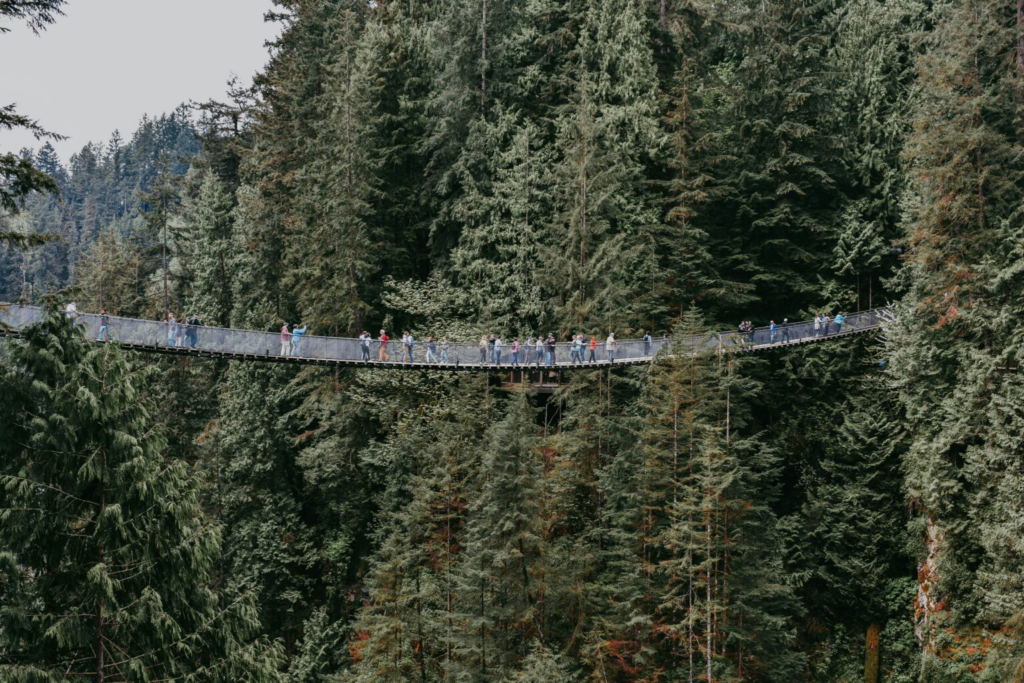
During your visit, it is also worth taking the Cliffwalk route: it follows a steep granite cliff, with narrow bridges, stairs and platforms that “suspend” above the canyon, offering an intense experience enhanced by the few points of support. For a more leisurely activity, you can take part in the Treetops Adventure and, through a network of aerial bridges, you will climb up to 30 m. among ancient trees. The route is suitable for people of all ages and offers a different perspective of the forest from the treetop level. During your visit, through presentations and informative stops, you will learn a lot about the subject of the temperate forests of the West Coast, as well as the relationship of the local First Nations (indigenous people) with nature.
The city’s historic Chinatown
It is one of the largest and most historic Chinese neighborhoods in North America, developed mainly around Pender and Kiefer Streets. It has largely retained its authentic character and remains a vibrant part of the city to this day. Your experiences here will be centered around gastronomy, as, among many others, you will find roast duck and barbecue pork shops, bakeries along Kiefer, traditional herb shops, Asian grocery stores, and small dim sum restaurants serving a variety of small plates that diners can share.
Nature Activities
It may seem strange, but just 30–80 kilometers from the city you can go whale watching, whose presence is due to the cold waters of the North Pacific where fish and plankton are abundant. This makes the city one of the best bases for whale watching on the West Coast of Canada. Tours are offered by special boats that depart mainly from Granville Island and head towards the Strait of Georgia and the Gulf Islands (about 4 hours). The most common species seen are orcas, humpback whales and, seasonally, gray whales. The best time to spot them is from spring to early autumn.
As we said at the beginning, within easy reach of the city there are many natural landscapes that literally take your breath away. The most popular route follows the Sea to Sky Highway to Squamish, with a stop at Shannon Falls and a ride on the Sea to Sky Gondola, the aerial cable car that offers panoramic views of fjords, forests and mountain peaks. Continuing north you will find Whistler, which operates as an organized alpine resort with trails and activities all year round. The more active can go to Garibaldi and Joffre Lakes Provincial Parks to hike in alpine landscapes and glacial lakes (about 180 km from the city).
Info: Most routes can be organized, with guided day tours lasting 8–10 hours: https://vancouvertours.com, https://westcoastsightseeing.com/guided-tours