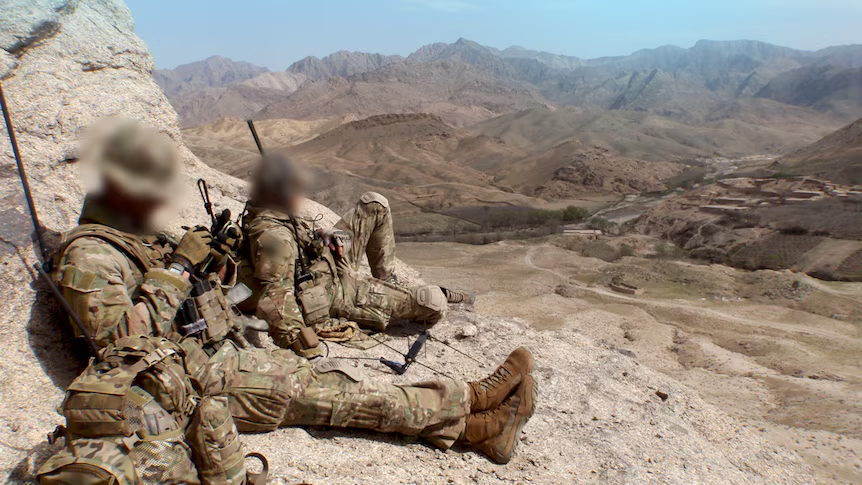
For the first time, the British government is taking legal action against the bravest elite warriors to walk the planet in the last eighty years, the SAS (Special Air Service).
It is curious that those who usually take legal action against these soldiers have never served as soldiers and have certainly never been in an extremely hostile environment, behind enemy lines. The fact that these soldiers are being accused shows ignorance of the great dangers that this elite soldier faces during the military operations they undertake. At the core of their existence is the regiment. They are not fighting for democracy or for the expansion of liberal civilisation, or for the crown they serve, but for their regiment.
When they move at night to accomplish the mission they have undertaken (they rest during the day), it is very easy to make a mistake. The mistake that can cost the life of the soldier himself, if a momentary miscalculation is made. Even more, the SAS soldier is not afraid of losing his life, his greater fear is that the momentary miscalculation may cost the life of his comrade. At the core of his existence is the regiment.
However, in these extreme conditions that they are trained to fight in, mistakes can be made. They did not drive their car down the road, hit a pedestrian unknown to them, only to have their insurance company come to compensate for the damages caused, including the loss of life. They fought because their government sent them to carry out the mission it gave them. If there is a mistake or some kind of abuse of power, the same army and their own unit knows what to do for them and how to punish them.
If lives were lost as collateral damage, during any of their missions, it is the duty of the British government to ease the pain of the relatives for the life of their loved one they lost. Not only in the form of financial compensation, but also in the form of providing services either as work or as studies in British schools and universities so that these people can transform their lives for the better, promoting British liberal culture, demonstrating that the loss of their own person was not wasted, but helped to transform the lives of their loved ones for the better.
The British government would be better off leaving the military and especially the “witch hunt” targeting the SAS out of the picture, and applying these left-wing policies to other areas of political life. The soldier who has made a mistake and taken a civilian life, when he withdraws from the intensity of the battle and returns to political life, lives with the mental scars he carries for a lifetime. This is known to all who have experienced such events. Please, show them more respect. They deserve it.
A significant number of soldiers from Britain’s 22nd SAS (Special Air Service) have reportedly resigned, expressing deep dissatisfaction with ongoing investigations into war crimes. The soldiers describe the legal proceedings as a “witch hunt” fueled by human rights lawyers. Officers from at least two squadrons, D and G, have applied for premature voluntary release.
The investigations mainly concern operations in Afghanistan and Syria, as well as older cases from Northern Ireland. The resignations include experienced warrant officers, who are considered the “backbone” of the unit.
Sources within the SAS describe morale as extremely low, while warning that the losses pose a threat to national security.