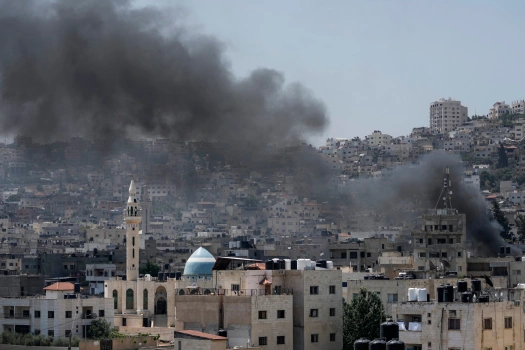
A fierce attack in the West Bank, specifically in the refugee camp of Jenin, has been unleashed by Israel since Sunday night, with the official count being eight dead Palestinians and dozens injured. The new raid, considered the biggest in the last two decades, comes after the one that took place two weeks ago again in Jenin with seven dead.
The attack by the Israeli army is taking place in a densely populated area where 14,000 displaced Palestinians live in less than half a square kilometer.
Israeli forces have carried out at least 10 airstrikes, with drones, as well as one missile, which caused serious damage to buildings and infrastructure.
Before June 21, when Israel carried out a drone strike near Jenin that left several dead and angered Palestinian militants, it had not used drones in an attack in the occupied West Bank since 2006. After the attacks, Israeli forces surrounded the refugee camp using dozens of armored vehicles.
The operation involved about 150 armored vehicles and about 1,000 soldiers (other international media say more) from elite special forces, the army, the intelligence services, the police and the border police.
The entrances to the city were blocked using tractors that also helped Israeli troops storm Jenin.
Gunfire ensued after Israeli forces entered the camp and were confronted by Palestinian resistance fighters.
Residents reported that bullets fell indiscriminately on their homes and that the Israeli army cut off electricity, telecommunications and water in a “collective punishment” of residents.
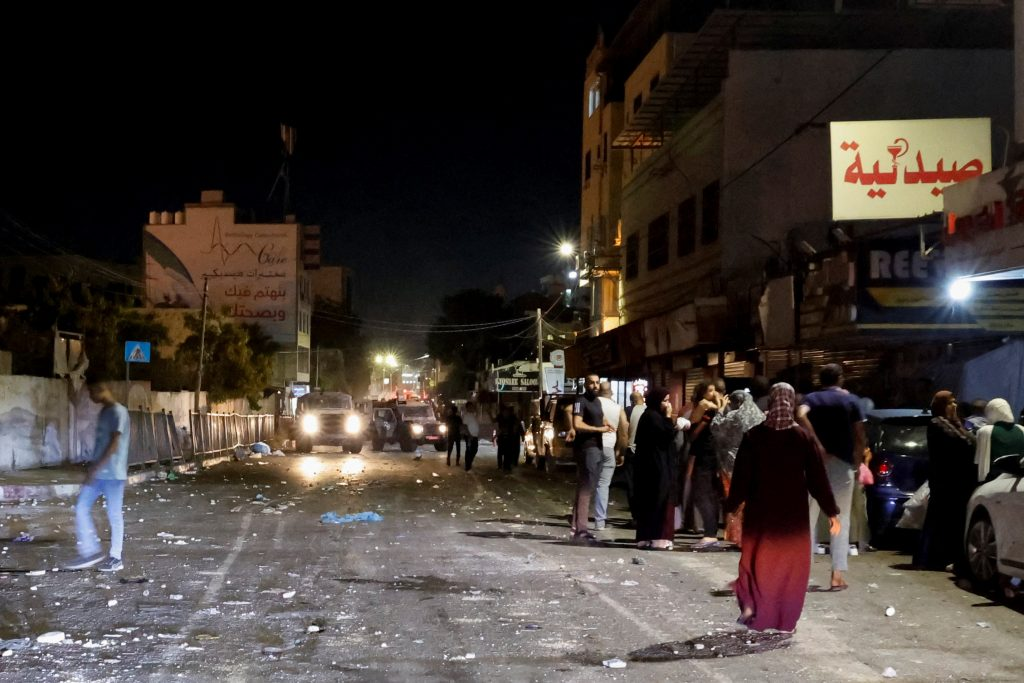
Who is Israel targeting?
The Jenin refugee camp has recently become a home for Palestinian militants, especially in the last year as Israel expands its incursions into the occupied West Bank.
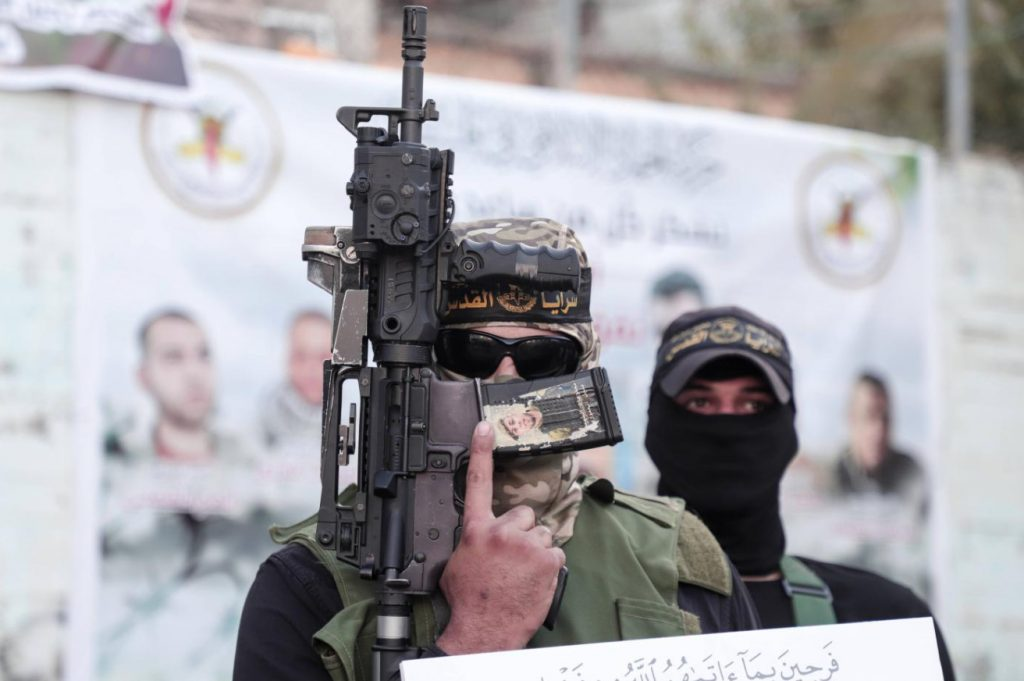
The fighters include hundreds under the banner of the “Jenin Brigades”, a newly formed group made up of fighters from various armed organisations.
Fighters from the Palestinian organizations Islamic Jihad, Fatah and Hamas are also believed to be active in Jenin. Also, the “Lions Den” organization has gained strength in the region. This particular group calls for direct confrontations with both the occupying forces and the armed settlers, and their calls are often heeded.
Combining armed struggle with other forms of resistance
The Lion’s Den called for a successful one-day General Strike in the West Bank, despite the fact that the proposal was not supported by traditional Palestinian forces.
What differentiates this rebellion from others is that it combines armed struggle with other popular forms of resistance. Moreover, unlike the “Knife Intifada”, which was carried out by individuals, this uprising is led by organizations throughout the West Bank. It started from Jenin in the north and then spread to Nablus, Jerusalem and to a lesser extent Ramallah and Hebron.
In their public statements, these rebel groups have maintained that they do not represent any faction and refuse to wrap the bodies of their martyrs in the banners of the leading political parties.
However, they have received support from groups such as the Popular Front for the Liberation of Palestine (PFLP), and even funding from Hamas and Islamic Jihad.
Active in these new brigades are members of all Palestinian political parties, including individuals from Fatah who reject the strategy of the Palestinian Authority under President Mahmoud Abbas.
However, the groups in Jenin and Nablus are extremely careful not to come into direct confrontation with the Palestinian Authority, as they believe that resistance should be directed towards the Israeli occupation.
Why was Israel savagely attacked?
A growing number of young Palestinians have taken up arms against Israel in the face of growing Israeli military operations and efforts to expand illegal settlements in the West Bank. Along with Gaza, Jenin has now become the main symbol of the Palestinian resistance.
One of the main goals of Israel’s raids in the West Bank over the past two years has been to crush these new groups, as part of Operation Break the Wave. In fact, a representative of Israel spoke of a “wasp’s nest of terrorists” when referring to today’s bloody operation in Jenin.
These new militant organizations are gaining ground, but whether the new wave of resistance turns into a generalized Intifada remains to be seen.
Although these new groups may not be able to achieve a decisive victory against Israel, their efforts are important in keeping the issue alive and challenging the Israeli occupation.