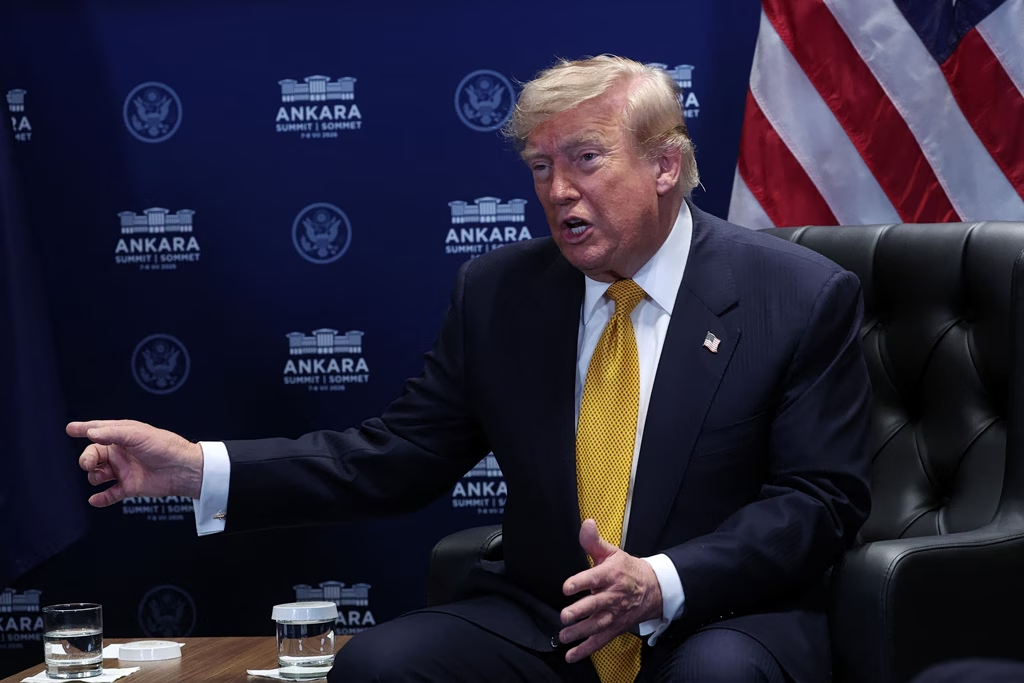


Is history repeating itself or can the cycle be broken? There is indeed an 80-year pattern in American history that has global implications. Every eight decades, the US faces an existential internal crisis that is overcome by war.
- 1781
The Union itself was the result of such turmoil. The American Revolution (1776-1883) began as an attempt to secede the 13 colonies from the embrace of the English crown and developed into a global conflict between the great European powers for dominance of the seas and colonial lands.

France entered the war on the side of the Americans and, in alliance with Spain and the Netherlands, attempted to challenge British sovereignty and avenge its defeat in the Seven Years’ War (1756-63).
Britain, on the other hand, was able to strengthen its expeditionary force in America by recruiting numerous units of German mercenary troops, the so-called Hessians, and establishing a special bond with Prussia that would last until World War I.
Americans were not united then. Some supported England and actively fought for the crown. There was a bitter division over whether the colonies had an independent future or whether they should remain part of the British Empire.
- 1861
About 80 years later, in 1861, America was devastated by the social and economic problem of slavery.
Modern factories in the North operated better with wage laborers than with slaves. However, in the South, slaves were an asset worth trillions (in today’s money) and a key tool in the production of cotton and sugar, commodities that drove industrialization at the time.
The country was split in two as a model of development and therefore of value systems. One part could benefit from the active participation of African Americans in the economy, the other part would be destroyed if blacks were freed.
This, however, was not an isolated incident. At the same time, England, the superpower of the time, fought in India, suppressing the Sepoy Mutiny (1857) and strengthening its dominance in the subcontinent.
China was drawn into the Second Opium War (1856-1860), with America and France winning major concessions from the Qing Empire.
America also supported Piedmont in the War of Conquest of Southern Italy (1861) against Austria and Russia. He took the side of Italy and Prussia against Austria in the war of 1866.

Overall, it was a decade of world conflict during which England wrongly chose to side with the South against the North, who eventually emerged victorious in 1865.
In some ways, in 1861 it still retained some roots in the Revolutionary War, because English involvement continued to a significant extent and it attempted to address an unresolved issue – the rights of African Americans to freedom.
- 1941
America was sharply divided again in 1941 when it entered World War II. There was a very active and powerful part of the country that was fascist and pro-Nazi.
Perhaps America’s greatest poet, Ezra Pound, was a fascist and lived through the war making anti-American propaganda in Italy.
Charles Lindbergh, perhaps the most famous American of his time, was pro-Nazi and had fought against the war with Germany.
On the other hand, there was an active socialist and communist movement threatening the Union from the left. Racism against blacks or Jews was rampant and overt.
African Americans were no longer slaves, but they were certainly not equal to the white majority. In the wake of the Crash of 1929 and the Great Depression, with unemployment at a record breaking 25%, America was once again on the brink of civil war.

The division concerned her very future. Should he get involved in European affairs and once again support Great Britain or stay aloof?
The attack on Pearl Harbor provided the answer to the dilemma and took the fascists out of the picture. The Cold War that followed, after 1945, also suppressed and weakened the socialist movement.
It took World War II and the Cold War, which lasted a total of 50 years, along with a vigorous and sometimes violent civil rights movement in the 1960s and 1970s, to prevent another civil conflict.
- 2021
If the time frame is correct, the fourth crisis is now unfolding and revolves around Donald Trump’s MAGA (Make America Great Again) movement and his presidential bid.
As 80 years ago, the sitting president, then Roosevelt, now Biden, is besieged by the right and a radical left, trying to balance.
If history is any guide, in the previous three crises the US moved forward with a hard-fought victory for the progressive party. It is not clear whether the same will happen now.
As in the past, there are growing portents of global conflict. The US is involved in two and a half wars (Ukraine against Russia, Israel against Hamas, and intense action against the Iran-backed Houthis in Yemen).
They are also locked in a fierce competition with China, around whose borders there are many hotbeds.
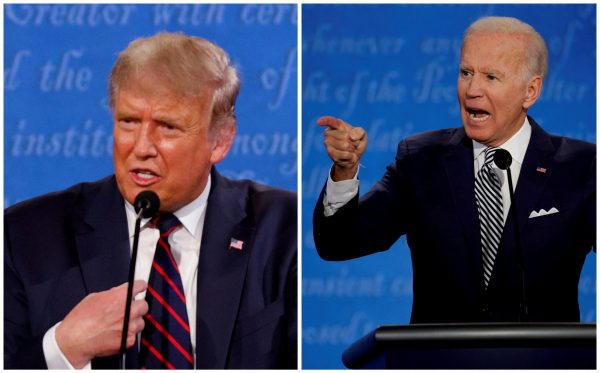
America’s role is now more critical than ever to the global balance, and it is becoming clear how internal tensions could lead to a major war.
Trump made comments against NATO and in favor of Russian President Vladimir Putin. He also seems willing to project an image of utter desperation for America in order to garner votes against Biden. The situation can get out of control.
It is easy to understand how a divided country can once again unite around a common goal – the war against China. The United States and the world need all their wisdom to rid themselves of the 80-year curse.