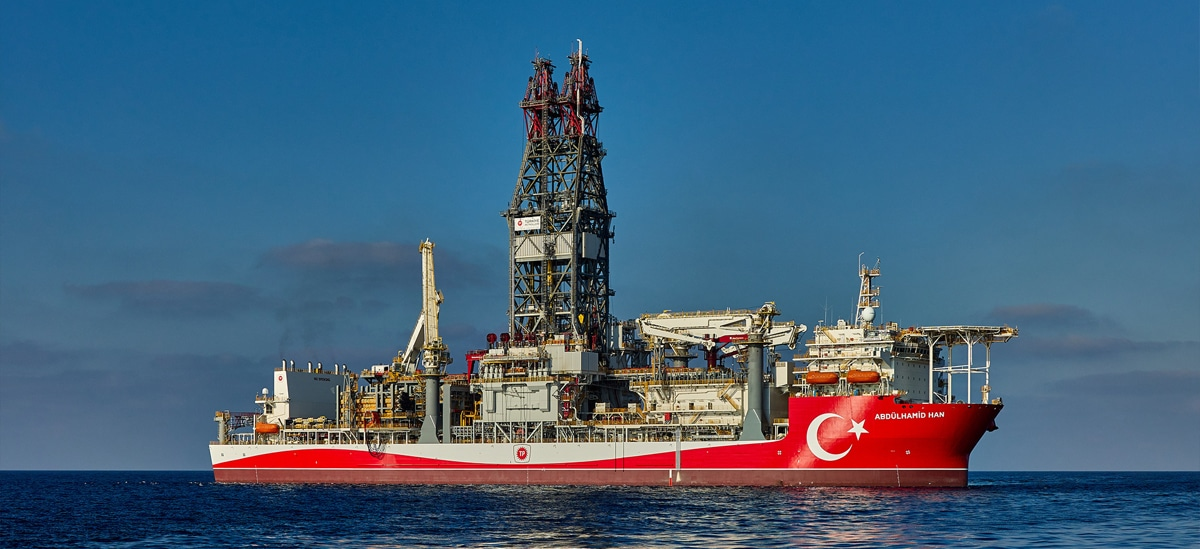
In late 2024, the Turkish research vessel Oruç Reis completed 3D seismic surveys of three offshore blocks off Somalia, covering an area of approximately 5,000 square kilometers each. The data it collected indicated the existence of vast hydrocarbon deposits. In April 2026, the drilling rig Çağrı Bey docked in the port of Mogadishu, marking the beginning of the first offshore oil drilling in Somalia’s history. The 228-meter-long drillship with a drilling capacity of up to 12,000 meters is expected to begin work on the Curad-1 target, 370 kilometers off the coast. Turkey has been organizing its political influence in Africa in general for years.
The Depth of Cooperation
The Turkish-Somali energy cooperation is not an isolated incident, but the culmination of a fifteen-year strategic relationship. It all began in 2011, when Tayyip Erdogan visited Somalia in the midst of a famine, becoming the first non-African leader to do so in two decades. Since then, Turkey has invested over $1 billion in rebuilding infrastructure, hospitals and schools.
In 2017, Turkey inaugurated its largest military base outside its borders, Camp TURKSOM in Mogadishu, where it has trained almost a third of the Somali national army. In February 2024, a ten-year defense agreement was signed to protect Somali territorial waters, with Turkey taking over the training of the Somali navy. Turkish companies, such as the Albayrak Group, already manage the airport and port of Mogadishu, significantly increasing Somalia’s state revenues. This is a holistic partnership that combines humanitarian aid, education, security and now energy.
Turkey’s strategic intelligence
Turkey, a country that imports almost all of its energy needs, manages to exploit oil that does not belong to it geographically, turning its geopolitical position into an energy advantage. Its “Africa Opening Strategy” includes Somalia as a priority due to its pivotal position in the Horn of Africa and its untapped resources.
The March 2024 hydrocarbon agreement grants the Turkish state-owned TPAO exclusive exploration rights to three offshore blocks. What makes this strategy “smart” is the risk management: Turkey assumes all the investment costs – over $100 million per well – and the insurance risks in an area that major oil companies (Shell, ExxonMobil) have avoided for decades due to instability. In return, Turkey secures access to deposits estimated at between 30 and 40 billion barrels!
Turkey’s Lead Over Greece
The Somalia operation is Turkey’s first offshore drilling outside its territorial waters. The expertise that the state-owned Turkish TPAO will gain in deep waters (over 3,500 meters) and in extreme conditions is invaluable and is directly reflected in the Aegean, where there are indications of hydrocarbon deposits.
The crucial point of comparison is the management model: Turkey invests through the state-owned TPAO, acquiring the technology, data and operational experience itself. In contrast, Greece grants exploration and exploitation rights in the Ionian and Aegean to foreign multinationals (such as Chevron, Total, ExxonMobil) through concession agreements. While Greek governments celebrate the “investment” of foreign capital, Greece acquires neither the know-how, nor the control of production, nor – most importantly – the profits from possible extraction. Turkey, through Somalia, is building a state-owned oil potential that it can exploit anywhere, while Greece remains dependent on third parties. Greek optimism is, in this light, indulgently superficial.
Under the production-sharing agreement between the Somali government and Turkey’s state-owned TPAO, the Turkish state-owned TPAO can recover up to 90% of annual production to cover costs. Only after depreciation is paid are profits shared, with Somalia initially receiving just a 5% royalty. This means Turkey will be able to channel huge amounts of oil into its market.
Turkey consumes about 1 million barrels per day, but produces only 80,000-100,000. Its energy import bill in 2025 reached $70 billion. TPAO’s goal is to reach a production of 1 million barrels per day (including the Black Sea and Ghabar fields). Even a 10-20% share of Somalia’s production (3-6 million barrels per day at full capacity) could cover a significant portion of Turkey’s needs, drastically reducing dependence on Russian and Middle Eastern oil.