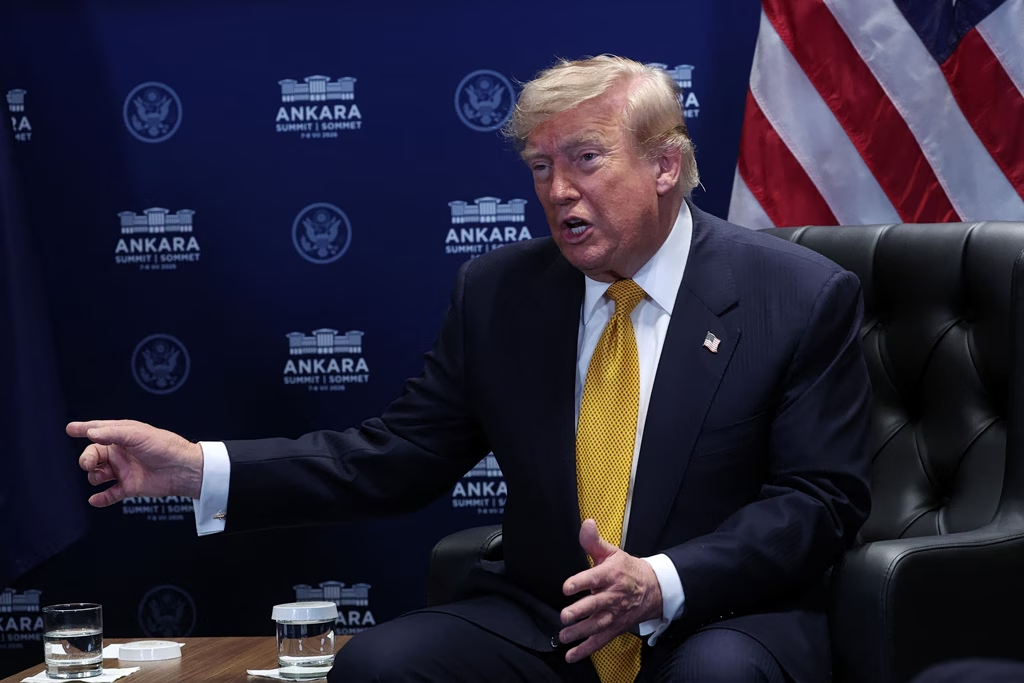

There is no historical parallel to the summit that took place in Washington on Monday, August 18. Heads of government from five European countries (Germany, the United Kingdom, France, Italy, Finland), the head of the European Commission and the Secretary General of NATO traveled to Washington to support Zelensky in his meeting with US President Trump. Such a gathering of high-ranking politicians is usually seen only at state funerals, apart from regular summits that are prepared months in advance. Perhaps this was a funeral, that of “willing allies”.
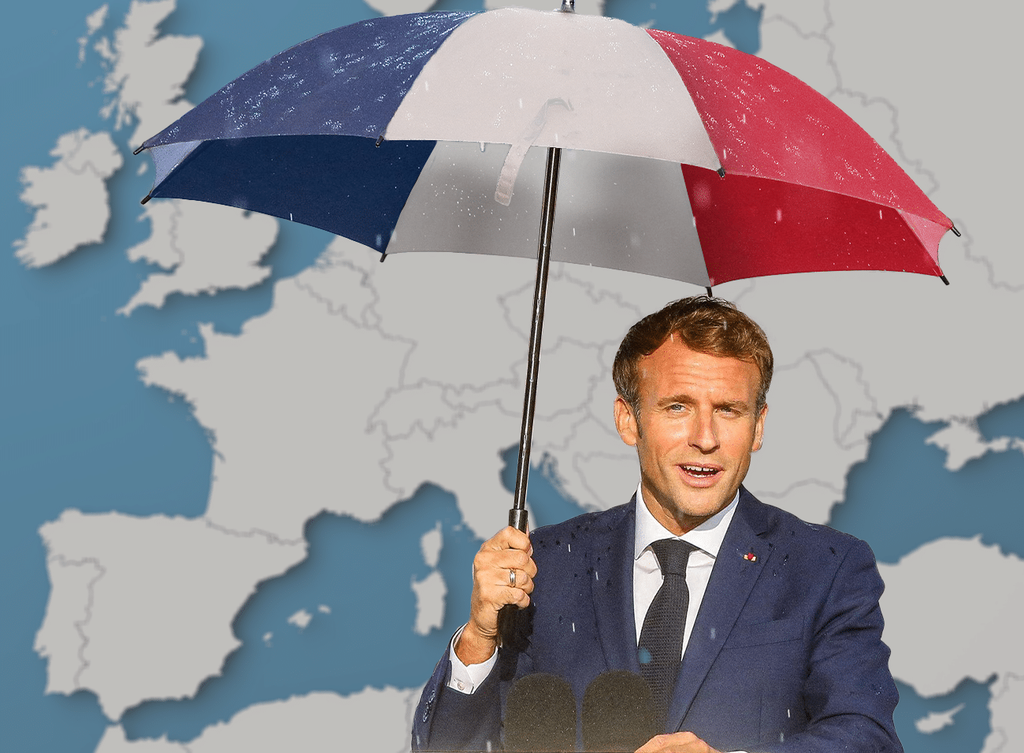
The European powers tried to influence Trump to their advantage. The trip to Washington served that purpose. The meeting did not result in an agreement. Trump has already rejected Ukraine’s membership in NATO. A mutual defense clause for Ukraine, similar to the one NATO countries grant to each other under Article 5, is under discussion. It is well known that French President Macron and British Prime Minister Starmer have long advocated the deployment of a Western “peacekeeping force” in Ukraine to deter Russia. Macron reiterated this to the BBC after the meeting in Washington: “We will need to help Ukraine with boots on the ground.” However, neither France nor the UK can easily mobilize the many thousands of soldiers that would be needed for a strong force (around 300,000). Chancellor Merz said for the first time that the German armed forces could also participate. But it also lacks resources, and domestic opposition to such plans is huge. The US rejects the deployment of its own troops in Ukraine. President Trump reaffirmed this on Fox News after the meeting in Washington. Neither the US nor NATO would participate in a force, he said. If there were to be one, it would have to come from European countries.
It is also difficult to imagine that Russia would accept the deployment of Western troops on Ukrainian soil in any form, given that NATO’s eastward advance was the reason for Russia’s invasion of Ukraine. Therefore, the demand for “boots on the ground” serves mainly to sabotage a negotiated solution and continue the war. Macron confirmed this when he told NBC that reports that Ukraine was losing the war were “completely fake news.”
Another suggestion for how Ukraine could receive “security guarantees” from the US came from Zelensky. Kiev has offered to buy $100 billion worth of American weapons in return and to jointly build $50 billion worth of drones with the US. Europe must pay for the arms deal. For European powers, this would mean paying for a Pax Americana that excludes them and undermines their efforts to develop their own arms industry.
Europeans are determined to continue the war against Russia in Ukraine, having invested so much in the narrative of “victory” that giving in to even a fraction of Russia’s demands would be suicidal. Having spent two years assuring their citizens that Ukraine is winning the war, they cannot suddenly turn around without facing public outrage, especially given the dramatic economic impact of the war on European economies.
But the deeper issue is structural. European leaders have come to rely on the specter of a permanent Russian threat to justify the ongoing erosion of democracy, from expanding online censorship to persecuting dissenting voices to even annulling elections, all under the guise of combating “Russian interference.” So they have adopted a strategy of expressing openness to a settlement while ensuring, through their terms, that no such agreement can realistically be implemented. Zelensky, too, has reason to resist peace. Ending the war would mean lifting martial law in Ukraine, exposing his government to accumulated resentment over corruption, repression, and its disastrous handling of the war. Indeed, a recent poll revealed that Ukrainians themselves increasingly prefer negotiations to endless fighting.
More fundamentally, however, Trump is unlikely to be willing to yield to Putin’s demand for a comprehensive reshaping of the global security order, one that would reduce the role of NATO, end US primacy, and recognize a multipolar world in which other powers can emerge without Western intervention. Despite his rhetoric about ending the “eternal wars,” despite his attempt to end the war in Ukraine, Trump continues to embrace a fundamentally imperial vision of the US role in the world, albeit a more realistic one than that of the liberal-imperialist establishment. His administration continues to support NATO rearmament and even the redeployment of US nuclear weapons on multiple fronts, from the UK to the Pacific. Trump’s policies toward China, Iran, and the broader Middle East confirm that Washington still sees itself as an empire whose global dominance must be maintained at all costs, not only through economic pressure but also through military confrontation when necessary.