

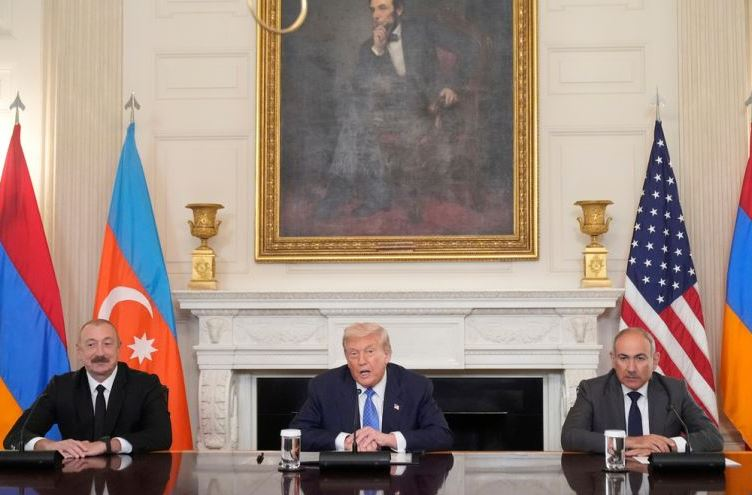
In a historic move that could reshape geopolitical developments in the South Caucasus, the leaders of Armenia and Azerbaijan signed a joint statement in Washington on Friday (8/8/2025), pledging to definitively end decades of conflict.
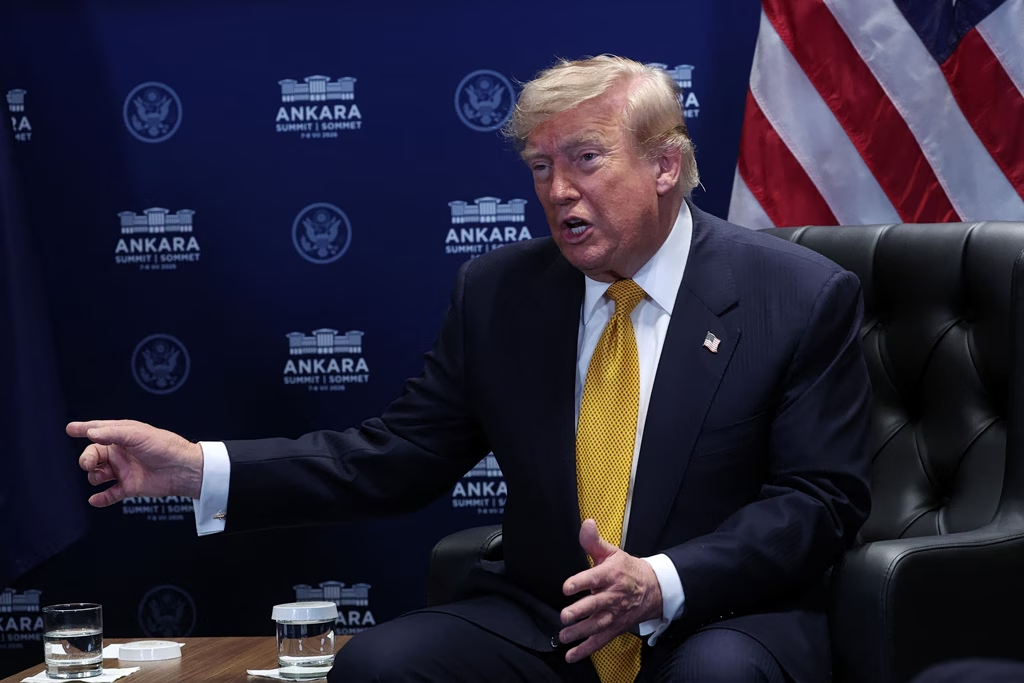
US President Donald Trump, who hosted the ceremony, emerged as the central broker of the agreement, with many talking about a “Nobel Peace Prize in the making.”
The content of the agreement
The agreement, although its full commitments remain unclear as to their legal validity, includes:
- A permanent cessation of all hostilities
- Restoration of trade, diplomatic and travel relations
- Respect for the territorial integrity and sovereignty of each state
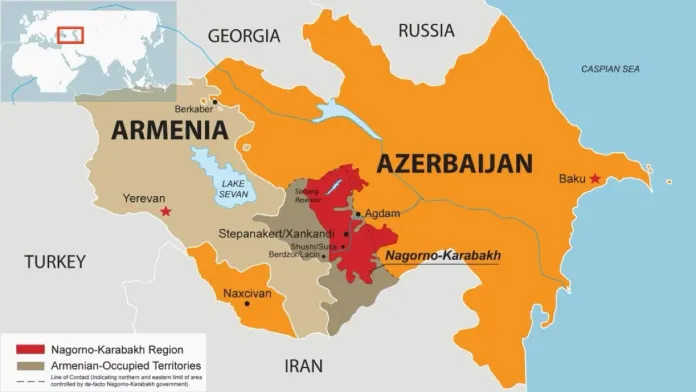
- Creation of a transit corridor from Azerbaijan to the Nakhchivan enclave via Armenia — now known as TRIPP (Trump Route for International Peace and Prosperity)
This corridor, beyond its geopolitical significance, will be developed under the auspices of the United States, which has secured development rights in the resource-rich region.
Trump’s Role – “Who Else Deserves the Nobel?”
During the signing ceremony, the leaders of Armenia and Azerbaijan praised the American president:
“This achievement would not have been possible without the perseverance and leadership of President Trump,” said Armenian Prime Minister Nikol Pashinyan.
“Who else, if not Trump, deserves the Nobel Peace Prize?” added Azerbaijani President Ilham Aliyev. The image of the two leaders shaking hands under Trump’s gaze was a powerful visual sign of reconciliation after decades of hostility and bloodshed.
Trump as “regulator” and guarantor
Trump appeared confident in the success of the peace, declaring:
“If there’s a problem again, they’ll call me and we’ll solve it.” The comment suggests not just his personal involvement but also a new form of American diplomacy, based on the former president’s direct, personable style.
What does the US gain from the deal?
The US has acquired exclusive development rights for the new Zangezur corridor in Armenia, which connects Azerbaijan with the Nakhchivan enclave.
The corridor will include rail, energy and telecommunications infrastructure, under the supervision of an American consortium.
This changes the geostrategic map of the region, reducing the influence of Russia and Iran and strengthening American economic and political aspirations
The agreement implies the withdrawal of the OSCE Minsk Group and weakens the Russian diplomatic presence in the region. The US appears as a mediator and guarantor of peace, which strengthens its prestige against competing powers such as China, Iran and Russia.
Along with the agreement, bilateral cooperation in areas such as energy, technology and trade was announced — strengthening the American presence in the region.
In addition, the already existing Strategic Alliance with Armenia is strengthened — it includes economic, energy and defense cooperation.
Turkey celebrates
Ankara, a long-time ally of Azerbaijan, expressed its satisfaction:
“We welcome the progress towards a lasting peace. In a time of escalating international crises, this agreement is particularly important for regional stability,” the Turkish Foreign Ministry said, also highlighting the contribution of American diplomacy.
What does Turkey gain from the agreement? – Regional hegemony is the goal
Turkey, as a long-time supporter of Azerbaijan, sees the agreement as an opportunity to strengthen its role as a regional power.
Washington has trusted Ankara as a “proxy mediator”, strengthening its power in the South Caucasus. The prospect of opening the border with Armenia creates opportunities for expanding trade and influence in sectors such as construction, textiles and infrastructure.
Turkey can claim a significant share in the economy of Armenia and the wider region. Through the Zangezur Corridor, Turkey seeks to connect with Central Asia and China. The project strengthens its strategic importance as a trade and energy hub within Eurasia.
Turkish President Recep Tayyip Erdogan’s active diplomacy, his support for an end to hostilities and the promotion of dialogue are increasing Ankara’s influence in the international arena as a peacemaker.
Strategic gains and geopolitical games
Despite the friendly statements, the background to the agreement is complex:
- Azerbaijan had demanded amendments to the Armenian Constitution to remove references to territorial claims to Nagorno Karabakh.
- Pashinyan has announced a referendum for 2027, provoking internal reactions in Armenia.
- The agreement was accompanied by the lifting of restrictions on US-Azerbaijani military cooperation, which changes the balance in the Caucasus.
The big winner is Armenia, which gains the most strategic partner in its history: the United States. The losers are Russia, China and Iran.