



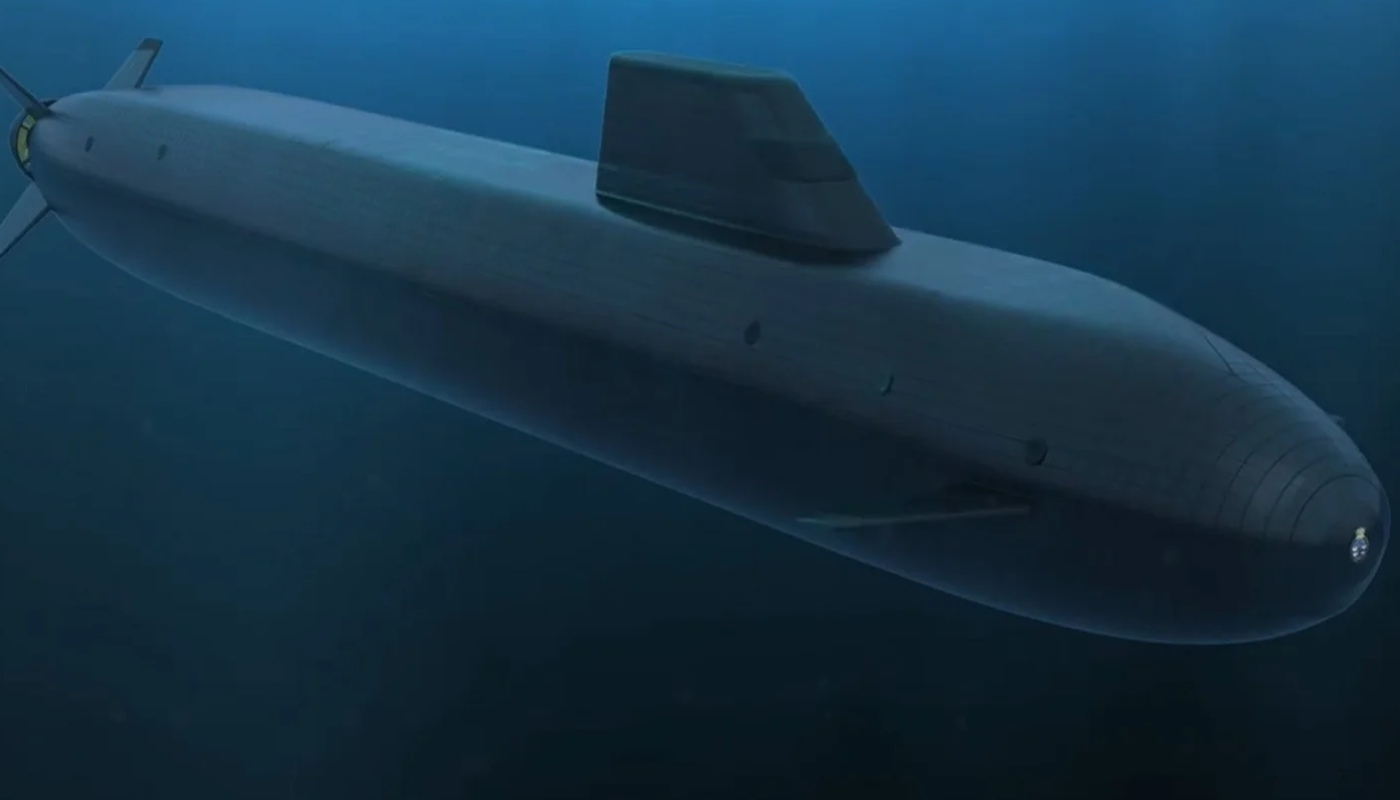
Great Britain has announced an ambitious armament program for its Armed Forces with the aim of increasing combat readiness. The program mentions the acquisition of 12 new nuclear-powered submarines (under the AUKUS agreement), investment in artificial intelligence, the acquisition of long-range weapons, etc. The new armament program and armament directions are the result of the lessons learned from the war in Ukraine. The most important armament program is the acquisition of 12 AUKUS submarines to replace the seven “Astute” class submarines (Australia wants eight AUKUS submarines). The new submarines are expected to begin entering service in the late 2030s. At the same time, about £ 15 billion ($ 20.3 billion) will be spent on the acquisition of nuclear weapons. According to the British newspaper “Sunday Times”, Great Britain and the United States are discussing a possible sale of B61-12 nuclear bombs, which will be used by F-35 Lightning II fighter jets.
As for surface ships, nothing specific is mentioned, but the “Sunday Times” reports that there will be an increase in warships from 15 to 24. Overall, Great Britain will increase its defense spending to 2.5% of GDP in 2027 and to 3% in 2034. Another point of the program is the expenditure of £ 1.5 billion ($ 2 billion) for the acquisition of 7,000 long-range weapons and the creation of six ammunition factories. We recall that a few days ago the British Army announced its plan for a radical change in the level of force structure. The British Army’s plan is referred to as “20-40-40” and incorporates lessons learned from the war in Ukraine. The “20-40-40” plan fundamentally changes the force structure, moving it away from heavy, manned vehicles and towards unmanned vehicles and mobile munitions. The main operational characteristics of the new structure are speed, autonomy and accuracy in attacking targets.
In other words, the British Army is preparing for the war of the future using the methods and tools of today. The “20-40-40” plan represents a fundamental departure from the British Army’s current reliance on armoured formations and motorised infantry. Under current tactics, conventional assets such as tanks, armored personnel carriers and artillery formed the backbone of Britain’s ground forces. These are systems designed for attrition warfare and prolonged engagements. However, the war in Ukraine and the increase in the use of autonomous platforms have made such structures increasingly vulnerable, slow to adapt and logistically burdensome. In contrast, the new “20-40-40” structure proposes a more flexible and sustainable force composition: 20% for traditional heavy platforms (tanks, armoured vehicles and self-propelled artillery elements), 40% mobile munitions for rapid and targeted attacks and 40% UAVs for intelligence gathering, surveillance, reconnaissance and precision strikes.
This composition creates an 80% unmanned structure, which prioritizes survivability, rapid deployment and digital dominance in the field. By shifting heavy weapons away from the front line and relying more heavily on unmanned systems, the British Army recognizes the tactical dominance of unmanned systems in Ukraine. Ukrainian and Russian forces have made it clear that the first 10-30 kilometers of the front line are fully monitored, rendering traditional armored vehicles exposed and ineffective. With the new force structure, the British Army aims to attack in depth and persistently, while minimizing the risk to friendly forces. At the same time, the new “20-4–40” structure will also affect command structures, which will need to evolve accordingly, with an emphasis on flexibility. New communications and data and information processing systems will also be required.

