



Russia proposed new direct talks with Ukraine in Istanbul on Monday, June 2, to discuss the terms of a ceasefire, with the condition that this ceasefire be used for real serious negotiations to resolve the conflict, and not just to give Ukraine a breathing space to rearm, regroup, and renew its troops.
So the question is whether Ukraine and its willing European allies are truly interested in a peaceful solution to the conflict and will respond to it, or whether they will find new excuses for continuing the war that is for them the best solution than a ceasefire.
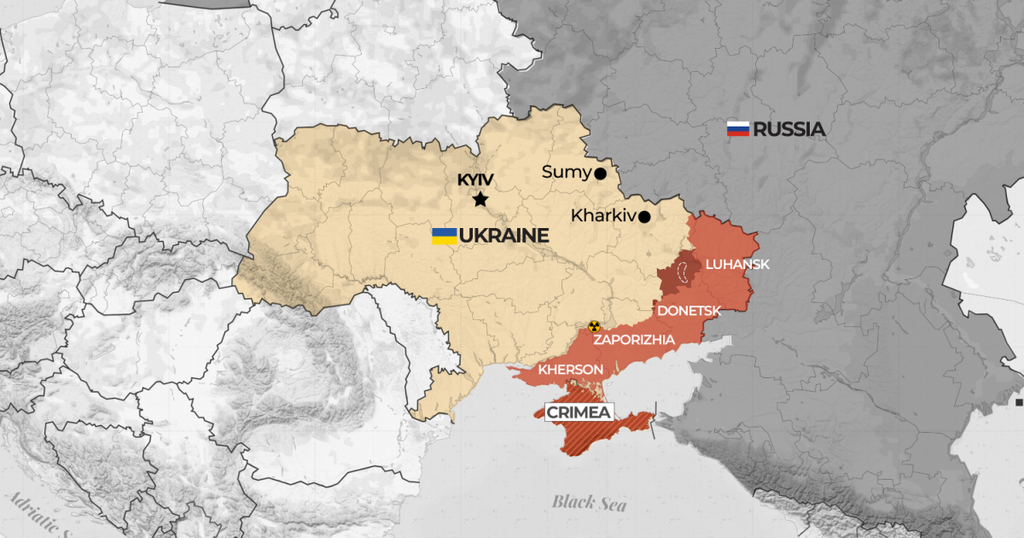
Russia’s terms for ending the war, starting with a ceasefire, have changed little from those in place before the conflict began in 2022. What are they? (It is a given that the Luhansk, Donetsk, Zaporizhia and Kherson regions that it has already militarily occupied will be recognized as Russian territory, in addition to Crimea, which was already annexed by the Russian Federation in 2014).
Moscow wants a written commitment from the West that
- Ukraine will never join NATO,
- the end of the Alliance’s eastward expansion,
- the lifting of sanctions,
- the release of Russian assets, and
- the protection of Ukraine’s Russian-speaking population in a post-war situation.
- NATO to deny Georgia and Moldova membership in the Alliance.
Obviously the hawks in NATO don’t want to hear about this, but these demands are perfectly reasonable. We recall the violent US reaction that could have led to the extinction of the earth’s population when the Soviet Union deployed nuclear weapons just a few kilometers from its coast, in Cuba, in the 1960s. So today’s Moscow also has the right to feel threatened by the possibility of NATO missile bases on its borders. Moscow also wants NATO to deny Georgia and Moldova membership in the Alliance.
The non-membership conditions for Ukraine, Georgia and Moldova to end the war in Ukraine include a requirement for Western leaders to commit to these conditions in writing. As is well known, verbal assurances not to expand the Alliance eastward, given to then-Soviet President Mikhail Gorbachev, were quickly broken.
The Russian president also wants the West to lift sanctions against his country. If this demand is not met, he will deny Western companies access to the Russian market. This is intended to protect Russian companies that have replaced Western companies with products and services that were forced to close their stores in Russia because of the sanctions.
Moscow appears ready for peace, but not at any price. If Putin realizes that he cannot reach a peace treaty on the terms of the victor, he will certainly want to show Ukrainians and Europeans through military operations that “peace will be even more painful tomorrow.” Kiev, for its part, has called on its willing allies not to believe Moscow’s conciliatory statements and to reject any action that would demonstrate their readiness for peace.
Putin will actually end the war if his opponents meet the aforementioned demands. If the victor’s demands are not accepted, then the continuation of the war will undoubtedly be the fault of the West, and in particular of Germany, France, and Britain.

